Bangladesh’s economic management now hinges on how it tackles three interlinked pressures — persistent inflation, shrinking fiscal space and weakening private investment — that are constraining growth, employment and policy flexibility, Centre for Policy Dialogue (CPD) Executive Director Fahmida Khatun said.
In an interview with Mahfuz Ullah Babu of TIMES of Bangladesh, the economist said inflation has made life “unbearable” for the middle class, lower-middle class and the poor, while also hurting businesses.
Private investment continues to slide, undermining job creation.
“Investment is falling, so employment is not being generated. Young people do not have jobs. Everyone wants government jobs, but one sector alone cannot provide employment for all,” she said, stressing the urgency of restoring investor confidence.
Revenue shortfall is compounding the strain. Fiscal space has contracted significantly in the tax and revenue sector, she said, warning that declining revenue will squeeze both development spending and operational expenditure.
The salary commission introduced by the interim government will require about Tk1 lakh 6 thousand crore annually — a major fiscal commitment, she noted.

She also flagged Bangladesh Nationalist Party (BNP) manifesto pledges — including family cards, higher allocations for education and health, one crore jobs for youths and expanded credit support — all of which will demand substantial financing.
“The tax-to-GDP ratio remains below 7 per cent. It has to be increased,” she said, adding that public expenditure efficiency must improve alongside revenue mobilisation.
Corruption, project delays and inefficiency in development spending are widening the income-expenditure gap, she warned, calling for stronger financial discipline, transparency and accountability.



The government is borrowing heavily from foreign and domestic sources, particularly from banks.
“If the government borrows heavily from the banking sector, how will the private sector access loans when needed?” she asked.
Private investment has hovered around 23 to 24 per cent of GDP for nearly a decade and fell to about 22.5 per cent in the past fiscal year, she said, cautioning that such levels are insufficient for sustained growth and employment generation.
Responding to the BNP’s target of building a trillion-dollar economy by 2034, she said it would require close to 9 per cent annual growth, driven mainly by private and foreign investment.
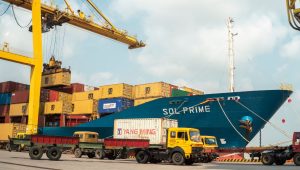
High business costs remain a structural obstacle, stemming from infrastructure bottlenecks, port delays, limited technological adoption, skills shortages, regulatory complexity and corruption, she said.
Tight monetary policy to curb inflation has pushed up lending rates, further raising business costs.
“The government must reduce price pressure so that monetary policy can become somewhat expansionary. Then access to credit will become easier for businesses, particularly small and medium entrepreneurs,” she said.
She described the banking sector as fragile, citing high non-performing loans, weak governance and regulatory gaps. Reforms initiated during the interim government must continue, she said, as banks remain the principal source of financing in the absence of a developed capital market.
“Our capital market is not developed. The main source of finance is the banking sector. It cannot be allowed to become a place for looting,” she said.
Looking ahead, she warned that graduation from the Least Developed Country (LDC) category and the trade agreement with the United States will add new pressures.
“Today or tomorrow, LDC graduation will create extra pressure. We must restructure our tariff structure and overall trade framework,” she said.
Seeking duty-free access to external markets after graduation will require reciprocal access at home, adding strain on domestic industries.
Even if graduation is deferred, preparation for post-LDC competitiveness must begin immediately, she said, urging Bangladesh to pursue free trade agreements while strengthening domestic capacity.