Seventeen years is a long time in politics. For Tarique Rahman, it was a lifetime lived in absence – an exile shaped by uncertainty, speculation, and a nation in flux. When he stepped on the soil of Bangladesh on December 25, 2025, after years in London’s political fog, it was not simply a homecoming. It was a turning of the page.
The country he returned to was not the one he had left behind. The scars of the 2024 mass uprising were still fresh. Streets that once roared with protest now carried the heavy silence of economic slowdown and political fatigue. Institutions were shaken, businesses hesitated, investors watched cautiously from a distance. And amid that fragile atmosphere, the return of the long-absent leader injected both hope and uncertainty into the national psyche.
Then came a personal blow that eclipsed even the weight of politics. His mother, three-time Prime Minister Khaleda Zia, passed away just days after returning home. The grief was intimate, yet it unfolded before a grieving nation. For Tarique Rahman, mourning and responsibility converged. The son had little time to weep; the politician had to stand.
What followed was swift and strategic. Within the ranks of the Bangladesh Nationalist Party (BNP), reorganisation began from the grassroots to the central command. Dormant structures were revived. Youth activists returned to the field. Committees were reshaped. The message was clear: this was not a symbolic return – it was preparation for power.

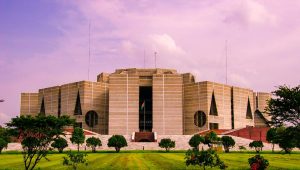
The 13th National Parliament election became the decisive chapter. Campaigns carried the energy of revival, framed as both resistance and renewal. When the results were declared, the BNP secured more than two-thirds of the parliamentary seats; a landslide that stunned critics and electrified supporters. It was more than electoral arithmetic. It was the completion of a political comeback many once considered impossible.
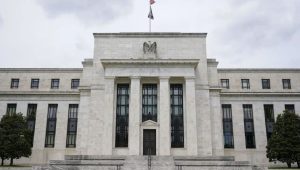
Yet victory delivered not celebration alone, but burden. The Bangladesh has got the new Prime Minister when the country’s economy is fragile; private sector credit growth had slowed sharply, according to Bangladesh Bank. Foreign direct investment lagged. Export earnings showed troubling signs. Revenue collection by the National Board of Revenue fell far short of targets, straining fiscal capacity. In the banking sector, non-performing loans had climbed to alarming heights, eroding trust and stability, banks are fragile, etc.



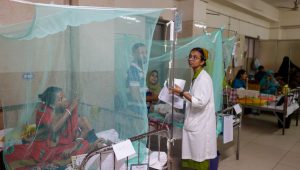
Behind the statistics lay human realities. Poverty had risen again, reversing years of gradual progress. A study by the Power and Participation Research Center pointed to a significant increase in poverty rates, while figures from the Bangladesh Bureau of Statistics showed extreme poverty expanding. Jobs had vanished in the turbulence. Young graduates searched without certainty. Small businesses struggled to breathe.
And looming on the horizon was Bangladesh’s graduation from Least Developed Country status in 2026 – a milestone of pride, yet a transition fraught with risk. The garment sector, the backbone of export earnings, faced the future without guaranteed duty-free access. Trade diplomacy would need to become as urgent as domestic reform.
So, the narrative shifted; from return to responsibility. Tarique Rahman’s premiership begins not in calm prosperity but in complexity. He inherits expectations shaped by sacrifice and upheaval. Law and order must be restored. Investment must be revived. The banking system must be disciplined. Revenue must grow without crushing the common citizen. A budget must reflect hope while grounded in fiscal realism.
History has handed him both mandate and test. The landslide victory offers political strength, but economic reality offers little margin for error. In the months ahead, decisions will matter more than rhetoric. Reform will matter more than symbolism.
So, BNP should not be complacent after its landslide victory. Such a decisive mandate comes with even greater responsibility and prudence to stabilise the country. It will not be an easy task for the BNP leadership to transform the nation into an ideal and progressive state.
Many of those who have become Members of Parliament today were previously part of the ruling party during 1991–1996 and 2001–2005. The people did not count the rate of success, but remember the mistakes happened during those periods. When governments make mistakes or fail in their responsibilities, the entire nation bears the consequences and suffers the turmoil, so the 17 years.
Seventeen years of exile have ended. A new chapter has begun to build a new Bangladesh. Whether it becomes a story of transformation or of squandered opportunity will depend not on the drama of return but on the discipline of governance.
The writer is a journalist and columnist