


Yasir Silmy
Journalism is traditionally seen as the ‘Fourth Pillar of State,’ essential for democracy by serving as a societal mirror, watchdog, and information source for the public good. However, recent actions by portions of the Bangladeshi media, particularly regarding the coverage of Dr. Zubaida Rahman’s return to Dhaka, have raised serious concerns about the integrity of this profession. This situation highlights a troubling trend where the pursuit of viewership and virality has overshadowed ethical considerations, individual privacy, and fundamental human decency.
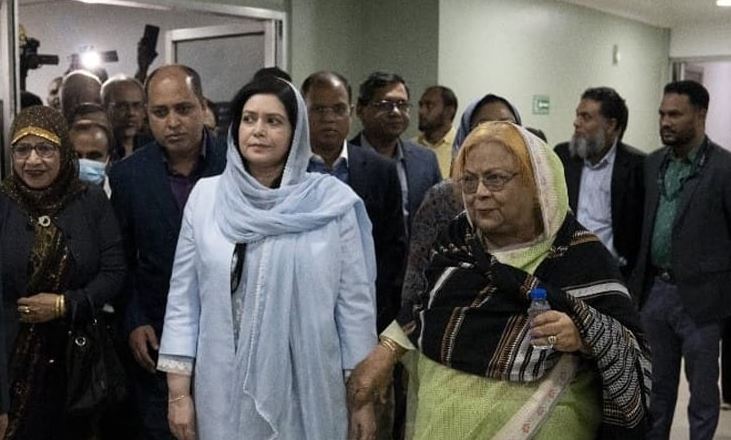
Dr. Zubaida Rahman, wife of BNP Acting Chairman Tarique Rahman, returned from London to Dhaka on December 5 to visit her ailing mother-in-law, former Prime Minister Begum Khaleda Zia. However, the media coverage surrounding her return reveals a notable ambiguity between genuine public interest and mere public curiosity about the event.
Her journey attracted extensive media attention. Reports meticulously outlined every aspect of her transit, including the timing of her immigration clearance, the VIP gate she used upon exit, and such miniscule details. One must pause and ask: How does knowing which flyover Dr. Zubaida’s car utilised benefit the nation? Is this information crucial for the socio-economic development of Bangladesh? Does it hold power to account? This form of ‘live tracking’ is not journalism; it is surveillance masquerading as reporting. It reduces the profession to a level of being a paparazzi and having the sense of voyeurism.

Publishing a private citizen’s passport number violates the journalistic ethical principle of ‘do no harm,’ as it does not serve any public interest and instead exposes individuals to harassment and security risks. When media houses neglect these ethical standards, they undermine their role as guardians of information and become harmful to the citizens they aim to serve.
Dr. Zubaida’s arrival at Evercare Hospital highlighted a troubling ethical decline, as the scene resembled chaos rather than professional journalism. Hundreds of cameras transformed the hospital entrance into a rally. Footage revealed journalists blocking driveways and pursuing Dr. Zubaida, causing distress to doctors, nurses, patients and their families.




Did these reporters take a moment to consider that within that building, there are critically ill patients in operation theaters and ICUs, as well as families in mourning? The culture of ‘breaking news’ seems to have eroded the essential human empathy needed to understand that a hospital is not a film set. When the quest for a striking visual disrupts the path of an ambulance or disturbs the tranquility of the sick, journalism loses its integrity.
The modern media landscape is impacted by a shifting business model characterised by ‘YouTubification,’ where success is measured by clicks and views rather than investigative depth or story impact. This has created an incentive structure that favours sensational content over thoughtful analysis, encouraging journalists to prioritise viral appeal over ethical standards. Consequently, the distinction between professional reporting and paparazzi has diminished; with the focus shifting from essential public information to content that attracts clicks. This obsession with triviality incurs a significant opportunity cost, as it diverts attention away from potentially more important stories. For instance, while the media focused on mapping Dr. Zubaida’s route through Dhaka, it overlooked other important narratives that might have been worthy of coverage.
Bangladesh faces significant challenges, including a soaring cost of living, a persistent dengue crisis, a fragile banking sector, and concerns regarding law and order as national elections approach. These issues impact the daily lives of millions and highlight the need for thorough media coverage and accountability. Media coverage of a political figure’s family member distracts from important state issues by prioritising entertainment over necessary reality, ultimately failing its duty to inform the public about critical structural problems.
Journalists in Bangladesh regarded as the ‘conscience of the nation,’ must reflect on their role and understand that possessing a microphone or camera does not entitle them to intrude, endanger, or disrupt. Editorial leadership is urged to reinforce the gatekeeping function of journalism by avoiding the publication of private data, such as passport numbers, and to prevent chaos in sensitive areas, like hospitals. Regulation is important not to restrict the press but to safeguard citizens’ privacy. The government and media oversight bodies must enforce data protection laws, holding media outlets accountable if they risk exposure of private data.
Dr. Zubaida Rahman’s visit holds personal importance but it should not be treated as TV reality show, which should also disregard insubstantial or fabricated media content that may hinder responsible journalism. If Bangladeshi media persists in sensationalism and invasion of privacy for viral trends, it risks losing credibility and becoming a source of distrust. Journalists must prioritise truth, dignity, and responsibility to reclaim their role as the fourth pillar of the state and the nation’s conscience.
The writer is a Chairman-in-Charge, Journalism and Media Studies, BGC Trust University Bangladesh