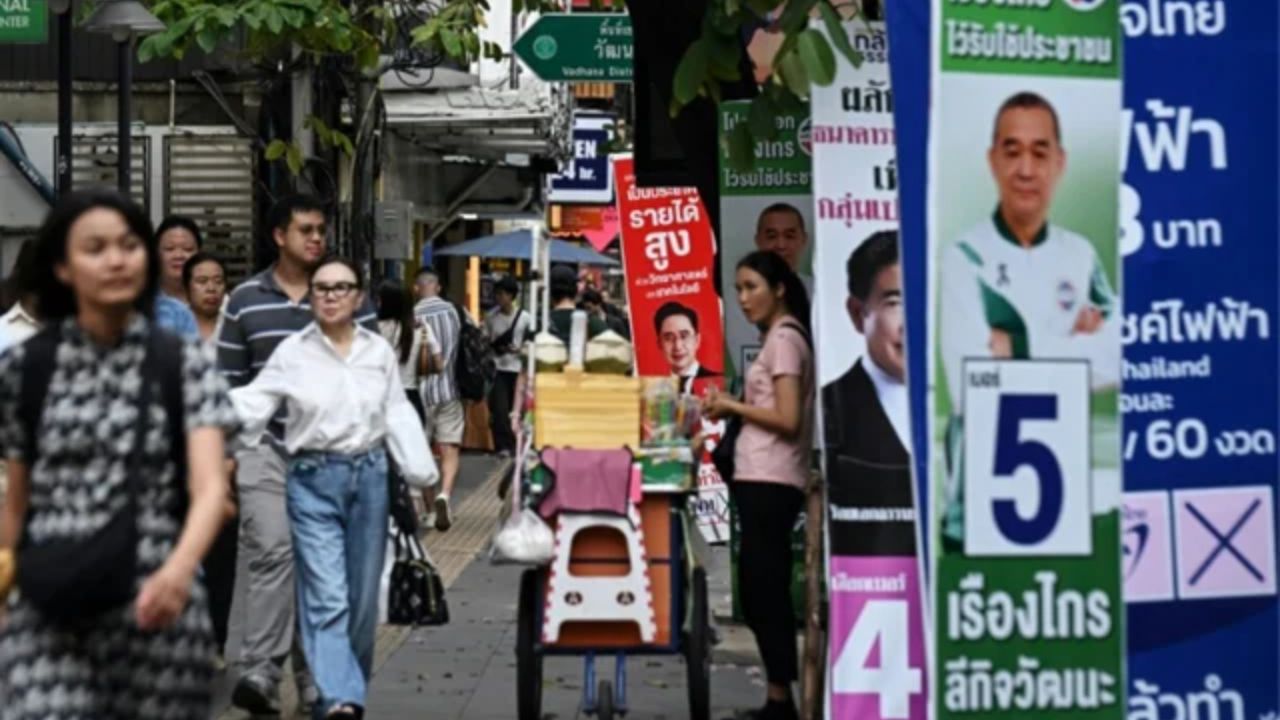

Thais vote on Sunday in a crucial election, with the progressive reformist movement that won the last ballot facing off against the conservative forces that ultimately took power, as former leader Thaksin Shinawatra exerts influence from his prison cell.
Thailand’s next administration must grapple with a persistent border conflict with Cambodia, which saw fatal clashes twice last year, and tackle the multi-billion dollar transnational cyber-scam networks operating from the region.
Economic momentum remains sluggish. Although tourism is critical, visitor numbers have not recovered to pre-pandemic levels, while faster-growing Vietnam is now drawing greater foreign direct investment.
No single party is anticipated to secure an outright majority. Analysts suggest this vote could mirror the result of the poll less than three years ago.
On that occasion, the former iteration of the progressive People’s Party achieved the largest share of votes and the most parliamentary seats, yet its prime ministerial candidate was barred from office and the party was subsequently dissolved.

Instead, Thaksin Shinawatra’s Pheu Thai party, which placed second, forged a coalition with the third-placed conservative Bhumjaithai party, only for its premier to be deposed by a court order.
He was succeeded by Thaksin’s daughter, Paetongtarn Shinawatra, who was herself judicially removed before parliament endorsed her former coalition partner, Anutin Charnvirakul, in September – marking the kingdom’s third prime minister in two years.
“Thai elections have effectively become decoupled from government formation,” observed political scientist Napon Jatusripitak.
“That’s not necessarily a good thing for a country where democratic experience has been turbulent.”




Thailand’s political landscape is marked by a history of military coups, violent street demonstrations, and judicial interventions banning prime ministers and parties.
The most recent coup in 2014 ushered in five years of junta rule and a military-drafted constitution that grants significant authority to institutions appointed by the unelected senate.
This has fostered “a situation where people who are elected have been able to be undermined by people who are not elected”, noted Napon.
People’s Party supporter Patcharee Phadungsuksira, 26, told AFP she desires a system that is “more fair and truly represents the voice of the people”. People’s Party leads decisively in opinion polls, with around one-third of voters indicating support.
Trailing in second is Anutin Charnvirakul’s Bhumjaithai. The conservative figure, who pushed for cannabis legalisation, is seen by analysts as likely to retain influence by again partnering with Pheu Thai, now ranked third in surveys.
Pheu Thai, the most electorally successful party of modern times, has seen its standing diminish after the constitutional court dismissed Paetongtarn over her management of the Cambodia dispute, compounded by Thaksin serving a one-year prison term for corruption.
His nephew, Yodchanan Wongsawat, aims to become the family’s fifth prime minister, but pollster NIDA forecasts the party will secure just 16 percent of votes, a stark decline from its past electoral zenith.
While the centre-right Bhumjaithai promotes its national defence record, particularly following last year’s clashes with Cambodia, People’s Party campaigns to end military conscription and reduce the number of senior generals.
All three major parties are promoting various populist subsidies and socio-economic policies, including Pheu Thai’s promise to award nine daily prizes of one million baht ($31,000) each to stimulate the economy.
A referendum on Sunday will also allow voters to signal whether they support constitutional reform in principle, though no specific proposals are currently tabled.
“We cannot really expect a lot of change in this election,” stated political scientist Punchada Sirivunnabood, highlighting the endurance of Thailand’s “old style” politics.
She added that unless the People’s Party clinches an overall majority at the ballot box – a feat only achieved by Thaksin’s parties in past democratic elections – it will be “really impossible” for them to establish a government.