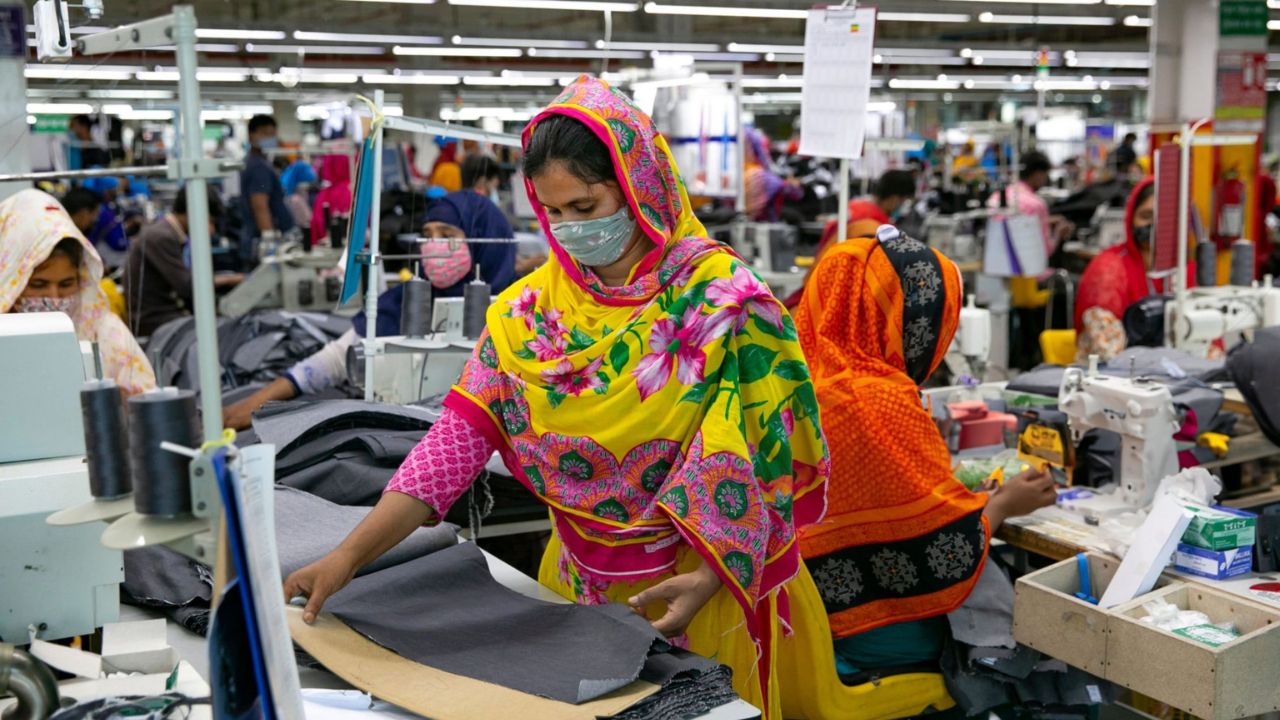
One of the country’s most important contributors to the national economy and a living symbol of commercial heritage, the famed Karatia Haat of Tangail, continues to serve as a vital artery of Bangladesh’s textile trade.
More than just a marketplace, Karatia Haat stands as a cultural and historical landmark of Tangail. For nearly two centuries, the Haat has played a central economic and social role, evolving into one of the district’s main commercial lifelines.
Established around the early nineteenth century, Karatia Haat is widely recognised as the country’s second-largest wholesale cloth market and the principal trading centre for Tangail handloom sarees.
Traders say weekly transactions amount to around Tk30 crore, underscoring the market’s significance to the local economy and the wider domestic textile sector.

Located about seven kilometres from Tangail town, the market has gained nationwide popularity for its comparatively lower prices and consistent availability of authentic Tangail sarees. Generations of skilled local artisans continue to produce distinctive fabrics, while traders at Karatia Haat ensure their products reach buyers across Bangladesh and abroad, even as the handloom sector faces rising costs and structural challenges.
Historical accounts link the origin of Karatia Haat closely with the rise of Tangail sarees. The market developed under the patronage of the Karatia jomidars at a time when agriculture and weaving flourished in the region. Jomidar Wazed Ali Khan Panni and his predecessors recognised the commercial potential of the area and gradually organised the market into a structured trading centre.
Initially a small venue for exchanging agricultural produce, livestock and handwoven cloth, the Haat expanded steadily with the elites’ support.


By the nineteenth and twentieth centuries, it had emerged as a leading commercial hub of the greater Mymensingh region. During the British period, traders from Dhaka and surrounding areas regularly conducted business here, benefiting from a disciplined market layout with designated sections for different goods.
Following the independence, Karatia Haat grew further in scale and reputation, becoming one of Tangail’s largest and most diverse markets. Today, it is regarded not only as a wholesale centre but also as an economic, social and cultural focal point, with Tangail sarees, indigenous handicrafts and agricultural products dominating trade.
Business leaders note tHaat the market spans nearly 45 acres and hosts thousands of traders. In addition to sarees, Karatia Haat is known for shawls and blankets, some of which are exported to colder countries including India and Myanmar.
The Haat typically operates twice a week, with wholesale trading beginning on Tuesday and continuing through Wednesday, followed by retail sales on Thursday.
Textile traders from across the country source products here for resale in supermarkets and shopping malls, while designs originating in Karatia are now visible in major urban retail outlets.
A wide range of items, including printed sarees, three-piece sets, fabric lengths, gamchas, towels, lungis and winter garments, are sold at both wholesale and retail prices.
Veteran trader Samiul Islam said Karatia Haat functions as a comprehensive textile marketplace, attracting buyers from home and abroad and sustaining weekly trade of about Tk30 crore, supported by wHaat he described as strong security arrangements.
Saree trader Minhaj Mia echoed the view, saying competitive pricing and variety have kept the market attractive for more than two decades.
Haat committee Joint Secretary Md Jinnah Mia said the nearly 200-year-old market remains a meeting point for traders nationwide, with ongoing efforts to modernise facilities, including bringing the entire area under CCTV surveillance, in cooperation with local authorities and residents.