
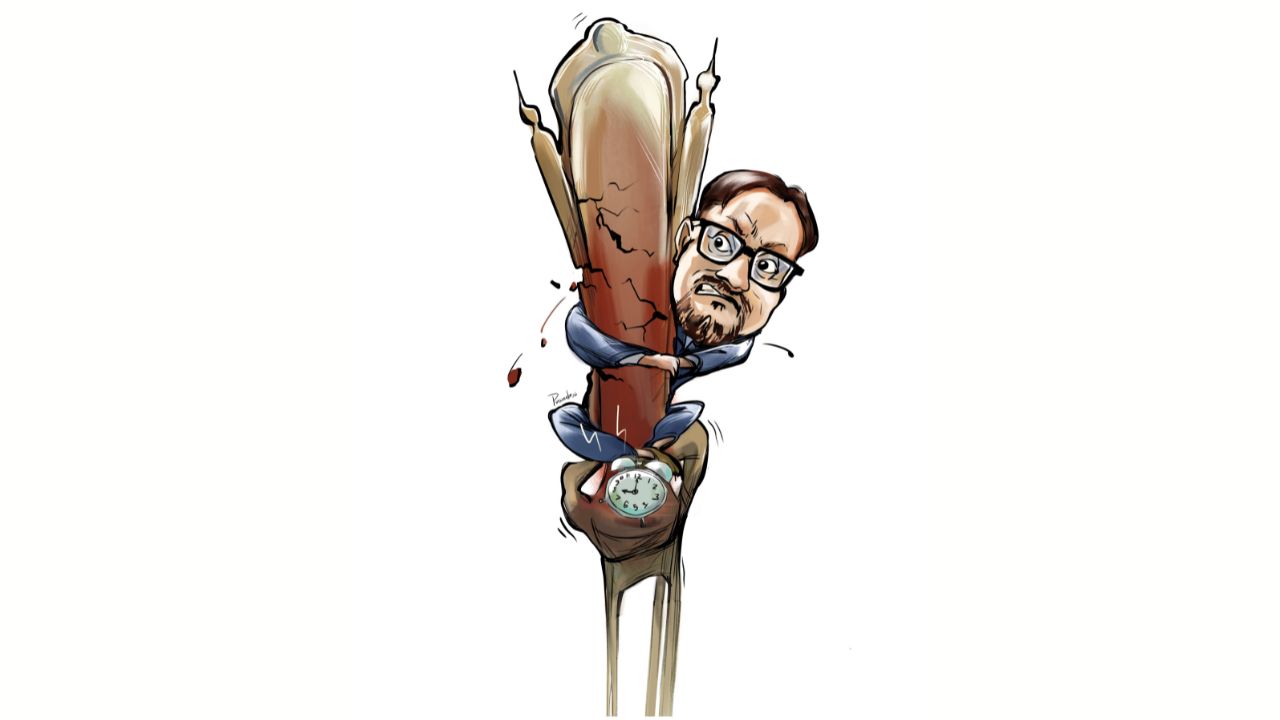




Robi Axiata PLC’s Managing Director and CEO Ziad Shatara speaks with conviction about a philosophy that guides “every decision inside the company”—sustainability.
For Robi, it is neither a corporate accessory nor a fashionable add-on, but an organising principle that shapes both purpose and performance, he told TIMES of Bangladesh in an interview.
He describes it not as a fixed framework but as a way of life – one that evolves with context. “If an organisation were a human being, it would need a way of life to excel in its mission. For us, sustainability is that way of life,” he says, emphasising that it cannot be treated as a universal template.
Its application, he notes, differs across industries, markets and organisational cultures, and although it may seem complex from the outside, its flexibility allows companies like Robi to tailor their approach to their needs.
This journey of understanding, he explains, has taken years. Robi began, like many companies, with a philanthropic mindset, conducting CSR activities out of goodwill for the communities it serves.
Those early efforts were well intentioned but commercially detached, and over time the company realised their limitations.
Yet the sense of responsibility rooted in those initiatives remains. The difference today is that Robi has moved rapidly from episodic CSR to embedding environmental, social and governance principles across the organisation.
This shift is now captured within a formal sustainability framework built around four pillars: advancing digital societies, advancing green economy, advancing people and communities, and driving governance and risk. Together, they give Robi the depth and breadth to adopt sustainable business practices holistically.
The digital empowerment, inclusion and environmental stewardship
When asked about the distinctive aspects of Robi’s sustainability practices, Shatara points to several initiatives that stand apart in Bangladesh’s corporate landscape.
One of the most significant is bdapps, the country’s largest app store, pioneered by Robi in 2014. Over the past eleven years, bdapps has expanded into a nationwide digital ecosystem of more than 115,000 developers serving 1.3+ million paid subscribers with over 120,000 apps.
A notable 20,000 developers are women, representing 17 per cent of the total community. Since its inception, the platform has disbursed $18.5million to developers and supported the creation of more than 50 start-ups.
For Shatara, bdapps proves that an initiative can be both commercially viable and socially transformative, advancing Robi’s broader goal of building a more inclusive digital society.
Equally distinctive is Robi’s diversity, equity and inclusion initiative – BLOOM, introduced on 1 October 2024. BLOOM reframes maternity support in corporate Bangladesh by combining empathy with operational continuity and career development.
It is designed so that motherhood remains a period of professional growth, not a barrier, reflecting Robi’s commitment to shaping workplace norms that acknowledge human needs while ensuring business continuity.
Environmental stewardship forms another critical dimension of Robi’s sustainability identity. The company has committed to achieving net-zero emissions by 2050, guided by science-based targets validated by the Science Based Targets initiative in 2024.
That commitment is already producing measurable results. In 2024, Robi reduced carbon emissions by 1.75 per cent, lowered energy use by 1.5 per cent, diverted 15.51 tonnes of waste from disposal and responsibly managed 569 tonnes of total waste. Today, 13 per cent of its network sites run on solar power.
To accelerate further, Robi has partnered with FloSolar and GreenPower Asia to build a 100 MW solar plant expected to cut emissions by up to 68200 tonnes annually. This project marks a significant step towards Robi’s 2025 net-zero milestone.
A framework for growth, a responsibility to society
For Robi, the importance of sustainability lies in its dual role as a growth enabler and a socio-economic responsibility. Sustainability, Shatara says, provides the framework that allows Robi to advance its commercial ambitions while supporting national progress.
Whether through the development of cutting-edge digital solutions or through improving everyday life with reliable technology, Robi sees its future intertwined with the country’s growth trajectory.
“Sustainability gives us a framework to grow our business while supporting the country’s socio-economic development — a true win-win,” he explains.
He notes that Bangladesh ranked 114th out of 167 countries in the Sustainable Development Report 2025, placing it among the bottom three in South Asia with an SDG score of 63.9 per cent.
Robi contributes to 14 of the 17 Sustainable Development Goals, and Shatara believes the private sector can help improve the country’s standing.
To do so, however, he stresses that regulatory authorities must work collaboratively to ensure an effective and enabling telecom framework.
Commercial reality meets long-term vision
Sustainability, Shatara explains, cannot be reduced to an accounting exercise. While it certainly has commercial implications, its true value reveals itself over time.
Some initiatives deliver immediate financial returns. bdapps, being a fully commercial venture, is assessed on commercial metrics, yet its contribution goes beyond revenue, supporting Robi’s transformation into a technology company while aligning with the sustainability pillar of advancing digital societies.
Other initiatives, such as achieving net zero, require front-loaded costs that outweigh short-term benefits. But Shatara argues that not pursuing these goals will be far costlier as the world accelerates towards a green economy. Future generations, he says, will expect service providers not to harm the planet.
This belief is echoed by Robi’s parent group, Axiata, which pursues net-zero commitments across all its operating companies in South and Southeast Asia. In these cases, costs and benefits must be viewed through a broader sustainability lens that recognises environmental responsibility as a long-term investment rather than a short-term gain.
Evolving ambitions for a digitally mature nation
Robi’s sustainability goals evolve alongside the company’s growth and the country’s advancing digital maturity. In the short term, the focus is on accelerating digital innovation, because smarter and more connected systems help embed sustainability into everyday operations.
In the medium term, as market demand matures, Robi aims to more tightly integrate commercial and sustainability priorities so that every new product or service advances both efficiency and environmental responsibility.
In the long term, the company envisions transforming from a traditional telecom operator into a full-scale solutions provider.
By investing in AI- and cloud-powered services that society will increasingly rely on, Robi can foresee a future where commercial considerations will be viewed from the sustainability perspective altogether — the widespread adoption of digital technologies in society will make this inevitable.
Shatara believes that Robi’s long-term commercial success will depend on enabling excellence at both individual and societal levels.
Ziad Shatara is confident that the company is evolving accordingly.


