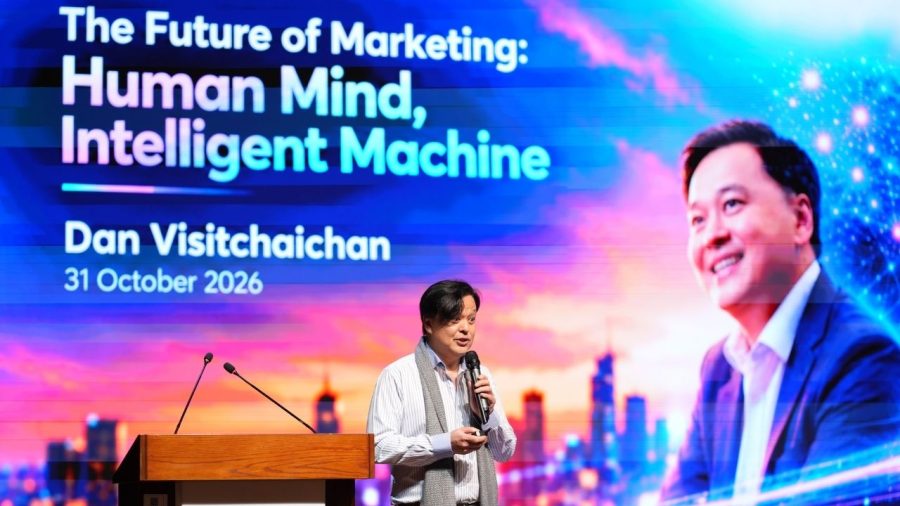



Marketing leaders meeting in Dhaka this week urged companies to embrace artificial intelligence for productivity and customer insight without surrendering human judgement, creativity or accountability.
That balance shaped the two-day World Marketing Forum 6.0, held at BRAC University on 30–31 October under the theme “Artificial Intelligence in Marketing: Human + Tech.”
The gathering brought together marketers, academics and industry leaders to examine how AI can improve customer engagement and business performance while preserving ethics and consumer trust.
Professor Philip Kotler, who joined virtually, said AI could help companies work more efficiently, understand customer needs, identify market opportunities and forecast sales and profits.

But he cautioned against overdependence, saying human creativity, supervision and judgement must remain central. He also urged marketing and finance teams to assess AI investments against productivity, cost and profitability.
Hermawan Kartajaya, co-founder of the World Marketing Forum and founder of the Asia Marketing Federation, said businesses must combine technology with creativity, trust and social responsibility.
He called on companies to pursue what he described as “Generative Advantage” by creating new products, experiences and markets rather than relying only on conventional competition.




BRAC University Vice-Chancellor Professor Syed Ferhat Anwar examined AI’s psychological effects on brands and consumers, while A K Enamul Haque, director general of the Bangladesh Institute of Development Studies, focused on productivity gains and who ultimately captures the value created by AI.
Other sessions covered AI regulation, human-machine collaboration, localisation of global brands and the technology’s potential to lower barriers for entrepreneurs.
One panel examined whether cheaper AI tools could help small and medium enterprises compete more effectively with larger businesses. Another focused on how universities and companies could turn academic research into practical commercial solutions.
Sajid Mahbub, secretary general of the World Marketing Council and Marketing Society of Bangladesh and group chief executive officer and executive editor of Bangladesh Brand Forum, said AI was changing how companies understand customers but people still gave marketing its purpose.
“AI is changing how we understand and serve customers, but it is people who give marketing its purpose,” he said.

BRAC Business School Dean Professor Mohammad Mujibul Haque also highlighted the role of universities in preparing marketers for an AI-driven business environment.
The forum featured 10 keynote sessions, two case studies and two panel discussions.
It concluded with the Dhaka Declaration of the World Marketing Council – “Marketing for Global Good: Y2030 & Beyond.”
The declaration was adopted by the World Marketing Council, Asia Marketing Federation, African Marketing Confederation and European Marketing Confederation, representing organisations across 54 countries in Asia, Africa and Europe.