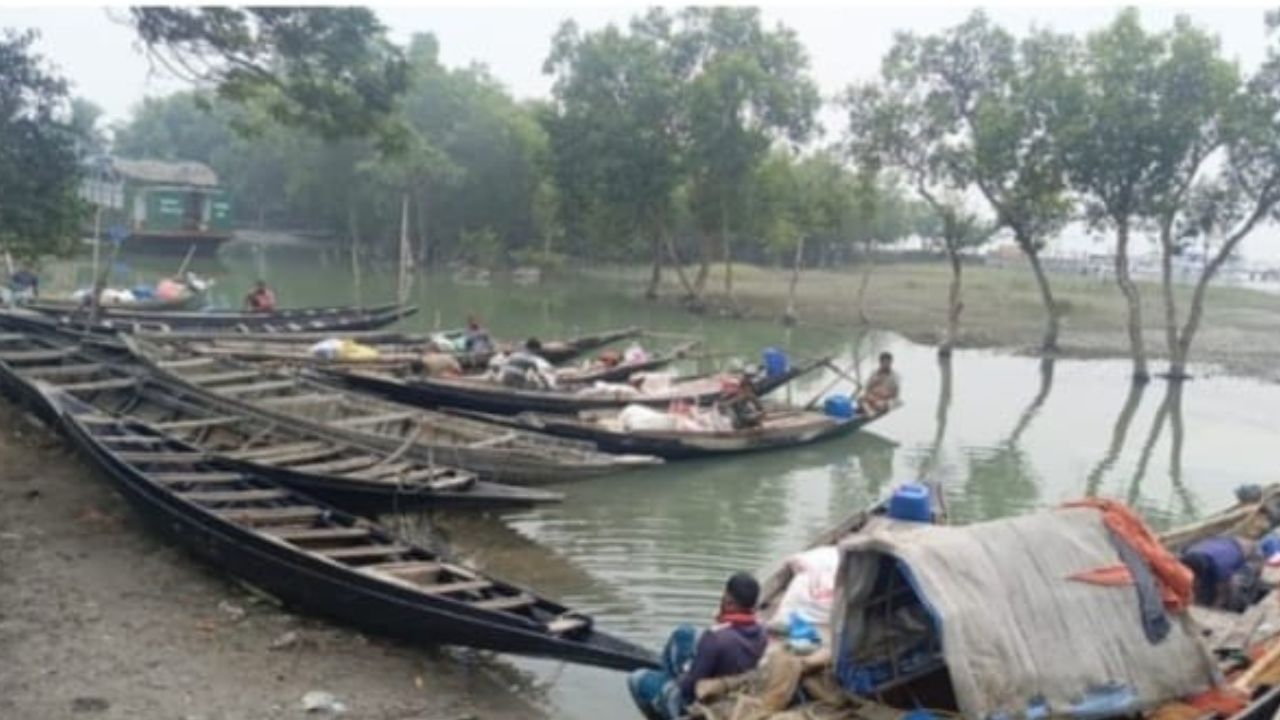



Fishing activity has resumed in Satkhira’s coastal communities of the Sundarbans after the two‑month ban on crab harvesting ended on Sunday.
The restriction, imposed to protect crab breeding and biodiversity, was lifted in the morning. Fishermen began entering the forest with permits issued by the Forest Department.
Families dependent solely on the forest face severe hardship during the ban. In Harinagar village, fishermen were seen loading boats with equipment and supplies along the Chunkuri River.

Local fisherman Arun Mondal said he supports a five‑member family through crab harvesting and had to borrow Tk20,000 from a moneylender to survive the break.
Another fisherman, Nityaranjan Mondal, noted that no government allowances are provided during the restriction, leaving the poorest to take the risks of harvesting crabs in the Sundarbans.




According to the West Sundarbans (Satkhira Range) office, 2,900 boats are permitted to enter the forest through Burigoalini, Kadamtala, Kaikhali, and Kobadak stations. Of these, 1,600 are designated for crab harvesting. Around 15,000 permit‑holding fishermen depend on these waters for their livelihoods.
While the season has reopened, several areas remain off‑limits. Harvesting is prohibited year‑round in sanctuaries such as Pushpakati, Mandarbaria, Natabeki, and Haldebunia, as well as 52 percent of the Dobeki and Kachikhata areas.
Crabbing is also permanently banned in Choto Keyakhali, Boro Keyakhali, Kholshibunia, and Sapkhali canals, and in any canal less than 25 feet wide.
Md Mashiur Rahman, assistant conservator of forests for the West Sundarbans (Satkhira Range), said fishermen may now operate in non‑sanctuary areas but forest guards have been ordered to intensify patrols against illegal activities. He reminded harvesters that transporting crabs by mechanised boats or trawlers remains strictly prohibited.
The annual two‑month ban has been enforced consistently since the crab export guidelines were introduced in 1998.