


Dhaka doesn’t slow down easily. Between the traffic, the deadlines and the general hum of a city that rarely exhales, standing still can feel like the hardest thing to do. On 21st and 22nd August, a few hundred people in Gulshan decided to try.
Summer Flow Fest 2026 returned to Gulshan Shooting Club, built around The Flow Fest’s Eight Pillars of Wellbeing – movement, nutrition, mindfulness, rest, connection, gratitude, creativity and purpose. Rest, in the festival’s own framing, is treated as a need rather than something to be earned; gratitude means noticing what’s still holding up, not only what’s breaking. In practice, the weekend unfolded around five simpler ideas: movement, mindfulness, creativity, connection and wisdom. Whatever the framing, the invitation was simple: move, create, connect, heal.
The festival is the work of Shazia Omar, who founded The Flow Fest as a public wellness movement and has since grown it well beyond a single weekend. Seventeen festivals in, it has drawn a combined 50,000 people, built a network of around 130 corporate partners, and now counts a standing community of roughly 40,000. None of that scale was really the point on Friday and Saturday, though. If anything, Summer Flow works precisely because it doesn’t feel like a movement with numbers behind it – it feels like a hall room that happens to be full of people quietly trying to take care of themselves.
It began early. Friday morning’s Rave Run, powered by Jeep, sent runners, walkers and dancers 7.5km around Hatirjheel, turning what could have easily been just another 6am run into something closer to a moving celebration – less about pace, in the spirit of the weekend, and more about showing up, for yourself and for whoever happened to be running beside you.

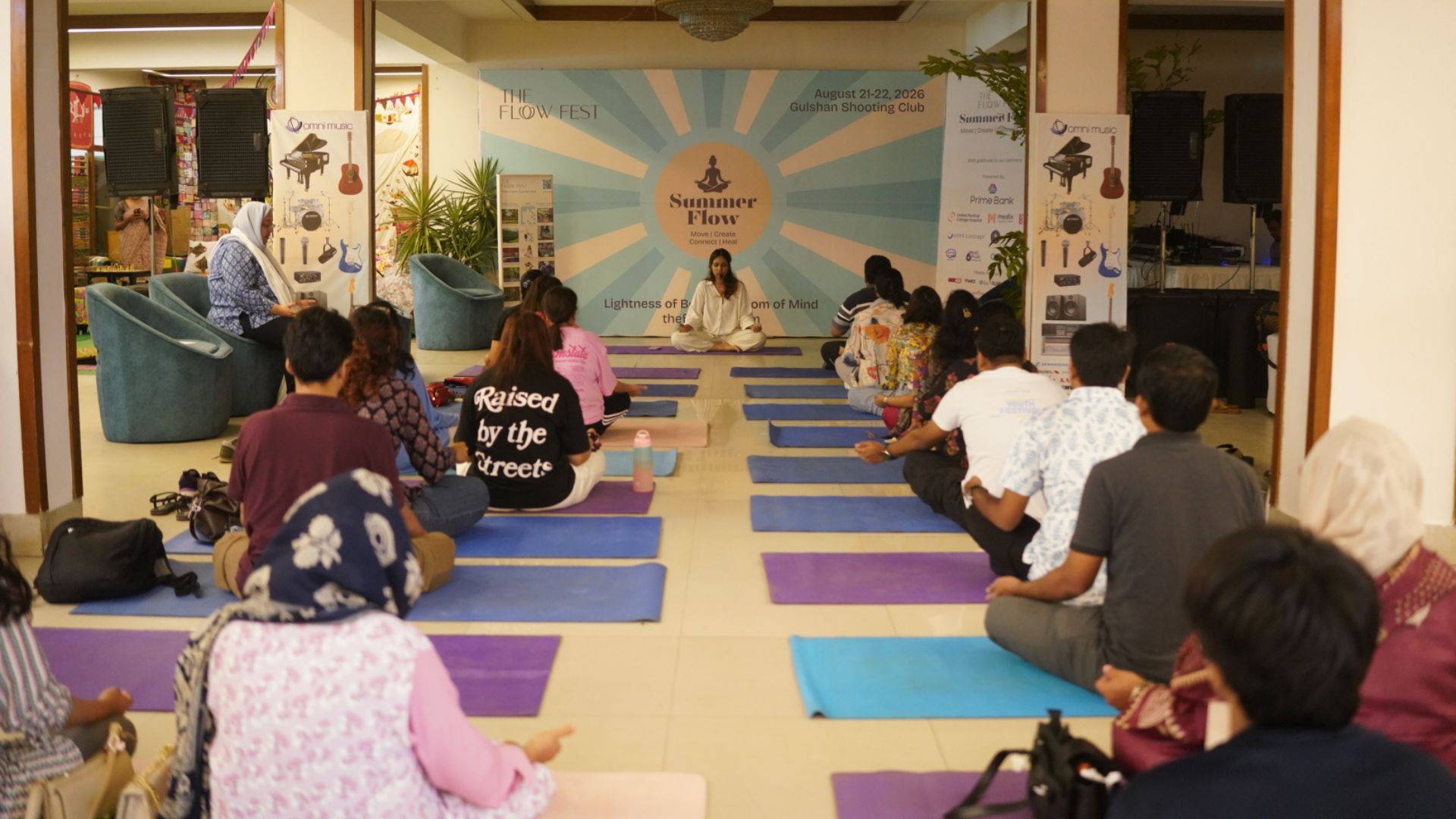
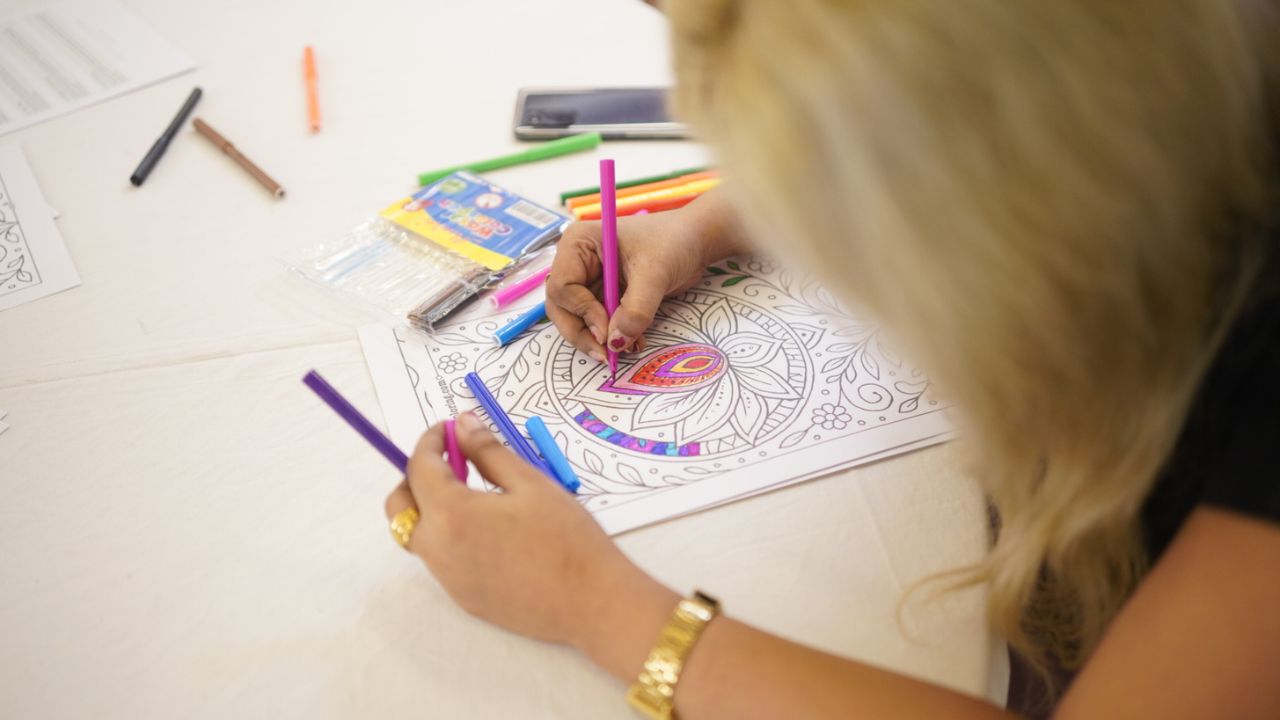
Back at Gulshan Shooting Club, Dhaka Jungle had transformed one of the hall rooms into something close to an indoor forest, greenery and all, setting the tone for two days of yoga led by Shazzy Om (Shazia Omar) and Mai, sound healing, a session with Irons Fencing Club, and a steady hum of conversation in between. The Flow Market ran alongside it, giving people a reason to wander between sessions and browse local wellness brands. The weekend’s other partners worked more quietly in the background – United Healthcare and Shwapno lending support across health and everyday essentials, and Savoy keeping everyone cool with free ice cream all weekend long.
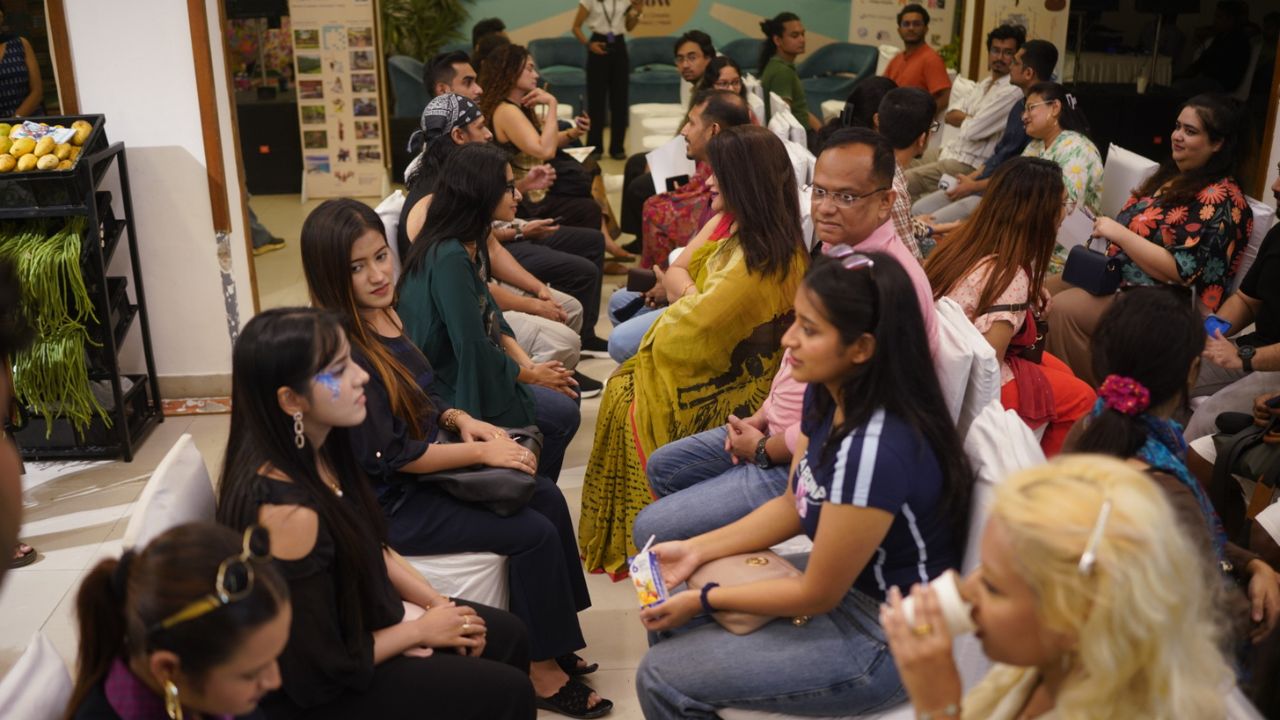
It was the conversations, though, that people kept returning to.



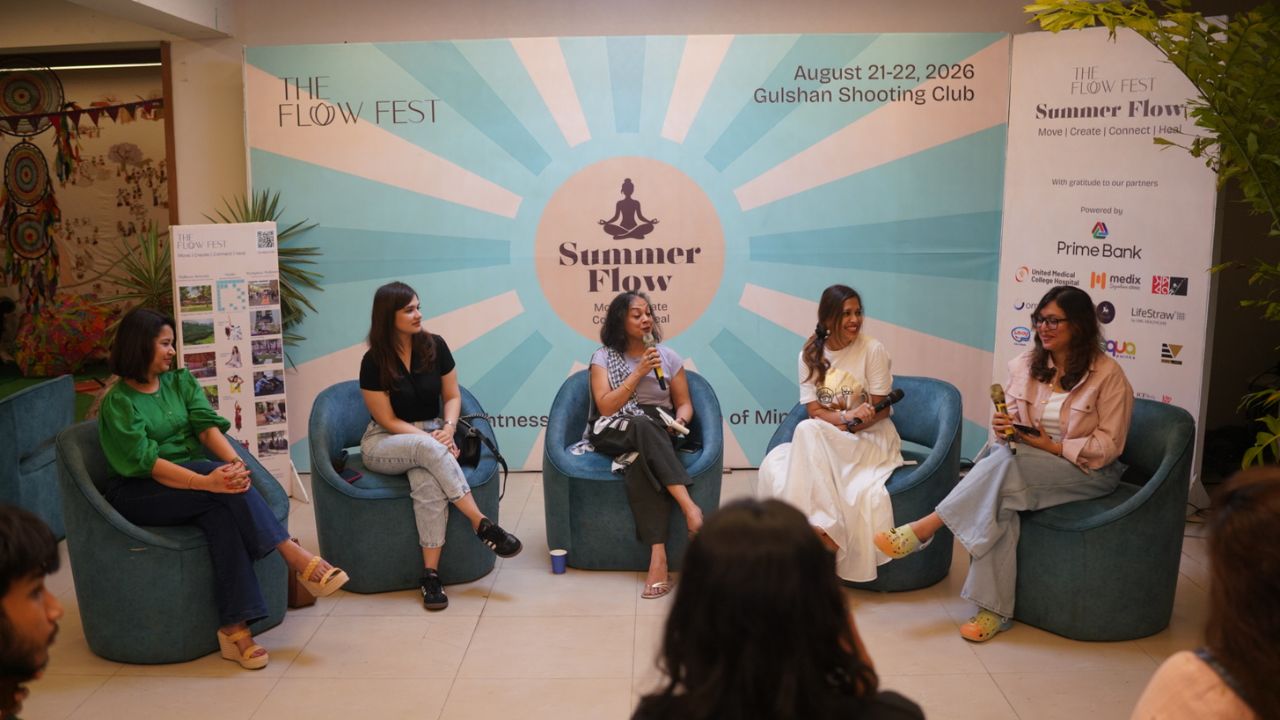
At the Shareapy Men’s Table, moderated by Nashid Ali, panelist Rashed Ahmed spoke about the small, unglamorous habits that end up shaping everything else. “If you’re not punctual in one place, you’re not punctual anywhere,” he said, encouraging the room to let themselves fail, learn from it, and let the people around them see that side of them too. Ali closed the session with a line that stayed with a lot of people in the room: “Never close doors. Cry if you need to, and share.”
A different kind of honesty ran through the Inclusive Wellness: Rohingya Response panel, moderated by Ashik Kabir, Sector Coordinator for the Rohingya Refugee Response. Alongside voices from UNHCR, ActionAid Bangladesh, AMAN, EBL and the Rohingya community itself, the conversation turned to dignity, and to what it takes to rebuild a path forward for the more than 1.2 million people living in the camps. Kabir walked the room through a skill-development framework now in its fourth year – a coalition of 50 organisations working on vocational training and self-employment, with products made by the Rohingya community on show for people to see and buy.
Fellow panellist Manuel Vincente spoke about protecting dignity as part of protecting wellbeing itself. Tanzeri Hoque of EBL spoke about the women and children at the heart of the response effort, before leaving the room with the line most people carried out with them: “Hope is a good thing. Probably the best thing. And it never dies.”
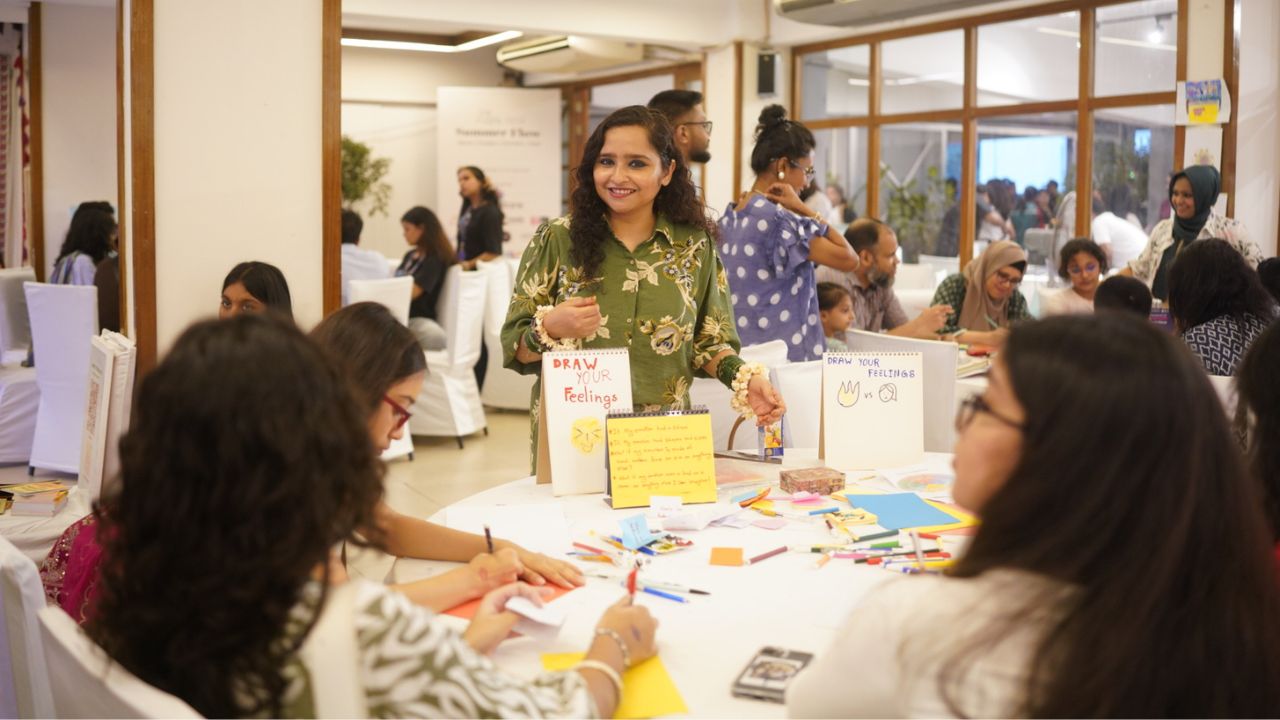
Some of the weekend’s quieter moments happened away from any stage. In one small circle, an older woman talked about what it looks like to model wellness for the people around her – mostly, she said, by giving herself permission to say no. Beside her, Tehreem, just beginning to pay attention to her own wellbeing, spoke about learning to be kinder to herself. Tashfia talked about pointing that same kindness towards others. Sahar was honest about the fact that her to-do list is probably never going to end. Zaria’s take was the simplest of all – that dreams don’t really have limits, so you might as well enjoy the walk there. None of it was staged, and none of it needed to be – just a handful of women, mid-festival, talking honestly about what wellness looks like once the performance is stripped out of it.
As the afternoon light faded, the festival shifted gears. Havana Salsa took over the dance floor, Project Dhk’s Creative Open Mic handed the room over to whoever wanted it, and Taboo: Poetry Slam gave local writers a stage to read work that didn’t hold much back.
It’s a different shape from last year’s edition, which spread across three days at Justice Shahabuddin Park under the theme “Healing as a Collective”, with more than a hundred sessions and upward of 150 stalls filling the park end to end. Summer Flow trimmed the run-time to a single weekend and moved indoors to Gulshan Shooting Club, trading scale for a tighter, more curated line-up. What carried over wasn’t the format so much as the feeling – a city giving itself permission to slow down, just with fewer days this time to actually do it in.
The Flow Fest has always rested on three simple convictions: Healing happens through connection, not isolation; healthy is supposed to feel good; and asking for help is courageous, never shameful. Nobody needed to say any of that from a stage this time.
It was there anyway – in a hall room dressed up as a forest, in strangers letting each other in, in a city that, for one weekend, agreed to slow down.