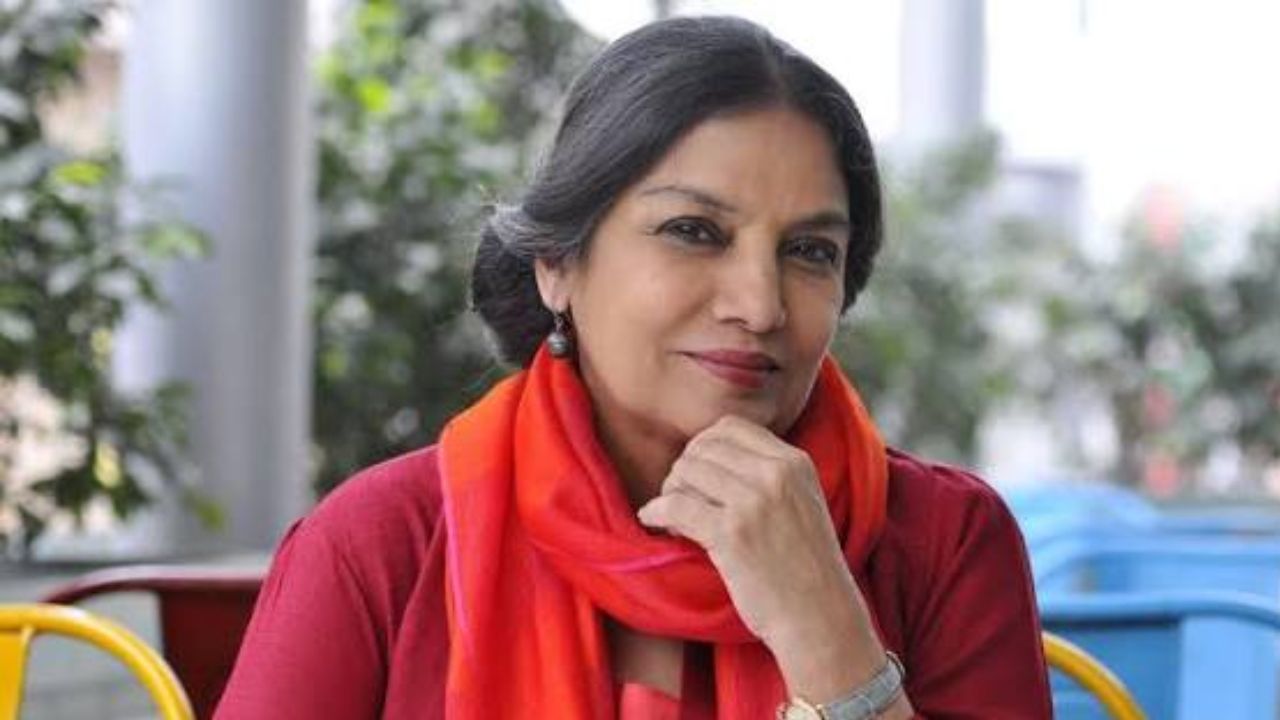

Veteran actor Shabana Azmi finds herself at the centre of two very different films that released on 14 August — Awarapan 2 and Batwara 1947, reports NDTV.
While the former has emerged as a box-office success, it is the latter that gives Azmi the space to truly showcase her acting prowess.
In Awarapan 2, Azmi plays Nafisa, also known as the Queen of Bangkok, a powerful crime lord who initially appears to be the film’s primary antagonist. Her introduction is striking, with a commanding entry and sharp one-liners establishing her authority.
Yet, despite the character’s importance to the story, the film does not give Azmi enough room to explore Nafisa.
Her character operates from the shadows, controlling criminal dealings, exposing traitors and eventually confronting Emraan Hashmi’s Shivam Pandit.

There is restraint rather than theatrical rage in her performance, but her limited screen time ultimately works against her.
Azmi has played morally complex and villainous characters before.
Her turn as the terrifying witch in Makdee remains one of her most memorable negative roles, while her performances as Rambhi in Godmother and Sheilaben in Dabba Cartel have also showcased her ability to inhabit characters with power and ambiguity.




Awarapan 2 had all the ingredients for another memorable Azmi performance.
Instead, Nafisa often feels like a character who is present without being allowed to fully dominate the narrative.
The same cannot be said about Batwara 1947, where Azmi plays Mai, an elderly Hindu widow stranded in Lahore during Partition.
Directed by Rajkumar Santoshi and based on Asghar Wajahat’s play Jis Lahore Nai Vekhya, O Jamya E Nai, the film follows Mai as she refuses to leave her ancestral home even after a Muslim family takes refuge there following Partition.
Azmi’s performance becomes the emotional heart of the film. Frail, frightened and desperately waiting for her son Ratan to return, Mai remains determined to hold on to her faith in humanity despite the violence surrounding her.
Her scenes carry an emotional weight that does not need exaggerated dialogue. One particularly harrowing sequence, in which Mai is dragged out of her haveli and humiliated by goons, demonstrates Azmi’s extraordinary command over physical and emotional performance.
Sunny Deol may headline Batwara 1947, but Azmi’s Mai becomes indispensable to its central message of humanity transcending religious divisions.
Ironically, the film that gives Shabana Azmi her most substantial role has received a lukewarm box-office response, while Awarapan 2 has opened to blockbuster numbers.
For Azmi’s fans, however, Batwara 1947 offers the more rewarding reminder of why she remains one of Indian cinema’s finest performers.
In Awarapan 2, she makes an impression and then disappears into the machinery of the plot. In Batwara 1947, she is the emotional core of the story.