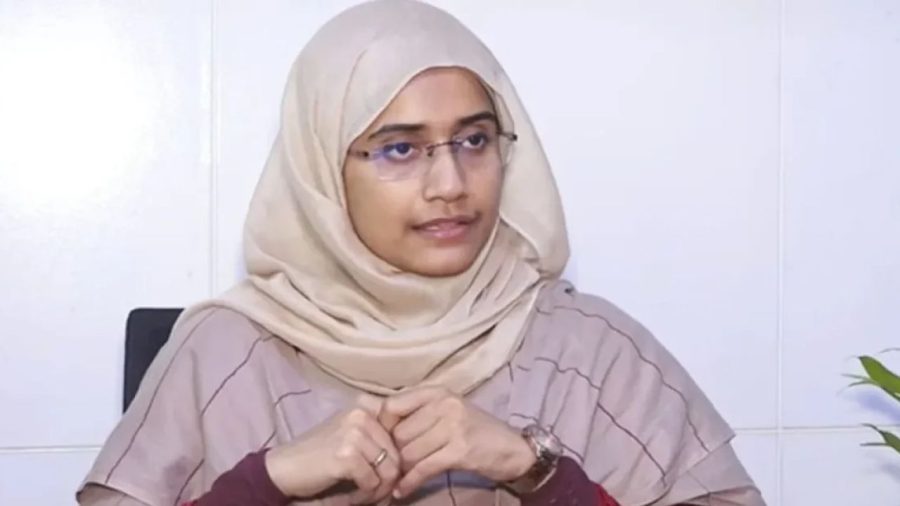



NCP Joint Convenor Samantha Sharmin has resigned from the party, citing differences over its alliance with Jamaat-e-Islami, electoral strategy, women’s political rights and internal democracy.
Announcing her resignation in a Facebook post on Thursday, Samantha said she no longer believed the party could remain faithful to the values on which it was founded.
She recalled taking a separate position nearly a year ago on the question of forming an alliance, arguing that Jamaat-e-Islami was neither an ethically nor strategically suitable partner and that the NCP would pay a heavy price for joining forces with the party.
Over the past 11 months, she said, she had submitted written complaints and proposals at different levels of the NCP and taken part in discussions and debates. She considered challenging the party’s adopted policies through recognised forums the only democratic way to steer it away from what she viewed as the wrong course.

Samantha identified four major areas of disagreement: the alliance with Jamaat, the 2026 election strategy, women’s role and rights following the 2024 mass uprising, and the restructuring of the party without holding a council.
Opposing the alliance with Jamaat, she said constitutional, legal and political reforms were central to the NCP’s political platform, whereas Jamaat did not consider such reforms part of its politics or state vision.
She also alleged that Jamaat was opposed to a democratic state system and had not apologised to the nation for its role in 1971.




On the 2026 election, Samantha said the NCP had an opportunity to challenge the old political order and turn the electoral contest into a broader political movement. However, by joining a major party in an alliance to contest the election, it had undermined its own political identity and the potential created by the mass uprising.
“By prioritising electoral victory over political victory, the NCP has also lost the credibility to object to election results under an unreformed system,” she wrote.
On women’s role and rights, she said women had played a crucial part in the 2024 mass uprising, but their political aspirations and fair share had been overlooked after the movement’s success.
The NCP had an opportunity to establish a new political culture based on gender equality but chose not to pursue that path, she added.

Regarding internal democracy, Samantha said the decision to restructure the convenor committee without holding a party council had weakened the NCP’s democratic environment and accountability.
Outlining her future political position, she said Bangladesh needed a politics of unity rather than division. Democracy, sovereignty, equal participation of women, economic justice and national interest should form the foundation of new political forces, she added.
Calling on young people to organise around new political initiatives, she wrote: “The challenge facing the youth of Bangladesh now is not just forming a new party, but building a political unity where dissent exists, but division will not be the driving force of politics.”
She also expressed her willingness to work with those committed to building a democratic Bangladesh.