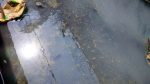
Residents of 12 villages in Pirojpur Sadar upazila have to take risky walk to cross a badly damaged bridge. They have laid wooden planks and pieces of areca palm trunks over broken sections to make it passable. Rusty iron rods stick out through gaps in the concrete, making the crossing dangerous. People can still walk across, but no vehicles can use the bridge.
The Jhautala Bridge has remained unrepaired for more than a decade and is now almost unusable, leaving around 20,000 people in the surrounding villages in severe hardship. Residents must make detours of up to five kilometres to reach the upazila town, increasing the cost of transporting agricultural produce and other goods.
Located about six kilometres from Pirojpur Sadar upazila town, the 45-metre-long and 2.59-metre-wide bridge was built nearly 30 years ago. North Shankarpasha village lies at its western end, while Banshbaria, South Shankarpasha, Kalikathi, Pangashia, Chithalia, South Gazipur, Rainkhali, Badokhali, Badura, Harina and Harina Gazipur are at its eastern end.
A visit to the site found several broken concrete slabs, with gaps exposing rusted iron rods. The bridge rattles and shakes whenever someone walks across it, adding to fears of an accident.

Rustom Ali Hawlader, 68, a local rickshaw driver, said he had fallen from the bridge with his rickshaw three years ago and still suffered occasional back pain.
“Vehicles cannot cross the bridge. We have to take a long detour to transport passengers and goods. Heavy loads have to be carried across on people’s heads,” he said.
Local resident Chan Mia Hawlader said even walking across the bridge had become frightening, particularly for children and elderly people.


“We have been hearing for a long time that the bridge will be repaired, but nothing has happened,” he said.
Tayeb Ali Hawlader said auto-rickshaws, vans, rickshaws and motorcycles once used the bridge. Residents now have to take longer routes during medical emergencies and other urgent journeys, spending extra time and money.
Rafiqul Alam said families had to carry elderly patients who could not walk across the bridge after getting them out of an auto-rickshaw. They then had to hire another vehicle on the other side to take them to hospital.
Habibur Rahman Akon said the damaged bridge was also increasing costs for farmers transporting their produce to the upazila town, sometimes preventing them from getting fair prices.
Abdur Razzak Mallik said the bridge was vital for trade, education and healthcare, adding that it became even more dangerous during the rainy season. He called for a new bridge or urgent repairs to the existing one.

Four educational institutions – Harina Abdul Hakim Secondary School, Harina Gazipur Government Primary School, South Harina Government Primary School and Baitul Huda Dakhil Madrasa – are located within one to three kilometres of the bridge. More than 100 students use it daily.
Local Government Engineering Department sub-assistant engineer Mohammad Mojibur Rahman, who works at its Pirojpur office, said a project proposal for repairing the bridge had been sent to Dhaka.
“The repair work will be carried out if the proposal is approved,” he said.
Residents of the 12 villages are still waiting for approval and the start of work. They are urging the authorities to repair the bridge or build a new one to end their longstanding suffering.