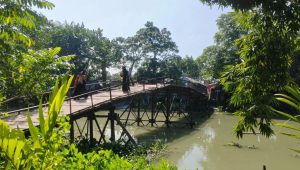
After nine months without tourists, nature has reclaimed much of Saint Martin’s Island, reviving lush vegetation, flowering dunes and clear coastal waters.
Sea morning glory carpets the sandy entrance, screw-pine forests thrive, and coral formations are visible beneath the waves, transforming the landscape of Bangladesh’s only coral-bearing island.
This hiatus gave the fragile ecosystem vital breathing space after years of unrestricted footfall, plastic waste and degradation.
Yet the return of holidaymakers raises a pressing dilemma: can the island welcome visitors without forfeiting the natural beauty it has just begun to recover?
Although the island reopened on 1 November, ship services began on 5 November.
Across the first seven days, just 6,018 tourists arrived aboard three vessels, far below the government’s daily cap of 3,500.
This sluggish start has left more than 250 hotels and resorts, offering roughly 5,000 beds, largely empty.
Business owners hope for a stronger turnout in December and January, though a surge risks placing renewed strain on the environment, setting livelihoods and conservation on a collision course.
A sluggish start to the season
Three vessels, MV Baro Aulia, MV Karnaphuli and MV Teknaf, are authorised to carry tourists between Cox’s Bazar and Saint Martin’s this season.

On 5 November, 837 visitors made the crossing. Over the next five days, 4,391 arrived: 2,149 aboard MV Baro Aulia, 1,223 on MV Teknaf and 1,019 on MV Karnaphuli.
Day six saw 594 arrivals, rising to 1,033 on day seven for a weekly total of 6,018.
With a combined vessel capacity of 2,298, sailings remained well under the 3,500 daily limit.
During the first five days, when up to 17,500 visitors could have travelled, fewer than a quarter did so.
A six-hour crossing deters travellers
The arduous journey is a major deterrent.
Departing from Nuniyachhara terminal in Cox’s Bazar, ships cover roughly 95 kilometres of sea, taking six to seven hours depending on tides.




Dhaka resident Kamrul Hossain, who sailed aboard MV Teknaf, found the trip exhausting.
“The first hour feels pleasant, but discomfort mounts as time passes,” he said.
“Seven years ago, I crossed from Teknaf in two hours. It was nothing like this.”
Steep fares also discourage travellers. Momenul Hakim, visiting from Rajbari with five relatives, noted return tickets cost Tk5,000 per person.
“Saint Martin’s is a favourite destination, so I brought my family, but lower fares would make it accessible to middle-income households,” he said.
Local traders believe restoring routes from Teknaf or Inani would shorten crossings and boost footfall.
Island businessman Mohammad Jasim Uddin said the former Teknaf-Saint Martin’s route reliably drew tourists and would benefit visitors and residents alike.
Meanwhile, Hossain Islam Bahadur, general secretary of the Sea Cruise Operator Owners Association of Bangladesh, explained that fares reflect crew wages, VAT, taxes and operating costs, though operators were weighing reductions and had introduced cheaper standing tickets.
Hoteliers await the December rush
Despite the quiet opening, hospitality businesses are preparing for peak winter demand. Across nine square kilometres, around 250 hotels and resorts can host 5,000 overnight guests.
Sarwar Kamal, director of Kingshuk Eco Resort in Golachipa, said his property had been refurbished with round-the-clock electricity and catering.
MA Rahim Jihadi, president of the Saint Martin Hotel and Resort Owners Association, confirmed strong advance bookings across nearly all properties for December.
Under government rules, the island remains open until 15 March next year, allowing overnight stays within the 3,500 daily limit.
Greenery returns, yet protection remains fragile
Ecological recovery is unmistakable. Sea morning glory binds the dunes, wildflowers line entryways, screw-pine trees stand greener with fruit, and coconut palms fringe clear waters above coral beds.

Visitor Atul Ahsan noted the stark change at the entrance, “Earlier, there were hardly any plants, and rubbish was scattered around. Now, sea morning glory, flowers and green screw-pines make it far more picturesque.”
To protect this revival, authorities introduced strict regulations. Visitors must pay a Tk100 conservation fee and obtain a travel pass and QR-code ticket.
Beach lighting at night, loud noise and barbecues are banned.
Entering screw-pine groves, harvesting their fruit, and driving vehicles, including motorcycles, on beaches are prohibited, as is collecting or harming coral, shells, starfish, horseshoe crabs, turtles, birds or seagrass.
Enforcement will decide the island’s fate
Environmentalists warn that rules will falter without oversight and waste disposal.
HM Nazrul Islam, organising secretary of Bangladesh Poribesh Andolon’s Cox’s Bazar unit, urged authorities to publicise guidelines aboard ships and at terminals, while ensuring conservation fees are properly spent.
Kefayet Khan, vice-president of the local hotel and resort association, called for state-backed monitoring teams to protect sensitive habitats.
The Coast Guard conducts regular patrols, with Saint Martin’s station commander Lieutenant Commander Maruf Ahmed Soukhin noting personnel also raise visitor awareness on the ground.
Meanwhile, the Department of Environment has planted 6,500 trees, hired nine conservation staff, and placed red flags to cordon off fragile zones.
Khandaker Mahmud Pasha, deputy director of the department’s Cox’s Bazar office, stressed that sea morning glory stabilises dunes while screw-pines guard against coastal erosion, serving as vital natural defences, not merely scenic backdrops.
As arrivals rise in December and January, the challenge lies in preventing past pressures from returning.
Tourism sustains local livelihoods, yet without disciplined waste management and enforcement, Saint Martin’s renewed greenery could swiftly vanish once again.