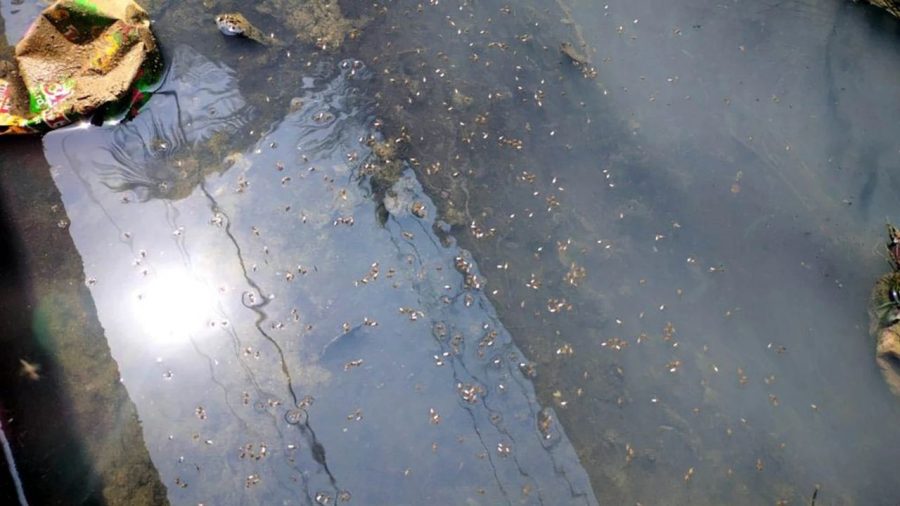



Residents of Naogaon are struggling with a growing mosquito infestation, particularly after sunset.
Mosquitoes are invading homes, offices and businesses despite the use of coils, sprays and electric mosquito bats.
The nuisance is disrupting students’ studies and people’s daily activities, while rising dengue cases have added to public concern.
Residents blame uncollected rubbish, dirty drains, stagnant water and neglected water bodies for creating mosquito breeding grounds.
Although insecticide is occasionally sprayed in some areas, residents say they have seen little improvement and question the municipality’s efforts to control the infestation.
The problem has worsened over the past month, affecting homes, hospitals, bus terminals, offices, businesses and public spaces.

Children and elderly people are among those struggling to escape mosquito bites.
Fariha Tabassum, a college student from Tazer More, said studying after sunset had become difficult because of the mosquitoes.
“Even mosquito coils cannot protect us from their bites. The number of insects has also increased. We have not seen any mosquito-control spraying in our area,” she said.
Shahin Hossain, a resident of Par-Naogaon, questioned the municipality’s response despite an increase in municipal taxes.




Kalam Hossain, a businessman from Muktir More, said the infestation had made it difficult to sit in his shop after sunset, even with mosquito coils.
He also urged residents not to dump rubbish indiscriminately or allow water to collect in flower pots and other containers.
Naogaon’s Deputy Civil Surgeon Dr Munir Ali Akand said mosquitoes breed throughout the year, but their reproduction increases as temperatures rise after winter.
Drains, stagnant water and dirty water bodies provide suitable breeding grounds.
He said controlling larvae at breeding sites was more important than simply killing adult mosquitoes.
He urged residents to prevent water from collecting on rooftops, in flower pots and in other containers, warning that Aedes mosquitoes could spread dengue.
Applying larvicide to drains and overgrown areas could help control their breeding, he added.
Meanwhile, dengue infections are adding to concerns.
According to the Civil Surgeon’s Office, another 12 patients were diagnosed with dengue and admitted to government hospitals in the district in the past 24 hours.

No dengue-related deaths were reported during the period.
From 1 January to 11 November this year, Naogaon recorded 734 dengue cases.
Of them, 705 patients recovered, while 29 remain under treatment at government hospitals.
One person has died from dengue in the district this year.
Naogaon General Hospital currently has 11 dengue patients, while Patnitala and Sapahar have five each, Niamatpur four, and Atrai and Porsha two each.
Responding to complaints about mosquito control, municipal administrator TMA Momin said insecticide spraying in drains, stagnant water and overgrown areas was continuing.
Fogging operations had also started and were under way, he said, adding that further measures would be taken if necessary.