A pervasive and intensifying campaign to recruit university students into Russia’s newly formed drone units is creating unprecedented friction within the country’s education system, as the Kremlin seeks to sustain its four-year war in Ukraine.
Students and legal experts have described a “colossal” environment of institutional pressure, where the promise of high-tech training is increasingly backed by threats of expulsion and involuntary conscription, reports CNN.
The recruitment drive, which accelerated in January, follows the Russian Ministry of Defence’s official establishment of the Unmanned Systems Forces.
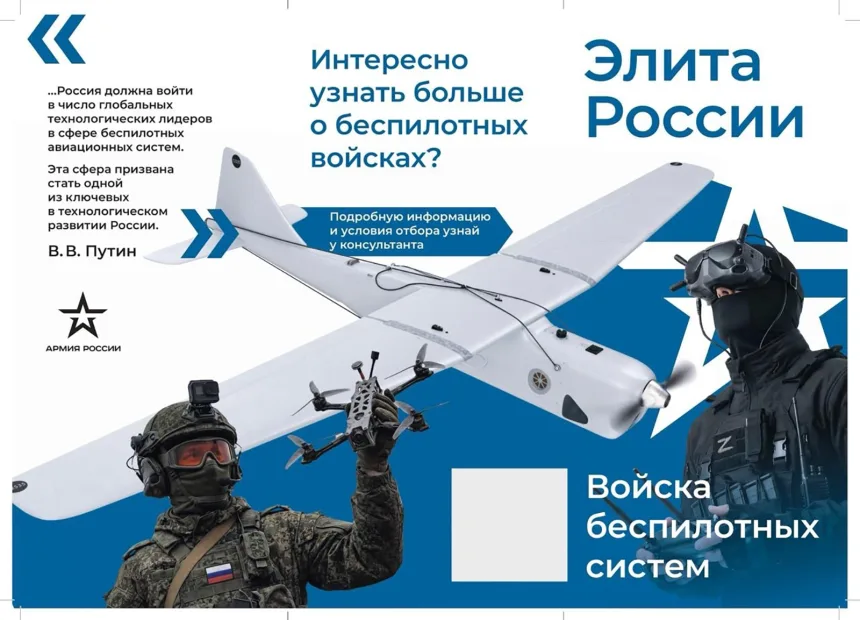
This new military branch, dedicated to warfare involving unmanned aerial vehicles (UAVs), has become the centrepiece of a multifaceted propaganda effort targeting Russia’s youth.
E-sports pitch: Gamers to operators
The Kremlin’s strategy appears specifically tailored to appeal to a generation raised on digital media. Recruitment material often frames drone operation as a natural progression for video game enthusiasts.
At the Kazan State University of Architecture and Civil Engineering, promotional videos explicitly tell students that the time they spent on video games was not wasted, asserting that their digital experience is now “especially valuable” to the state.
Similarly, at the Plekhanov Russian University of Economics in Volgograd, recruitment videos employ gaming terminology, showing split-screen comparisons between gamers and drone pilots with captions urging students to “choose the right skin.”
Several recruitment posts reviewed by researchers indicate that individuals identified as “e-sports players” or “gamers” are being given priority in the application process.

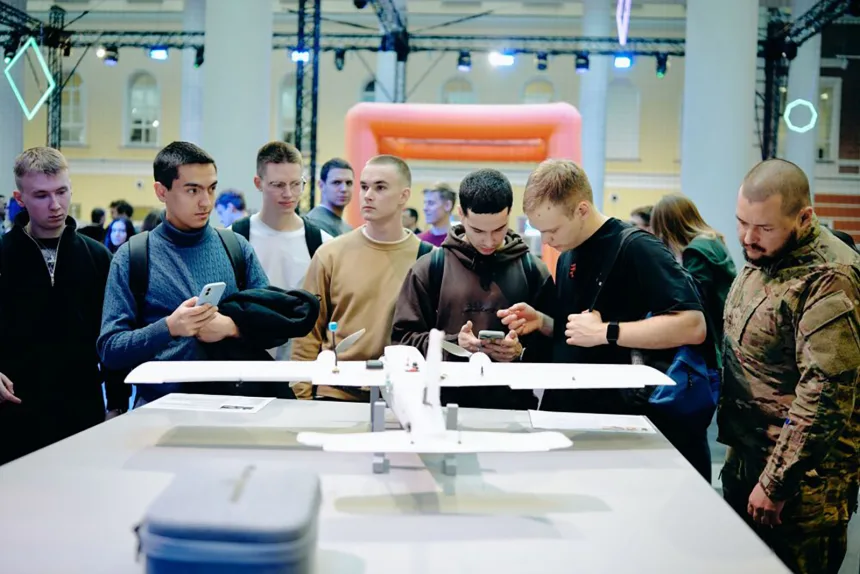
Major academic institutions are at the heart of this effort. The Higher School of Economics in Moscow, currently ranked second on the 2025 Forbes list of top Russian universities, hosted an “Unmanned Systems Festival” in February.
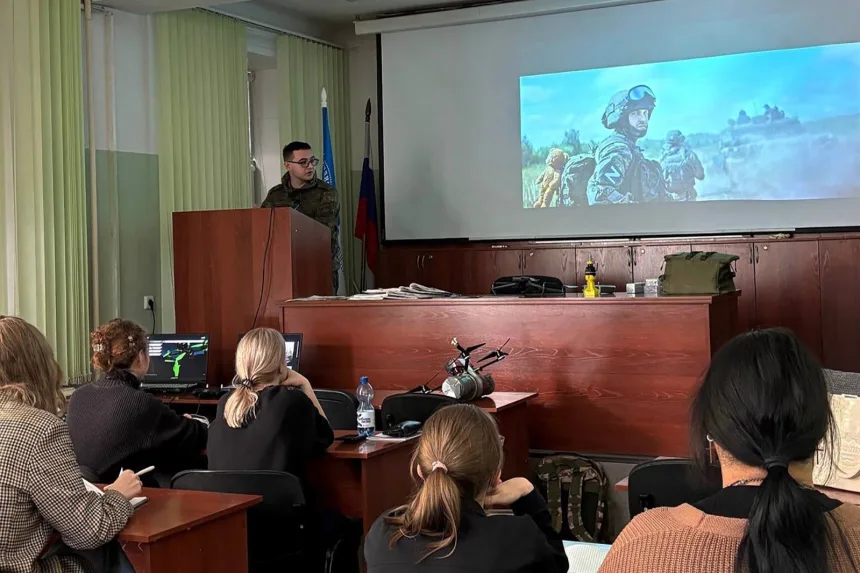
The event featured prominent recruitment posters for the country’s drone forces. Even President Vladimir Putin’s alma mater, St. Petersburg State University, has utilised its website to advertise military contracts alongside lengthy video lectures from military personnel detailing the benefits of enlistment.
The ‘Mobilisation Trap’
To entice students, the Ministry of Defence is offering what appear to be highly lucrative terms. These include promises of one-year, fixed-term contracts, the opportunity to acquire “unique knowledge,” and the assurance that service will take place in the “rear,” safely away from the front lines.
The financial incentives are equally substantial. While federal and regional sign-on bonuses are set at a minimum of 400,000 rubles (approximately $5,000) each, some elite institutions are offering far more.
St Petersburg State University has advertised one-off payments of roughly $56,000 for those joining the military, with base annual salaries reaching nearly $70,000.




However, legal experts and human rights advocates warn that these promises are deceptive. Artem Klyga, a Berlin-based Russian military lawyer, described the offers as “a lie,” noting that the contracts are standard, open-ended military agreements without special terms.
The core of the “trap,” according to Sergey Krivenko, head of the human rights organisation Citizen. Army. Law., lies in the 2022 “partial” mobilisation decree.
Because President Putin has never formally cancelled that decree, all military contracts are automatically extended until the mobilisation period is declared over.
“When the year ends, the student – now already a service member – will not be dismissed,” Krivenko warned. Furthermore, Grigory Sverdlin, leader of the anti-war charity Idite Lesom (“Get Lost”), pointed out that the Ministry of Defence retains the power to reassign recruits to any unit.
“As soon as the person signs the contracts, he is literally a slave of the Ministry of Defence,” Sverdlin said, noting that promises of rear-line service are unenforceable.
Coercion and academic leverage
Despite the “slick” recruitment videos and high salaries, many students remain deeply sceptical. Consequently, universities are allegedly turning to more coercive tactics to meet recruitment targets.
A primary tool of coercion is the management of “academic debt”—uncompleted coursework or failed exams. Students at various institutions reported being called to group meetings specifically for those with missing credits.
In one instance, a student claimed the university “student office” threatened to expel a third of his group, pressuring them to sign military contracts on the spot to retain their academic standing.
There are also reports of universities abruptly shortening deadlines for outstanding assignments to March 31, making it nearly impossible for struggling students to pass and thereby leaving them vulnerable to immediate conscription.
One student described a particularly predatory approach where staff targeted first-year students struggling with mental health issues or financial difficulties.
These students were invited to “personal conversations” and told that joining the drone forces was the best way to avoid mounting debt and guarantee they would not fail their degrees—an approach the student characterised as “emotional abuse.”
Strategic necessity and political risk
The aggressive nature of the campus campaign reflects the growing strain on Russia’s manpower.
While the Kremlin has largely avoided a repeat of the unpopular 2022 mass mobilisation, Western officials estimated in February that Russian battlefield losses have begun to exceed recruitment rates.
Ukrainian President Volodymyr Zelensky claimed that by late March 2026, Russia had lost 89,000 troops while managing to recruit only 80,000 in the same period.
Kateryna Stepanenko, the Russia team lead at the Institute for the Study of War (ISW), suggested that these tactics indicate the Kremlin is expanding its powers to conduct “more coercive sort of recruitment than ever before.”
While Kremlin spokesman Dmitry Peskov described the campaign as a “completely open offer,” analysts warn that the strategy carries significant domestic risk.
By transforming universities—long considered safe havens from the draft—into recruitment pipelines, the Kremlin risks alienating the country’s youngest voters.
Students are increasingly aware of this “oppression” and are unlikely to become supporters of the current regime as a result.
For the students themselves, the university environment has shifted from a place of learning to a source of anxiety.
“Government institutions are now a source of threat,” one student told researchers. Another remarked that “every passing year feels scarier than the last,” as the shadow of the war continues to loom over Russia’s academic halls.