
The hall fell quiet long before the music began. Every seat was filled. Latecomers searched for a place to stand. Conversations faded into anticipation as hundreds of people waited for the woman whose voice has accompanied generations of Bangladeshis. Some came to relive memories. Others came to witness history. They all knew they were about to experience something rare. After 62 years on stage, Bangladesh’s legendary singer Runa Laila was finally presenting her first full-length solo concert at the Bangladesh Shilpakala Academy.
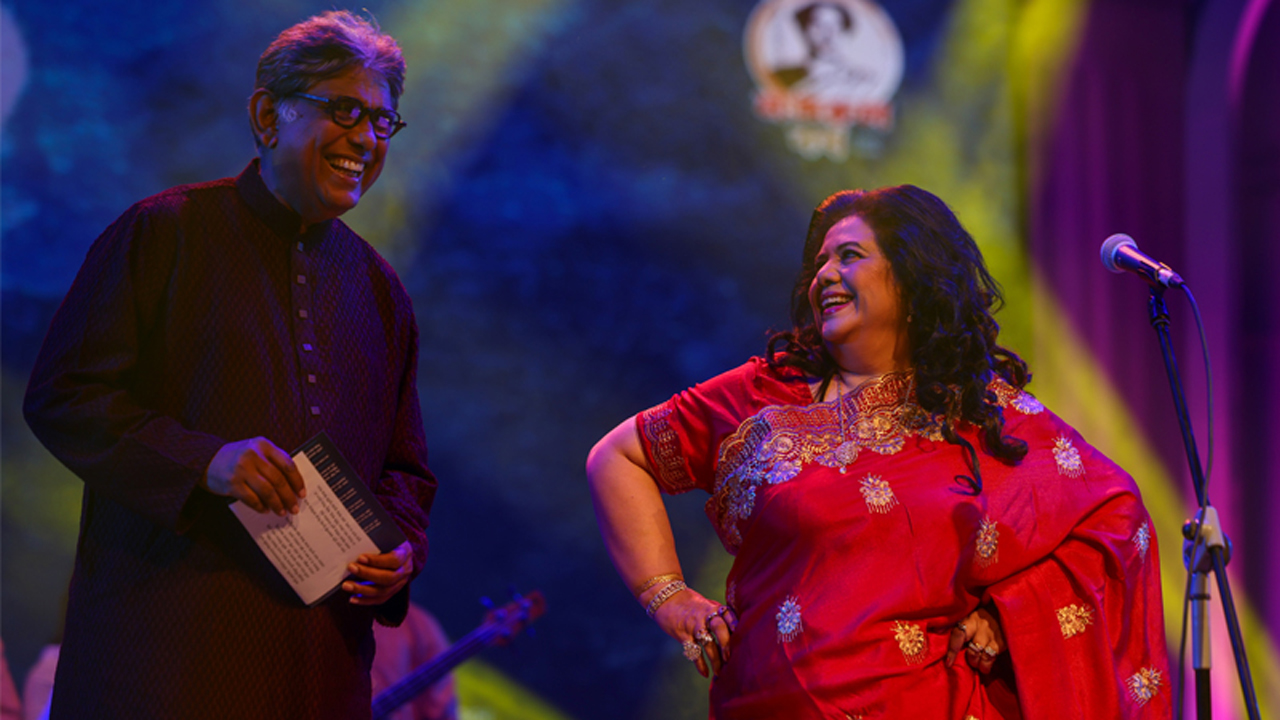
Actor Afzal Hossain welcomed her with a tribute worthy of the occasion.
“Bangladesh is a land of six seasons,” he said. “The singer whose voice carries the colours of all six is Runa Laila.”
The applause grew louder.
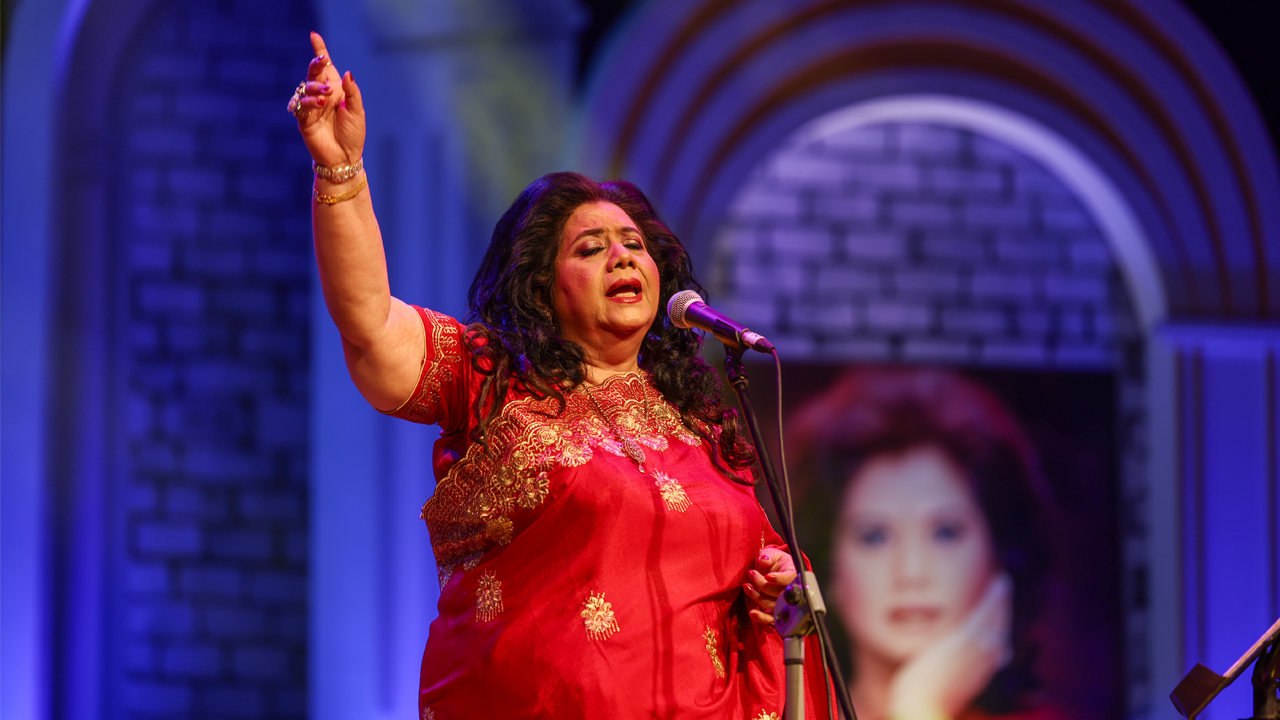
As the lights dimmed, she stepped onto the stage wearing an elegant red saree. The auditorium erupted in applause. She greeted the audience with a warm salam before paying tribute to the nation’s Liberation War heroes and Language Movement martyrs. Then came the opening song, Desher Jonno Jara Diye Gecho Pran, setting an emotional tone for the evening.
Many in the audience had quietly wondered whether the 74-year-old legend would sing live. Runa Laila herself answered that question within moments.
“I always prefer singing live,” she told the audience before proving exactly why. Every note carried warmth, emotion and effortless control. More than six decades after beginning her career, her voice still held the audience captive.
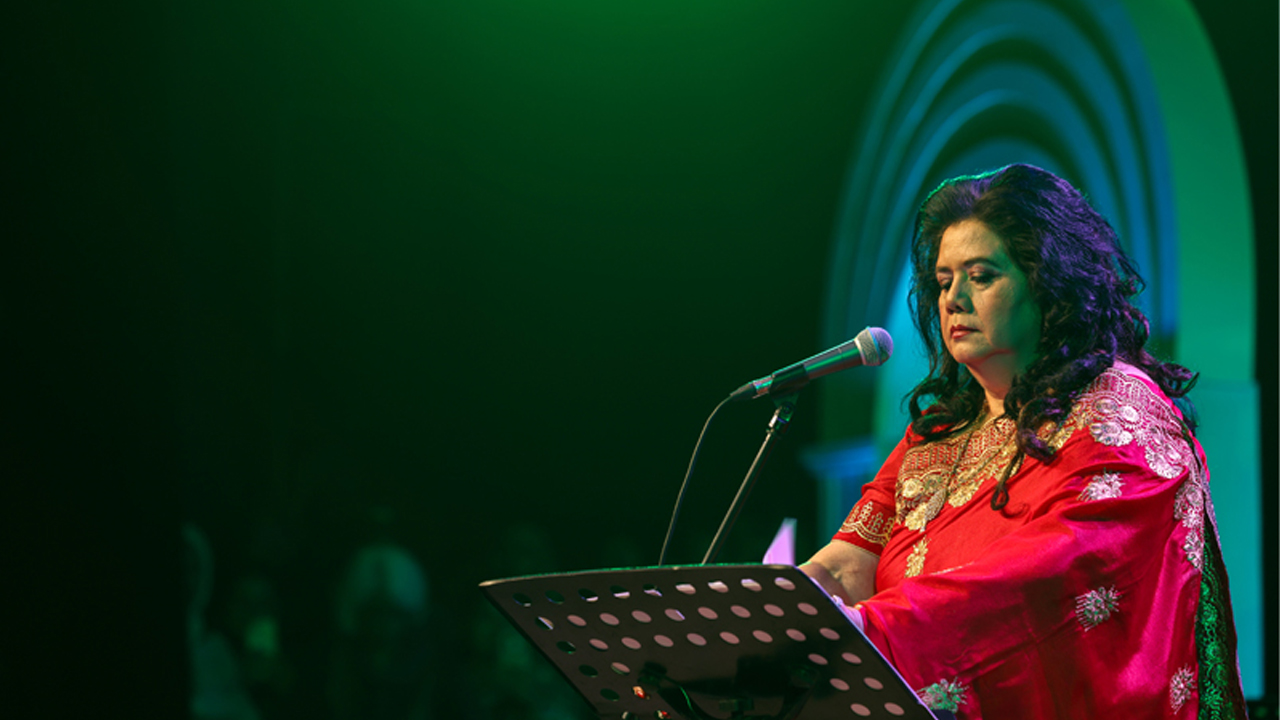
Across an extraordinary career, Runa Laila has recorded more than 10,000 songs in 18 languages. She also appeared in the film Shilpi, which was inspired by her own life. When she performed the film’s title song, the audience instantly joined in. The entire hall became one giant chorus.

Despite her age, Runa remained on her feet for almost the entire concert. Afzal Hossain gently persuaded her to sit for a brief rest on a couple of occasions. He also noticed she was perspiring while performing. Yet the singer never allowed her energy to fade.
During Shilpi, she playfully swayed to the rhythm and even invited Afzal Hossain to dance with her. He politely declined. After the song, she laughed and joked that she could have made him dance if she wanted. Afzal replied with equal humour, saying he had learnt only a single dance movement for a stage production decades ago and knew nothing beyond that.
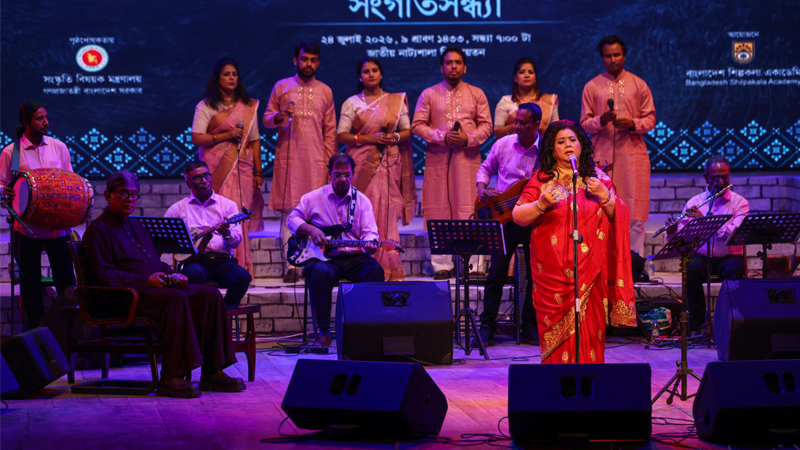
The evening unfolded as more than a concert. It became a journey through memories. Between songs, Runa opened the pages of her life. She spoke about her elder sister, Dina Laila, who unknowingly shaped her musical destiny. While a music teacher visited their home to teach Dina and a dance instructor came for young Runa, she secretly learnt to sing simply by listening to her sister’s practice sessions. Remembering Dina, who died on 27 December 1976, left the legendary singer visibly emotional.




Runa also reflected on a career that earned her equal admiration across Bangladesh, India and Pakistan. Afzal Hossain recalled a famous remark by renowned Indian journalist Khushwant Singh, who once joked, “Give us Runa Laila and we will give you the Farakka water.” Smiling, Runa responded with unmistakable pride: “But I never left. I stayed here, and I will remain here.”
She then shared another cherished memory. While living in Karachi, filmmaker Nazrul Islam and music director Subal Das visited her home and asked whether she would sing a Bengali song for the film Swarlipi. She immediately agreed. Moments later, she performed the film’s timeless classic Gaaner-i Khatay Swarlipi Likhe, transporting many in the audience back to the golden era of Bangladeshi cinema.
Afzal Hossain offered one final memory of his own. He recalled that about four decades ago, after rehearsals at Bangladesh Television, he was almost left speechless when he first saw Runa Laila. He said she had never made herself easily accessible, which was why she deserved to be called not merely a star, but a superstar.
One timeless song followed another. Je Jon Premer Bhab Jane Na, Amay Genthe Dao Na Ekta Polash Phuler Mala, Bondhu Tin Din, Onek Brishti Jhore and Sadher Lau filled the auditorium with nostalgia. Although she rarely performs Nazrul songs on stage, she chose the occasion to sing Bhulite Pari Na. Every song seemed to unlock a different memory for the audience.


By the time Sadher Lau began, the atmosphere had transformed completely. Children, young fans and elderly admirers all moved to the rhythm from their seats. Smiles spread across the hall. The audience no longer watched the concert; they became part of it.
Then came the finale everyone had been waiting for. As the unmistakable beats of Dama Dam Mast Qalandar echoed through the auditorium, the energy reached its peak. When the final note faded, the entire hall rose as one. The standing ovation lasted for several minutes. It felt less like applause and more like gratitude for a lifetime devoted to music.
The concert, titled Shilpi Ami Tomaderi Gaan Shonabo, marked Runa Laila’s first full-length solo performance at the Bangladesh Shilpakala Academy. During the event, she also received a special honour from Cultural Affairs Minister Nitai Roy Chowdhury. State Minister for Cultural Affairs Ali Newaz Mahmud Khayyam, Cultural Affairs Secretary Kaniz Mowla and Bangladesh Shilpakala Academy Director General Sheikh Rezauddin Ahmed also attended.
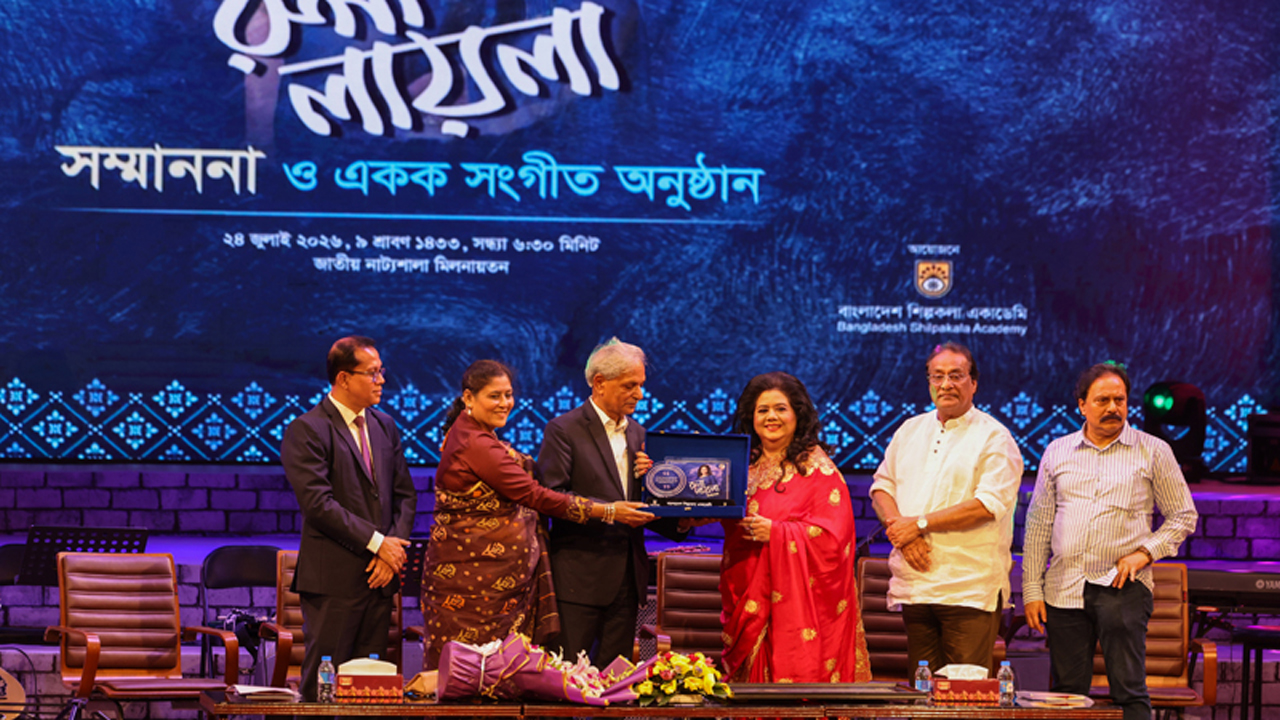
Addressing the audience, Nitai Roy Chowdhury praised Runa Laila’s lifelong contribution to music, saying her songs had transcended generations, enriched Bangladeshi music and elevated the country’s cultural identity on the global stage.
Ali Newaz Mahmud Khayyam said the government had undertaken initiatives to honour the country’s distinguished artistes and described the event as part of that effort.
Organisers said all proceeds from ticket sales would go to the Prime Minister’s Relief Fund to support flood victims. The academy had previously organised similar solo concerts honouring legendary singers Sabina Yasmin and Syed Abdul Hadi.
An 11-member ensemble accompanied Runa throughout the evening. Among them were renowned musician Fuad Naser Babu and music director Maksud Jamil Mintu. As the concert drew to a close, Runa thanked every instrumentalist, chorus singer and audience member. Then, with visible emotion, she quietly said that perhaps they might never meet again.
Asked whether anything remained unfulfilled after a remarkable career spanning 62 years, Runa Laila smiled and said she had no regrets. Her only wish was to keep singing for the rest of her life.
For nearly three hours, thousands of people laughed, sang, reminisced and applauded alongside a woman whose songs have become part of Bangladesh’s collective memory. Long after the lights went out and the final applause faded, one feeling lingered inside the auditorium: some concerts entertain, but a very rare few become history. On Friday night, Runa Laila gave her audience one of those unforgettable nights.