


The Rooppur nuclear power plant will become the game changer for electricity generation. Many people are still concerned about the outcomes, especially considering operations; rest assured that everything will go well. This is achievable once workers and managers follow the procedures and blueprint of operations.
Think about it: the nuclear power plant will reduce the budget for electricity generation while sustaining the grid and the supply.
Bangladesh imports 62.5 percent of primary energy – a rise from 47.7 percent within 4 years. Fossil fuel burning, meant for electricity generation, produces the highest amount of carbon emissions.
This, combined with the natural disasters and climate change the country faces, creates an annual loss of $7-8 billion. This is not a small amount. Climate change comes from rapid urbanisation, deforestation, and the diminishing of water bodies.
Another culprit that plays a role in the devastation of the climate and the financial burden is the burning of fossil fuels, oil-based and coal-based sources. It is further worsened by the presence of lowlands, high population, carbon emissions, and the climate shifts of neighbouring countries.
To prevent further devastating situations, we need to take action and make commitments to create ‘clean’ energy. This is energy with low-carbon emissions and sufficient generation.
The government discussed using solar panels as a form of renewable energy. Although it is a great initiative, it does have its consequences. Natural resources are the sole providers of renewable energy. Given the weather conditions of Bangladesh, getting an adequate number of natural resources is unpredictable.
Taking solar panels as an example, one day there might be enough sunlight for the perfect amount of electricity to be generated. But the next day, the sky may be cloudy, thus providing little sunlight. The same with the wind. One day may give a great wind level, turn the blades, and generate electricity.

The same may not be found the next day. To overcome these obstacles, certain alternatives need to be taken.
The government stated that around 5,000MW to 10,000MW of electricity can be generated through solar panels. But will it be a great choice? First of all, there will be instability in the grid.
This will degrade the grid and make it less efficient than it already is. Since it is unsure of a constant level of natural resources for proportionate electricity, the base load – the source of electricity – has to be increased to constant levels.
Bangladesh’s entry into the nuclear age and becoming the 33rd country to generate electricity with nuclear power is a marvelous goal. It is the delaying of starting operations that is creating a financial burden. In my opinion, nuclear energy is the greatest alternative for a renewable source of energy.
It will not only be renewable, but it will also maintain grid stability and provide clean electricity to everyone.



If the project started when the exchange rate was 85 takas to a Dollar, it would be financially beneficial. Now that the rate has gone up to 125 takas to a Dollar, we have to bear the consequences. This is especially considering the purchase of new equipment and parts.
Speaking of equipment and parts, there is a high chance of extensive failures. These have been bought and kept for a long time, degrading their lifespan. This is one of the biggest challenges that we have to face. Also, it is possible to set up two more units for a quick start.
At this time of need, we need to look at stabilising the electricity demand of the country.
To provide a supporting role for the power plants, it is necessary to create ‘islands’ – small cities around the premises that will house the employees, employers, and their families, giving them all the facilities they need.
A great example can be the one of Chelyabinsk in Russia. schools and colleges can be built for the children to get their share of education, malls and markets can be built for supplies and necessities, and so on. There should be no restrictions on who can set up their business in the premises.
Non-residential people should have the right to conduct their business, as it will be another booster for the regional economy. This should be done by keeping in mind that Rooppur is now no longer just a regional spot, but an international tourist spot as well.
As the people living in these islands are connected with the Rooppur power plant, there will be a flow of a similar mindset – employees living in these islands will keep the steady flow of skills in and out. Foreign skills will have limited access to the premises. As mentioned, nuclear power plants work not on science, but completely on engineering.
Just operating the power plant will not be sufficient.
Our employees and employers have to gain the skills needed to operate in a safe manner. The project is contracted with Russian companies until 2028. Even if they help now, we have to look into the future. The workers have to get sufficient skills so that the work can continue smoothly even after the contract expires.
Policies regarding how the spent fuel will be imported and how the waste will be managed are other important topics. Negotiations with Russia have to be concrete and clarified beforehand. Alongside, the amount and the quality of the fuel will also have to be clarified.
Many people have misconceptions about the safety of operating a nuclear power plant in Bangladesh. All of these stem from the way Hollywood and certain entertainment media frame it. Yes, there are incidents of critical levels. But it has to be noted that incidents can teach the future and bring aspirations.
The iconic Chornobyl disaster is, no doubt, due to human error. The workers in Rooppur have to be examined and evaluated thoroughly every day. People working at the plant should be encouraged to ask questions without boundaries.
The management should provide concrete and detailed answers to these questions. If all the information is given in a detailed manner, then there will be a lower chance of human error. The operations have to be done on an engineering basis with no room for scientific experiments.
Talking about structure, we have obtained further design improvements since the Fukushima incident. There are two chambers responsible for their duties. The inner chamber is the most critical part as it deals with the reactions and the heat.
Just outside of the inner chamber is another semi-chamber responsible for dissipating and controlling the heat and the radioactivity so that it does not get exposed to the outside world. The outer chamber, on the other hand, is responsible for dealing with natural causes and accidents. When we were designing the plant, we thought of every ‘exaggerated event’ such as a 9-scale earthquake, extreme flooding and rain, and so on.
From the operations perspective, there will be some noise and dust in the atmosphere due to the adjustment of the structure. After that, there is little noise and heat is dissipated into the atmosphere. People think that living or agriculture will be a challenge. But this is not true.
There will only be a slight increase in the temperature, but it will not affect the ozone layer in any way. The latest generation of materials and equipment are used in Rooppur just to keep everything and everyone safe from harm.
I suggest a ministry to oversee the entire operation and progression. Countries with nuclear capabilities have a ministry that handles all the problems and suggests improvements.
In a small country like Bangladesh, there are many electric companies that fail to provide sufficient electricity for the whole nation, while taking money from consumers without providing electricity. I think that one or two companies are enough to run Bangladesh.
Should this be the case with nuclear energy, it would be a disaster for the company, the project, and the nation. Unfortunately, there are no clear policies provided till now, and it becomes a headache, especially with the delay.
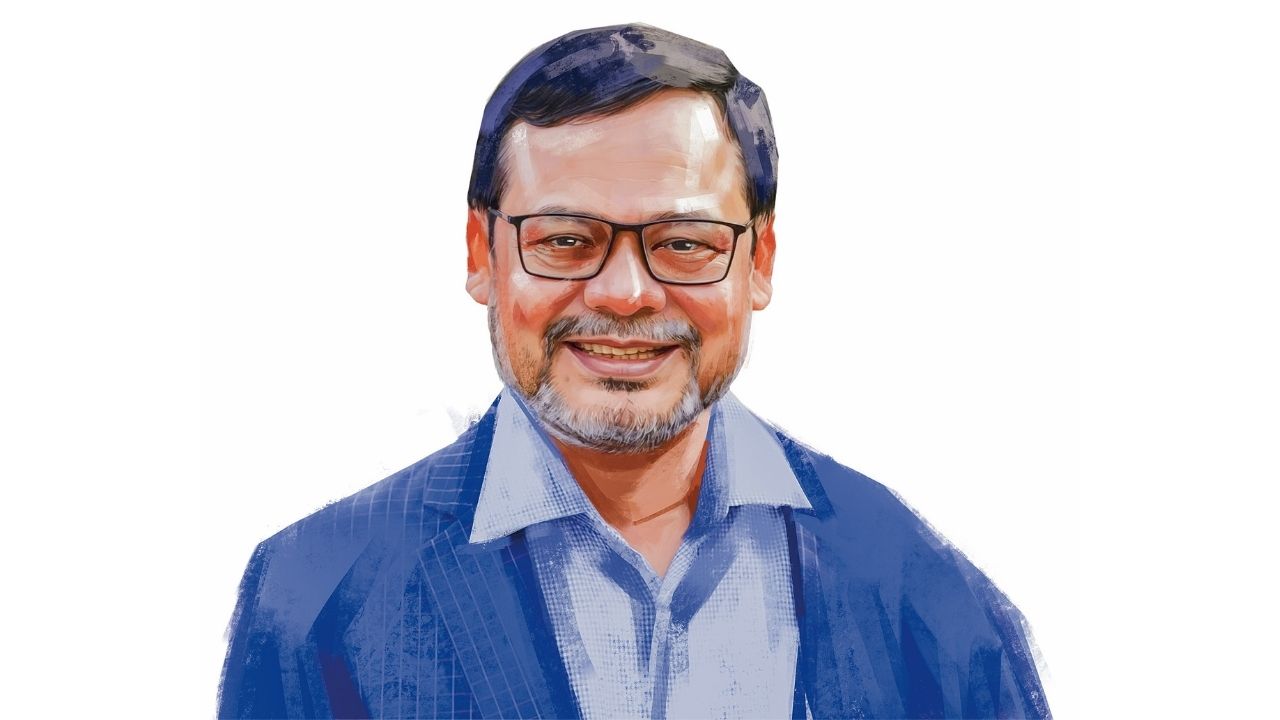
The author is a Professor, Department of Nuclear Engineering, Dhaka University.