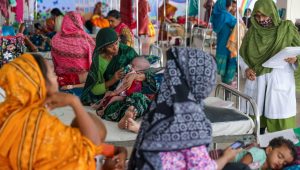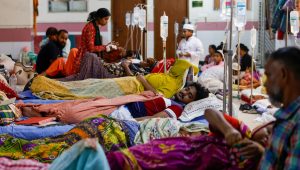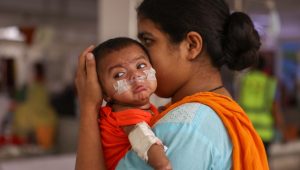




A mother from Kushtia has spent two days sitting outside a paediatric ICU reception in Rajshahi Medical College Hospital, waiting for a bed that has yet to become available for her critically ill child.
Latifa Begum says her child’s condition continues to worsen as she waits in a long queue for intensive care.
“There are many ahead of us, they say no beds are free,” she said, her voice trembling. “We have been here for three days, but still no ICU support.”
Inside the hospital’s paediatric wards, the scale of the crisis is stark. There are just 160 beds across three wards, yet between 600 and 800 children are admitted daily, forcing many to go without critical care.
Doctors say the consequences are severe.
Dr Abu Hena Mostafa Kamal, in charge of the ICU department, said 44 children died between 10 March and 26 March while waiting in the ICU queue.
“In many cases, when their turn comes and we call the family, they tell us the child has already died,” he said.
Over the past two and a half months, the situation has been even more alarming. A total of 53 children died without receiving ICU care, while nine more died despite being admitted. In total, 62 child deaths have been linked to the ICU shortage, with most cases involving pneumonia and measles.
The hospital initially dismissed such reports as “misleading”, “exaggerated” and “rumours”, but later acknowledged the figures.

Dr Shankar K Biswas, spokesperson for Rajshahi Medical College Hospital, said the crisis reflects broader weaknesses in the healthcare system.
The situation has drawn a sharp response from Health Minister Sardar M Sakhawat Hossain.
Speaking at a medical ethics event in Dhaka on Saturday, he blamed hospital authorities, saying he had not been informed that there was no neonatal ICU at the facility.
“The hospital director did not inform us,” he said, adding that those responsible should face strict consequences.
With the government struggling to rapidly supply ventilators, the minister said he had personally arranged for three to be delivered to the hospital and promised three more.
However, questions remain over why the crisis was not anticipated.
Rajshahi Medical College Hospital currently operates a 40-bed ICU unit, which is being run through internal arrangements.
Of these, 12 beds are designated for adults and 16 for geriatric patients, leaving only 12 beds available for children. Yet between 40 and 50 children are waiting for an ICU bed each day.
On 26 March, a total of 48 children were in the queue for ICU admission.
Hospital Director Brigadier General PKM Masud Ul Islam declined to take responsibility and did not provide a clear explanation when asked why preparations had not been made in advance. He also did not respond to repeated requests for comment.
He said that on Wednesday alone, around 750 children were admitted across two units, with about 5 per cent – roughly 35 to 40 patients – requiring ICU support, despite there being only 12 ICU beds available.
Inside overcrowded wards as ICU crisis deepens
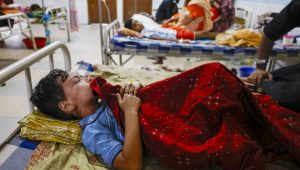
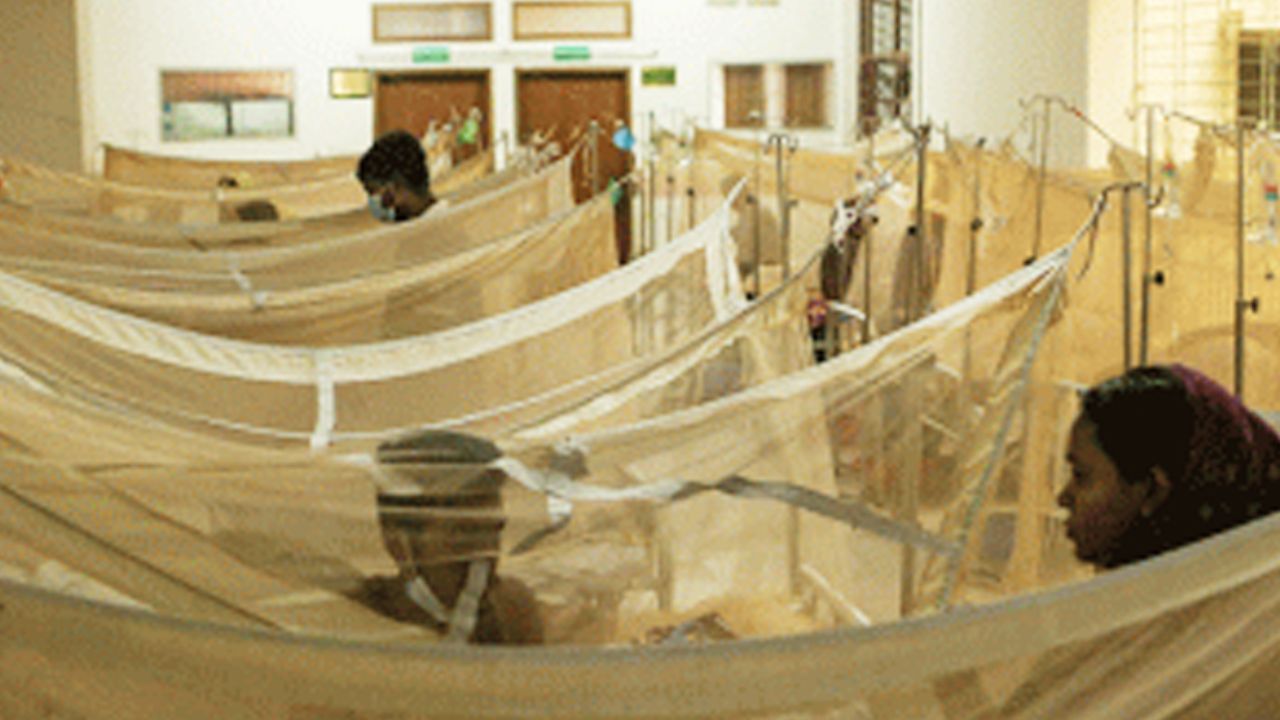
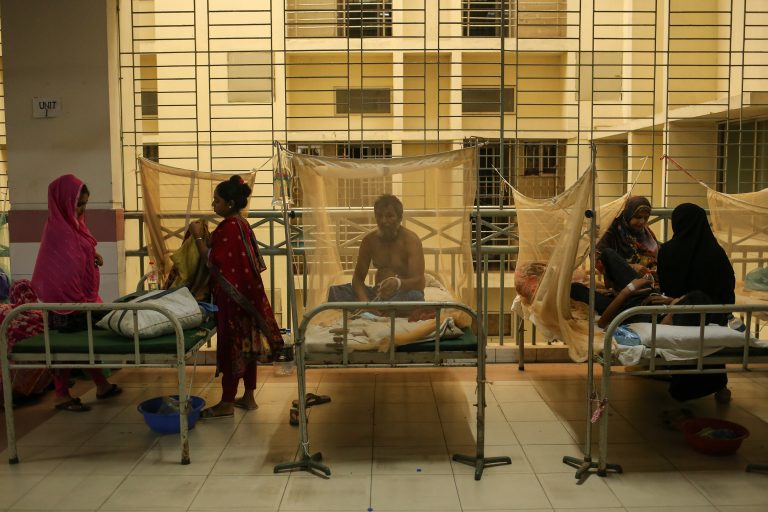
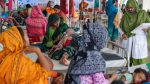
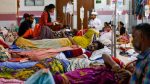
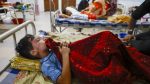
Inside the hospital wards, the strain is visible in every corner, with two to three children sharing a single bed while many others lie on the floor.
The suffering of sick children, the anxiety of their parents and the relentless crowding have created a heavy, tense atmosphere across the facility.
Saber Hossain, who has been at the hospital for two weeks with his child suffering from pneumonia, says the wait for intensive care has become unbearable.
“I admitted my child last Thursday with pneumonia,” he said. “Doctors told me the condition was serious. We have been given number 27 in the ICU queue, but we still cannot get in. The condition is worsening.”
An intern doctor described the situation as deeply distressing.
“In a single day, I saw around three children die because they could not get ICU care,” the doctor said. “We are trying to save lives by treating multiple children on a single bed if needed.”
Measles outbreak deepens crisis
A surge in measles cases is worsening an already strained healthcare system, with officials reporting a sharp rise in infections since the start of the year.
Dr Md Halimur Rashid, director of the Disease Control Division at the Directorate General of Health Services, said patient numbers have been increasing in Rajshahi and Mymensingh since January.
Data from the Rajshahi Divisional Health Office shows that 153 samples were tested on 18 March, of which 44 returned positive – an infection rate of nearly 29 per cent. The highest number of cases has been recorded in Chapainawabganj, Rajshahi and Pabna.
Between 1 March and Thursday, 84 children in Rajshahi were recommended for ICU care. Only nine were admitted, while three died while waiting.
At Rajshahi Medical College Hospital, 12 children have died from measles so far this month while undergoing treatment.
The pressure is also evident in surrounding districts.
In Pabna, 26 children were receiving treatment in measles wards as of 28 March. In Chapainawabganj, four children have died over the past three months, with around 70 currently admitted.
Rajshahi Medical College Hospital remains the primary referral centre for critically ill children from Rajshahi, and Rangpur divisions. However, unused infrastructure has compounded the crisis.
A plan to launch a new 20-bed paediatric ICU at the hospital has stalled for two years, despite beds and equipment already being in place, due to a shortage of staff.
An even larger facility remains unused nearby.
A 200-bed specialised children’s hospital in the TB Pukur area of Rajshahi city – built at a cost of around Tk35 crore – has remained closed since 2023. The hospital is equipped with between 12 and 56 modern ICU beds and a central oxygen supply system, but has not opened due to delays in approving staffing structures.
Dr SIM Raziul Karim, civil surgeon of Rajshahi, said a committee was formed six months ago to relocate the paediatric ward of Rajshahi Medical College Hospital to the new facility, but no progress has been made.