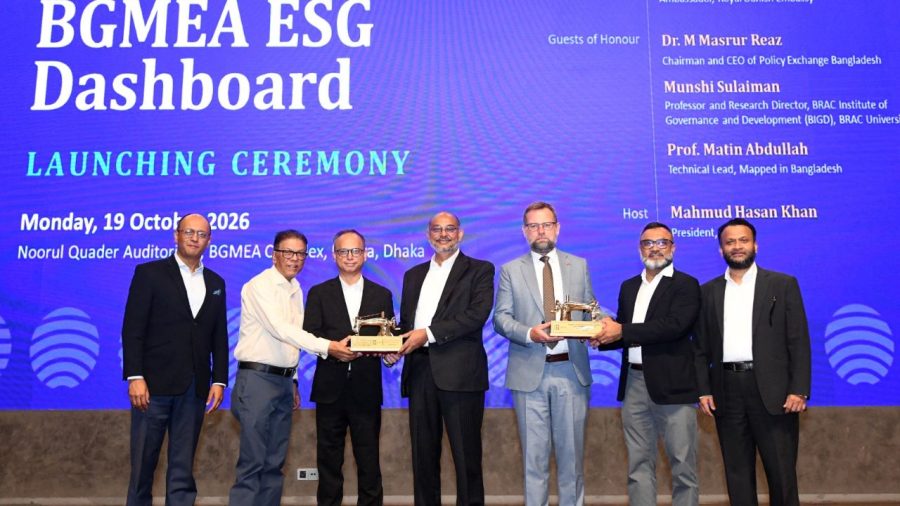



Bangladesh must move beyond competing solely on low production costs and focus on sustainability, transparency and compliance with international standards to retain access to global markets and strengthen competitiveness of its ready-made garment (RMG) sector, Danish Ambassador to Bangladesh Christian Brix Møller has said.
The ambassador made the remarks on Monday at inauguration of Environmental, Social and Governance (ESG) Dashboard of Bangladesh Garment Manufacturers and Exporters Association (BGMEA) at Noorul Quader Auditorium in Uttara, Dhaka.
The launch of the ESG dashboard represents an important step towards strengthening sustainability practices, improving transparency and maintaining international buyer confidence in Bangladesh’s garment industry.
Rashed Al Mahmud Titumir, adviser to the prime minister for ministries of Finance and Planning, attended the event as the chief guest. M Masrur Reaz, chairman and chief executive officer of Policy Exchange Bangladesh, Imran Matin, executive director of BRAC, and the Danish ambassador were present as special guests.
Citing the World Bank’s Bangladesh Development Update, the Danish ambassador said the country’s overall exports stagnated in fiscal year 2025-26, while ready-made garment exports to the European Union declined by 3.3 per cent, highlighting the urgency of strengthening competitiveness.
Although some recent recovery may have taken place, Bangladesh could not rely on cost advantages alone, making sustainability, transparency and compliance essential to maintaining market access and building long-term competitiveness.
He added that the ESG dashboard could help strengthen international buyer confidence by demonstrating progress in sustainability and providing greater transparency about the sector’s performance.
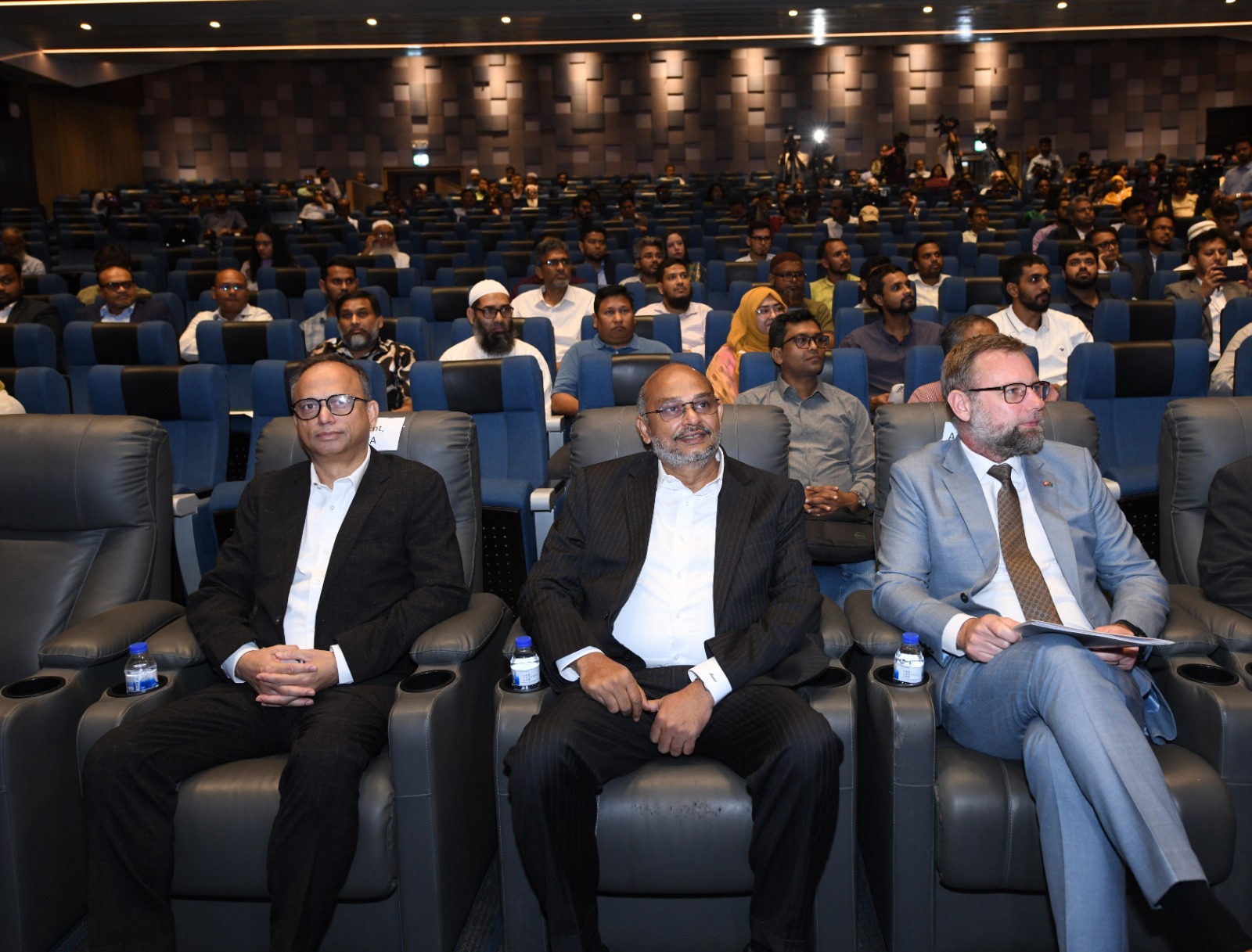
Highlighting the strength of Bangladesh’s backward linkage industries, Ambassador Møller said the World Bank had recognised the sector’s domestic value addition of around 60 per cent, which the country could leverage to move towards higher-value products, greater diversification and stronger global competitiveness.

Five priorities for sustainable growth
The ambassador outlined five priorities for Bangladesh to sustain economic growth and attract investment.
First, the country must pursue trade access through free trade agreements with the European Union to secure favourable access to export markets.
Second, ensuring reliable energy supplies through regional cooperation and a transition towards renewable energy is essential; investments in solar power, energy storage and energy efficiency could reduce dependence on expensive imported fuels while helping factories meet buyers’ ESG and carbon-reduction requirements.
Third, Bangladesh needs product and market diversification, moving towards greater value addition and expanding beyond the RMG sector, noting that producing more should go hand in hand with creating more value. Fourth, economic and labour reforms are required to restore investor confidence and unlock investment.
Citing the International Monetary Fund’s recent assessment, he said Bangladesh’s growth was projected at around 3.5 per cent in fiscal year 2026-27, with growth potentially falling below 3 per cent over the medium term without decisive reforms.
Creating employment opportunities for young people and women must be an essential part of the reform agenda, alongside a more liberal wage-setting system and strong enforcement of minimum labour standards to strengthen workers’ purchasing power, boost domestic consumption, reduce dependence on remittances and expand government capacity to invest in health and education.




Fifth, building an inclusive and stable parliamentary democracy by utilizing the current constitutional moment is vital.
For Bangladesh to achieve its ambition of becoming a trillion-dollar economy, political reconciliation, institutional stability and a functioning parliamentary system are crucial.
He expressed hope that implementation of the July Charter would be successful and that opposition parties would feel included, cautioning that foreign investors could be reluctant to invest in a country with weak domestic investment and a fragile political system.
Therefore, Bangladesh should not lose sight of the July Charter and the 2024 uprising while addressing immediate challenges, including the energy crisis.
Economic reforms to address inherited challenges
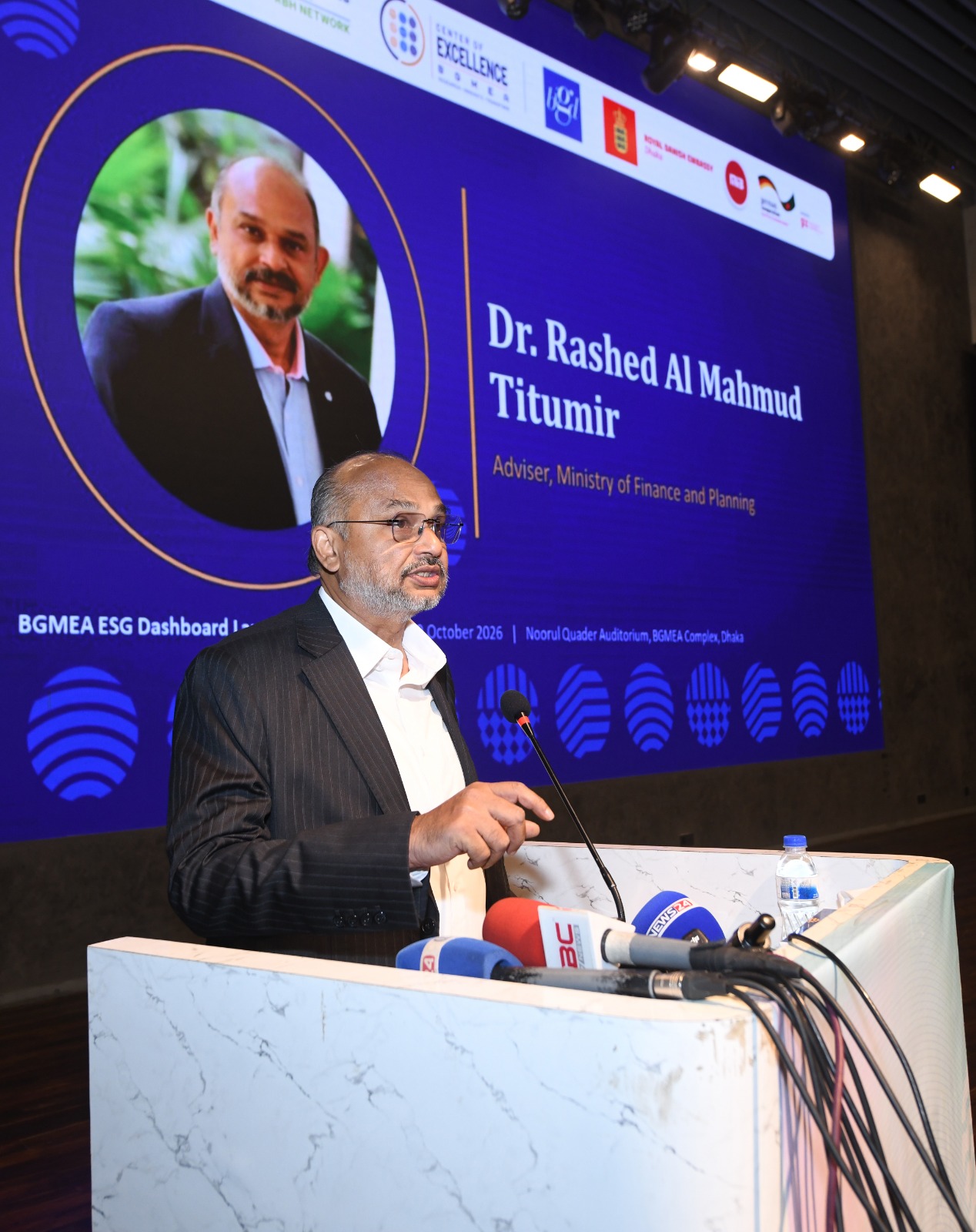
In his speech as chief guest, Finance and Planning Adviser Rashed Al Mahmud Titumir said Bangladesh is facing multiple challenges, including a fragile inherited economy, high inflation, unemployment and energy pressures arising from the Middle East crisis, which has resulted in an extra $4.12 billion in expenditure over the past eight months.
The government is pursuing reforms and social protection measures, including agricultural loan waivers and the Family Card programme.
The adviser affirmed that Bangladesh can no longer remain competitive solely on the basis of lower prices, adding that environmental standards are essential for future generations and that the initiative is commendable and necessary as the country aspires to become a manufacturing hub and build a trillion-dollar economy.
Highlighting employment challenges facing educated young people and women, Titumir noted that a large proportion of the population remains outside employment, education or training, making expanded job opportunities and social protection vital to improving living standards.
Referring to past economic experiences, he cited how the country had overcome major challenges by creating new sources of income and employment, pointing to initiatives during the periods of former presidents Ziaur Rahman and Khaleda Zia associated with economic recovery, women’s participation in the formal labour market and poverty reduction.
To increase investment, the government is taking initiatives across five key areas. On policy continuity, it aims to maintain consistency in taxation over five years to improve the business environment and reduce barriers.
For financing, a Tk60,000 crore package is being introduced for closed industrial units at a 7 per cent interest rate, below the prevailing inflation rate.
In energy, initiatives involve renewable energy, gas exploration, liquefied natural gas (LNG), liquefied petroleum gas (LPG) and floating storage and regasification units (FSRUs), alongside plans to develop Matarbari as an energy hub and boost investment in the southwestern region.
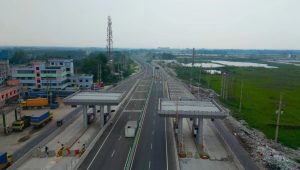
On connectivity, projects involving railway links, broad-gauge and metre-gauge integration, and the Dhaka-Chattogram Expressway are progressing toward a 2029 completion target.
Finally, to strengthen the business environment, investment is being broadened in productive sectors to generate employment, expand domestic revenue and create scope for public spending on health and education.
Additionally, discussions are ongoing at the international level to extend Bangladesh’s preparation period for graduation from the least developed country (LDC) category until 2029.
On poverty reduction, independent research institutions project that five years of implementation of the Family Card programme could reduce the number of people living in poverty by 5 per cent.
The Danish ambassador also highlighted the proposed $600 million Laldia Container Terminal project as a prime example of bilateral cooperation.
The government-to-government public-private partnership project involves Danish companies APM Maersk and APM Terminals alongside the Chattogram Port Authority, designed to support Bangladesh’s wider industrial economy.
Denmark’s approach is based on working alongside Bangladeshi industries to help shape their future rather than merely providing support.
BGMEA to make ESG reporting mandatory
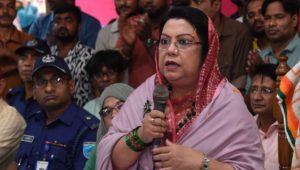
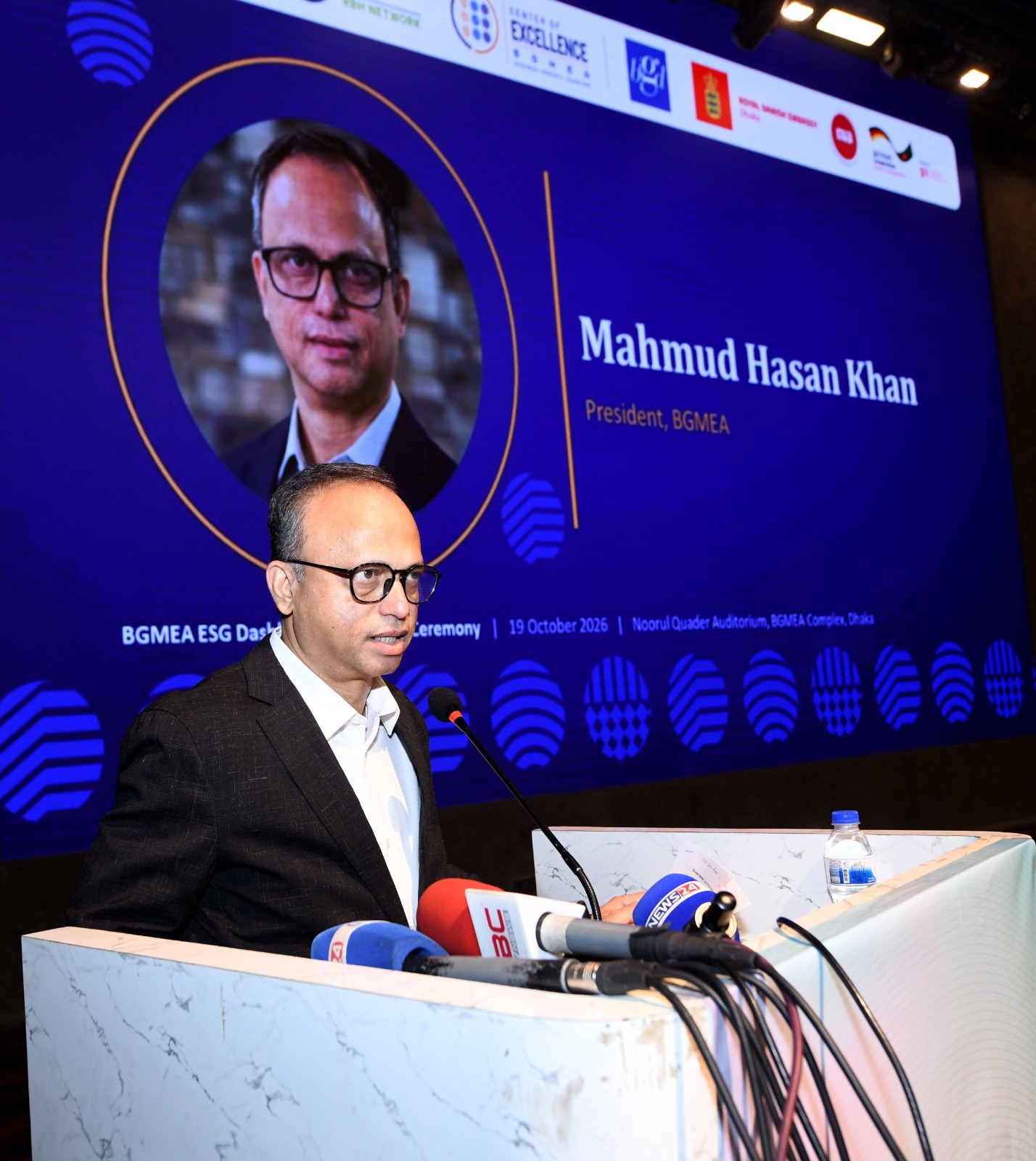
BGMEA President Mahmud Hasan Khan announced that the trade body will make ESG-related data reporting mandatory for its members, stressing that the association possesses the necessary tools to enforce the requirement without relying on incentives.
He added that BGMEA will consider working jointly with the Bangladesh Textile Mills Association (BTMA) and the Bangladesh Knitwear Manufacturers and Exporters Association (BKMEA) to bring the garment sector and its backward-linkage textile industry under a coordinated framework for ESG reporting.
Reinforcing the imperative of sustainability, M Masrur Reaz added that ESG practices have become an essential part of international competitiveness as buyers increasingly monitor carbon emission levels.