


Bangladesh’s push to revive investment through reforms and financial support is facing a reality check as businesses struggle with weak credit growth, rising operating costs, energy uncertainty and a widening gap between policy announcements and execution.
The government has announced a Tk60,000 crore stimulus package, digital reforms and investment facilitation measures, but businesses say companies are still unable to expand as financing remains tight and production costs continue to rise.
The concerns emerged at a Dhaka Chamber of Commerce and Industry (DCCI) seminar on Bangladesh’s fiscal and monetary outlook for FY26, where policymakers, economists and business leaders assessed the country’s investment climate and growth prospects.
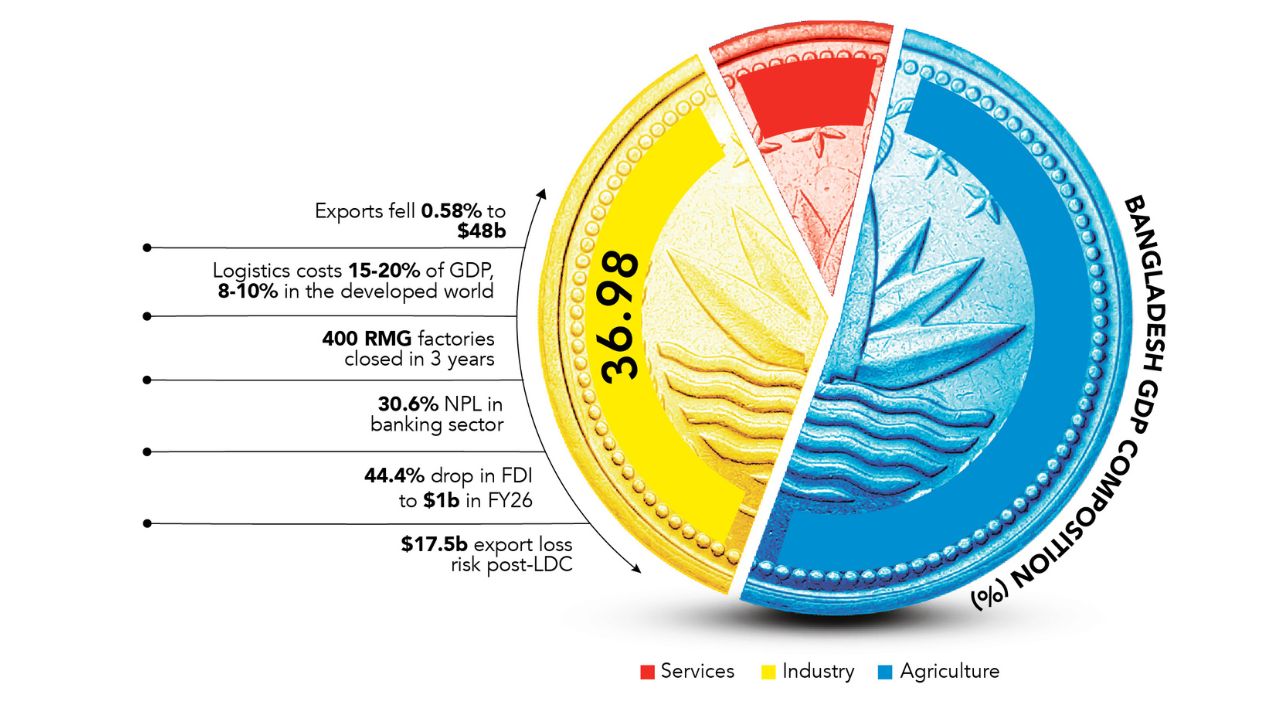
The pressure is visible in key indicators. Private investment stands at 21.2 per cent of GDP, while net foreign direct investment fell 44.4 per cent to $1 billion in FY26 from $1.8 billion a year earlier. GDP growth was projected at 4.14 per cent.
Investment momentum is being weakened by global uncertainty, trade barriers, supply chain disruptions and rising energy costs, according to DCCI President Taskeen Ahmed. He said budget measures, including faster company registration, customs automation, export incentives and trade agreement initiatives, would only deliver results if implementation improved.
The financing squeeze has become one of the biggest obstacles for businesses. Private-sector credit growth has slowed to 5 per cent, compared with 25.9 per cent growth in public-sector credit, raising concerns that government borrowing is limiting lending space for companies.

The pressure is sharper for smaller businesses. Actual credit flow to CMSMEs stands at 16.8 per cent against a target of 25 per cent, while non-performing loans in the sector have increased to 24.1 per cent.
The wider banking sector is also under strain, with non-performing loans reaching Tk5.57 trillion, equivalent to around 30.6 per cent of outstanding loans.
The financing problem reflects deeper structural weaknesses, said PPRC Executive Chairman and BRAC Chairman Hossain Zillur Rahman, who described Bangladesh’s economy as being at a “critical juncture”.




“Business harassment has evolved into a structural issue,” he said, arguing that reforms would fail to deliver results unless institutional weaknesses were addressed. He called for strengthening the financial system, improving SME credit access and establishing an Economic Reform Acceleration Unit to monitor implementation.
The government, meanwhile, is focusing on removing investment barriers and improving the business environment, Finance Minister Amir Khosru Mahmud Chowdhury said.
Foreign investment will not increase unless domestic investment expands first, he said, adding that the Tk60,000 crore stimulus package was designed to support troubled businesses. Only eligible companies meeting conditions set by the central bank will receive support, he added.
Energy security remains another major concern for industries. The finance minister said supply shortages could not be resolved immediately and that the government was working to maintain a three-month energy reserve to reduce the impact of future disruptions.
Bangladesh also faced an additional $4–5 billion in energy-related payments due to the Middle East crisis, he said, stressing the need to diversify energy sources and increase investment in solar power.
For businesses, the impact is already visible in higher production costs and weaker competitiveness. ICC Bangladesh President Mahbubur Rahman said inflation had not yet declined to the desired level, while private-sector credit growth remained among the lowest in years.
High interest rates, rising production and import costs, exchange-rate volatility and uncertainty over energy supplies have increased the cost of doing business, he said.
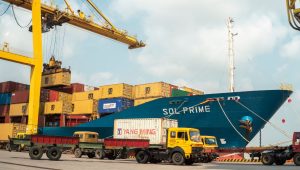
Transcom Limited Group CEO Simeen Rahman pointed to similar pressures on companies, particularly SMEs, citing high interest rates, inflation, rising non-performing loans and expensive raw materials. She called for improvements in ports, customs and logistics efficiency to reduce costs.
Mutual Trust Bank Managing Director and CEO Syed Mahbubur Rahman said better coordination between fiscal and monetary policies was needed, warning that lower interest rates alone would not increase investment without reliable energy supply and a supportive operating environment.
Economists said the challenge extends beyond financing. Policy Research Institute of Bangladesh Chairman Zaidi Sattar pointed to a gap between policy formulation and implementation, saying restrictive import policies and high tariffs were contributing to higher domestic prices. He also stressed the need for stronger preparation ahead of LDC graduation.
Centre for Policy Dialogue Distinguished Fellow Mustafizur Rahman said improving tax collection was essential to strengthen fiscal capacity and support development spending. He warned that budget initiatives were not adequately reflected in monetary policy, contributing to inflationary pressure, and urged caution in foreign borrowing and debt management.
The pressure is increasing as Bangladesh prepares for LDC graduation. DCCI warned that the country could face potential export losses of $17.5 billion unless it accelerates trade negotiations, develops sector-specific strategies and improves competitiveness.
The chamber also highlighted Bangladesh’s logistics costs of 15–20 per cent of GDP, compared with an 8–10 per cent benchmark in many developed economies, as a major challenge for exporters.
For businesses, the test is no longer how many reforms are announced, but whether those measures can lower costs, unlock finance and restore confidence before Bangladesh enters a more competitive global market.