


Political leaders, lawyers and analysts have warned that proposed amendments to the Cyber Security Act could pave the way for renewed digital authoritarianism, arguing that vague provisions and the potential for misuse could undermine freedom of expression and citizens’ fundamental rights.
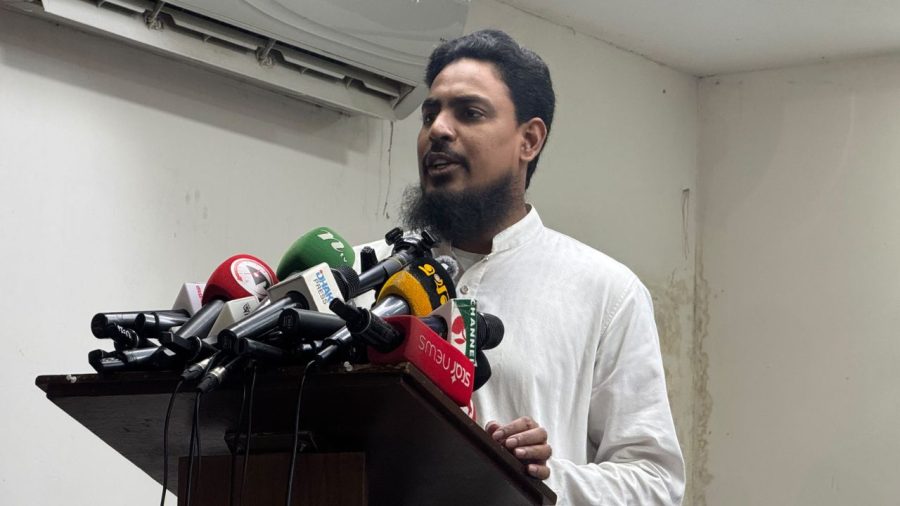
The concerns were raised at a discussion titled “Proposed Amendments to the Cyber Security Act: The Future of Freedom of Expression and Civil Rights” at the Zahur Hossain Chowdhury Auditorium of the National Press Club at 10:30am on Saturday.
The NCP’s Reform Implementation Committee organised the event.
Nabila Idris, an academic and former member of the National Human Rights Commission and the Commission of Inquiry on Enforced Disappearances, presented the keynote paper. Speakers included NCP Member Secretary and Rangpur-4 MP Akhter Hossen, Amar Bangladesh Party (AB Party) Chairman Mojibur Rahman Bhuiyan Manju, NCP Joint Convener Sarwar Tushar, Daily Waadaa Managing Editor Faisal Mahmud, writer and analyst Apurba Jahangir, and NCP Joint Member Secretary and Law Affairs Secretary Advocate Zahirul Islam Musa. NCP central organiser Advocate Arman Hossain moderated the discussion.
Akhter Hossen said the Digital Security Act had been widely misused during the Awami League government to arrest and harass people, including journalists, writers and ordinary citizens. The death of writer Mushtaq Ahmed in custody illustrated the consequences of such abuse, he said.
He noted that the interim government introduced the Cyber Security Ordinance to combat online crimes while limiting arbitrary arrests and harassment. However, he alleged that the proposed amendments would broaden offence definitions and make them less precise, creating opportunities to restrict criticism of the government.
Akhter also criticised the government’s handling of constitutional reforms, alleging that its failure to take the oath of the Constitutional Reform Council and its unilateral formation of a constitutional amendment committee disregarded the referendum outcome and national consensus.

Comparing the government’s approach with authoritarian tendencies during the Awami League’s tenure, he warned that majority-driven constitutional changes could trigger another political crisis.
He further alleged that government supporters faced little action over abusive language, rumours and defamatory statements, while opposition activists and ordinary citizens risked legal action for criticising the authorities. He urged the government to withdraw the proposed amendments and protect freedom of expression.
Citing extortion, looting, deteriorating law and order and rising commodity prices, Akhtar said the government had failed to provide effective solutions. He also alleged that syndicates were responsible for selling liquefied petroleum gas above regulated prices without facing effective action.
Referring to the postponement of a Department of Youth Development recruitment examination following a question-paper leak, he demanded that those responsible be identified, dismissed, arrested and prosecuted. He also called for compensation to be considered for affected jobseekers who had travelled from different districts.
Nabila Idris said online incitement, calls for violence, harassment of women and children, and misinformation were serious concerns. However, many such activities were already offences under existing laws, making it necessary for the government to explain the need for additional amendments.




She warned that an unclear definition of rumours could threaten freedom of expression and stressed the need for transparent verification procedures and independent investigations. Protections for truthful information published in the public interest were also necessary, she said.
Nabila cautioned against granting the state excessive authority to regulate offensive language, arguing that citizens had the right to criticise the government. She said assurances from Prime Minister’s Adviser Zahed Ur Rahman that the BNP would not misuse the law like the Awami League were insufficient without safeguards built into the legislation.
Citing the experience under the Digital Security Act, she warned that cases and arrests over statements or social media posts could create a “chilling effect”, discouraging people from expressing their views for fear of harassment. She called for clear offence definitions, transparent verification, independent investigations and judicial oversight.
AB Party Chairman Mojibur Rahman Bhuiyan Manju questioned the proposed amendment to Section 26(a), asking whether people who sincerely believed and shared a report of someone’s death, including offering prayers for the deceased, could also face punishment.
He warned that unclear provisions could expose ordinary citizens to harassment and urged the BNP to learn from its previous experience, when laws and institutions established during its tenure were subsequently used against the party.
Manju also criticised the BNP over its position on a port agreement with DP World, saying the party had accused the interim government of selling the country but later entered into a port-leasing agreement with the same company. He also pointed to an increase in electricity prices despite promises not to raise them.
He said the public would compare the BNP government’s first 18 months with the interim government’s corresponding period. Addressing the challenges surrounding battery-powered rickshaws, he called for consultations involving all stakeholders and consideration of unemployment, public transport, traffic congestion, electricity shortages and road safety. Reforms and crisis management, he added, should be based on national consensus.
NCP Joint Convener Sarwar Tushar said that although the government had described 113 of the interim government’s 133 ordinances as unnecessary, it had enacted some ordinances almost unchanged. He criticised provisions allowing elected local government representatives to be removed through executive orders, while an ordinance intended to ensure accountability had been scrapped.
Sarwar said the proposed cyber amendments could create opportunities for digital authoritarianism. Referring to media reports of 21 to 22 people being arrested over Facebook posts since the government took office in February, he said some cases had been pursued under the Anti-Terrorism Act and other laws because they did not fall under existing cyber legislation.
He questioned who would determine whether information constituted a rumour and how government-aligned individuals would be held accountable for spreading misinformation. Warning that a two-thirds parliamentary majority did not guarantee permanent political security, he urged the government to remain accountable to the public.
Apurba Jahangir, writer, analyst and executive editor of Nutshell Today, questioned whether the proposed amendments reflected bureaucratic or political objectives.
He said the government needed to clarify who would determine what constituted misinformation and who would have authority to remove online content. He welcomed continued discussion and urged the government to reconsider provisions that could undermine public confidence.
Daily Waadaa Managing Editor Faisal Mahmud warned that provisions including Sections 25 and 26 could undermine press freedom. Mandatory verification before publication could interfere with editorial independence and pressure media owners and editors to impose self-censorship, potentially suppressing important information, he said.
He also criticised Section 8’s proposed authority to block or remove content without judicial approval, warning that journalists and ordinary social media users could face harassment.
Advocate Zahirul Islam Musa said concerns about legal misuse had persisted from Section 57 of the Information and Communication Technology Act 2006 through the Digital Security Act.
He warned that vaguely defined rumours, the potential criminalisation of creating or sharing memes, and retaining defamation as a criminal offence could enable renewed repression.
He called for content-removal decisions to remain exclusively with courts and cautioned against bringing cyber offences under the Mobile Court Act to enable immediate punishment. All citizens, not only journalists and lawyers, must receive equal protection, he said.
Closing the discussion, moderator Arman Hossain said the July uprising had raised expectations that no government would restrict freedom of expression, access to justice or the expression of ideas through repressive laws. He warned that the proposed amendments could revive controversial provisions of the Digital Security Act and expose citizens to renewed harassment and persecution.