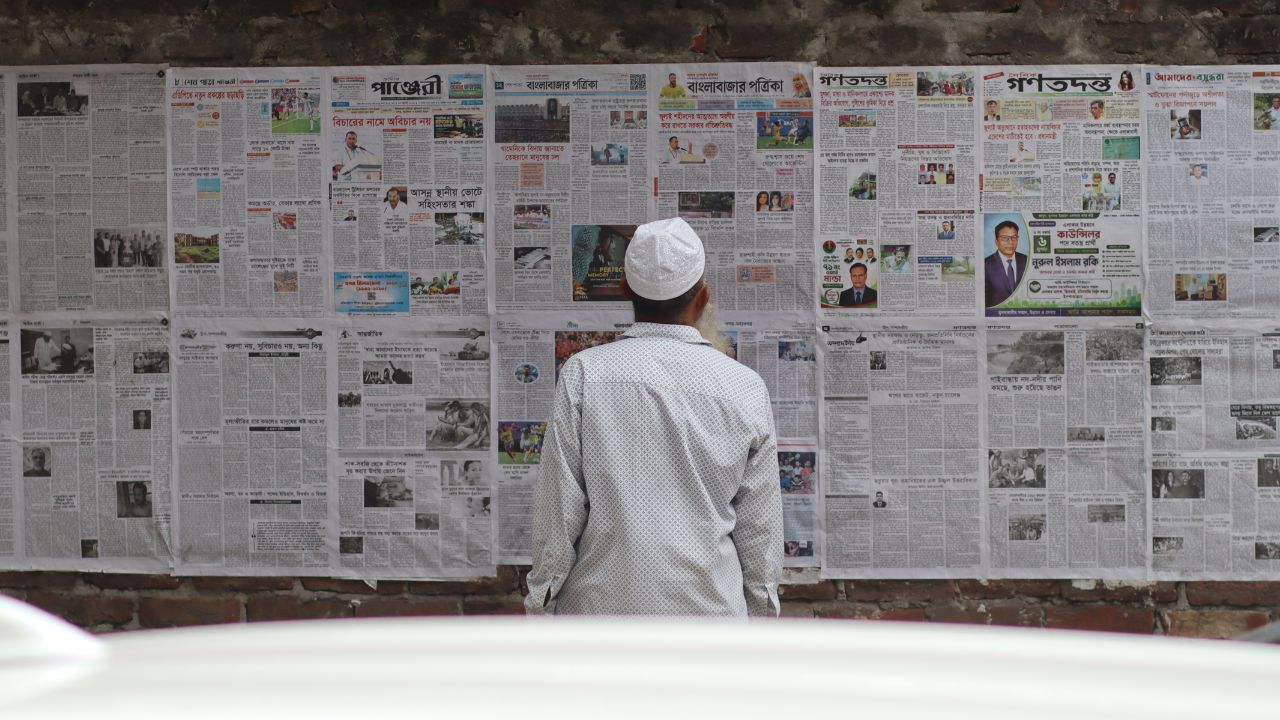



In the morning rush of Dhaka, amid blaring bus horns and ringing rickshaw bells, small crowds gather around weathered walls covered with freshly pasted newspapers.
These street corners become open-air reading stands where anyone can stop to catch up on the day’s headlines. In the smartphone era, they remain a quiet reminder of the enduring appeal of print.
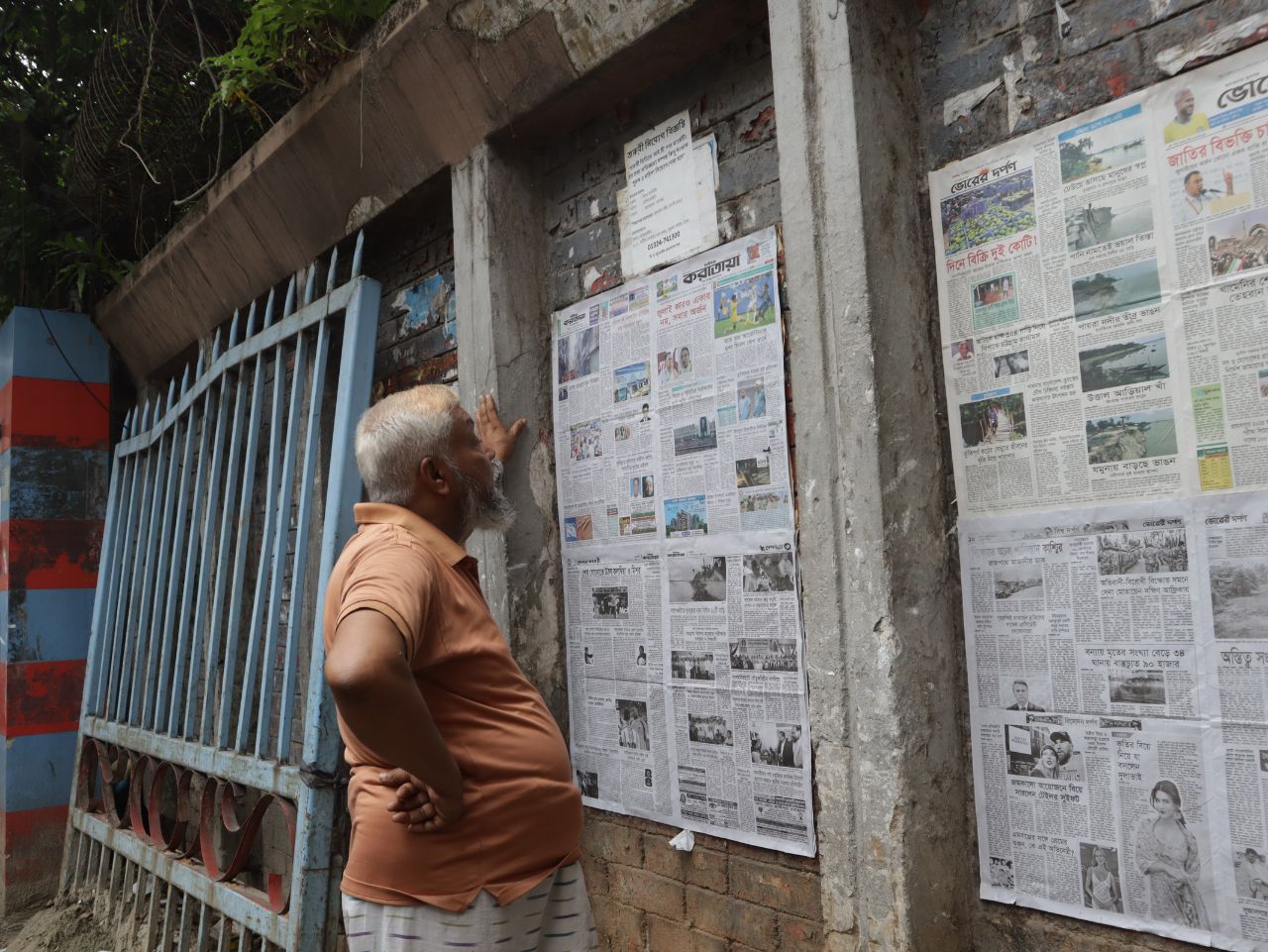
Though found at only a handful of locations – including near the Secretariat Metro Rail Station, Rajarbagh Police Lines and the Dhaka Reporters Unity – these walls offer free access to the day’s news.
For rickshaw pullers, labourers, students and office workers who cannot afford subscriptions or data packs, these pasted papers provide a vital window into the world.

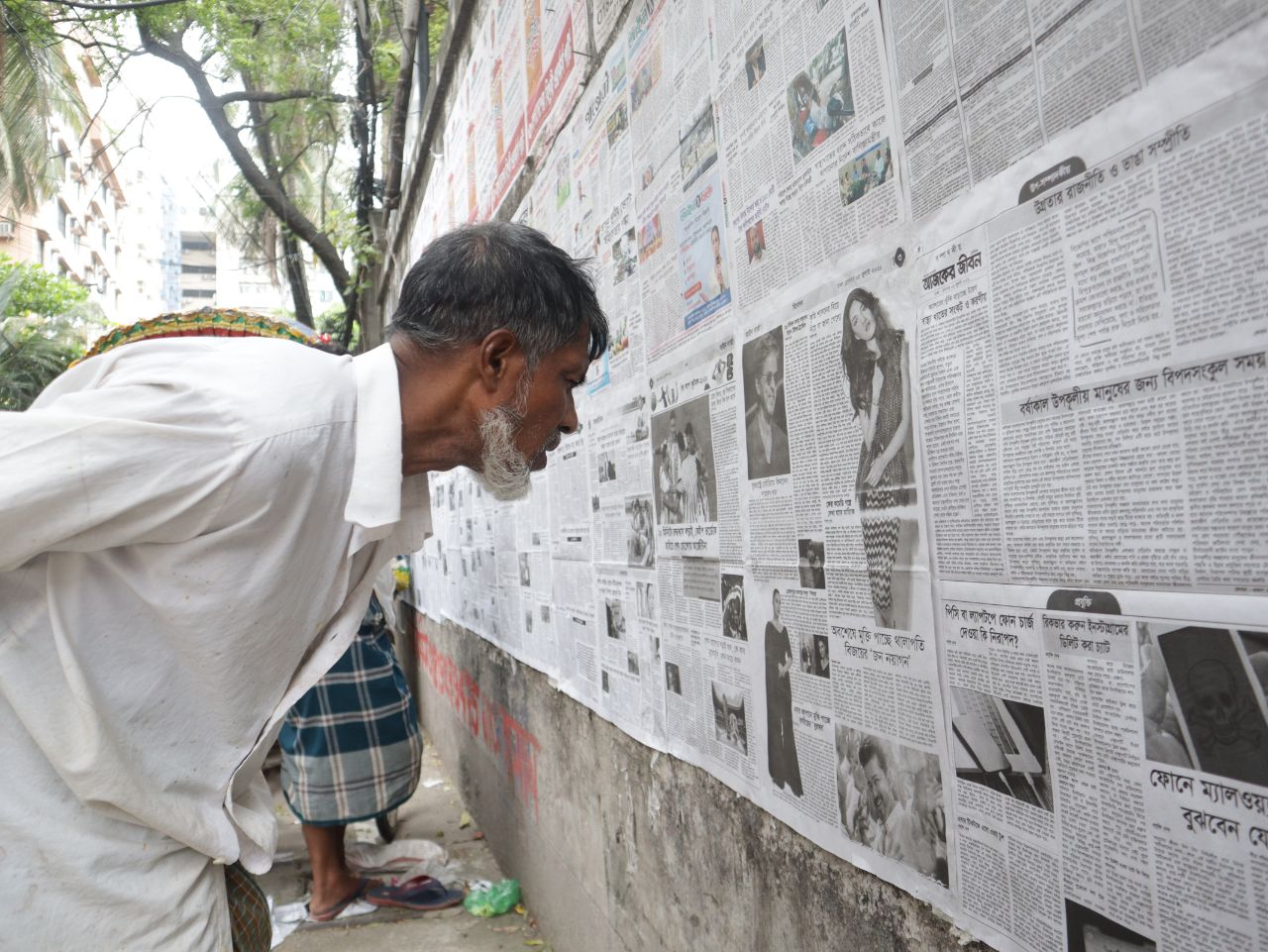
According to the Department of Films and Publications, 593 government-registered daily newspapers are published from Dhaka. Yet the city’s best-known papers, including Prothom Alo, Kaler Kantho and The Daily Star, rarely appear on these walls.
Instead, they are dominated by smaller and lesser-known publications, some of which are not government-registered. These papers, often printed in modest numbers, find a second life on the city’s walls – reaching readers who would otherwise never see them.




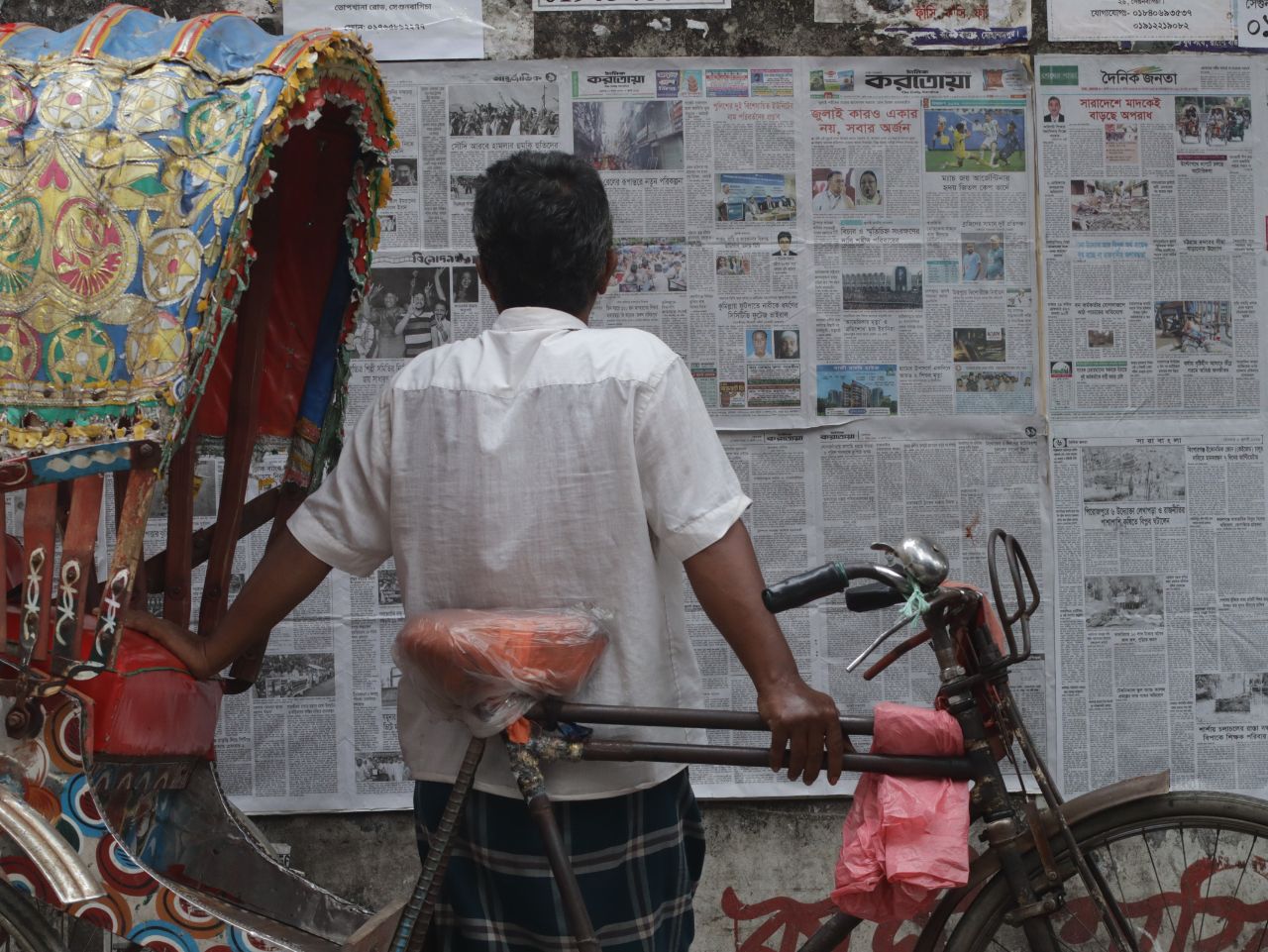
As smartphones and affordable internet continue to erode newspaper sales, many publishers have downsized or closed their print editions. Still, these wall-pasted newspapers draw readers from all walks of life.
Rickshaw pullers, labourers, students, and office workers stand side by side reading the same headlines, sparking conversations and preserving one of Dhaka’s last shared public reading spaces.
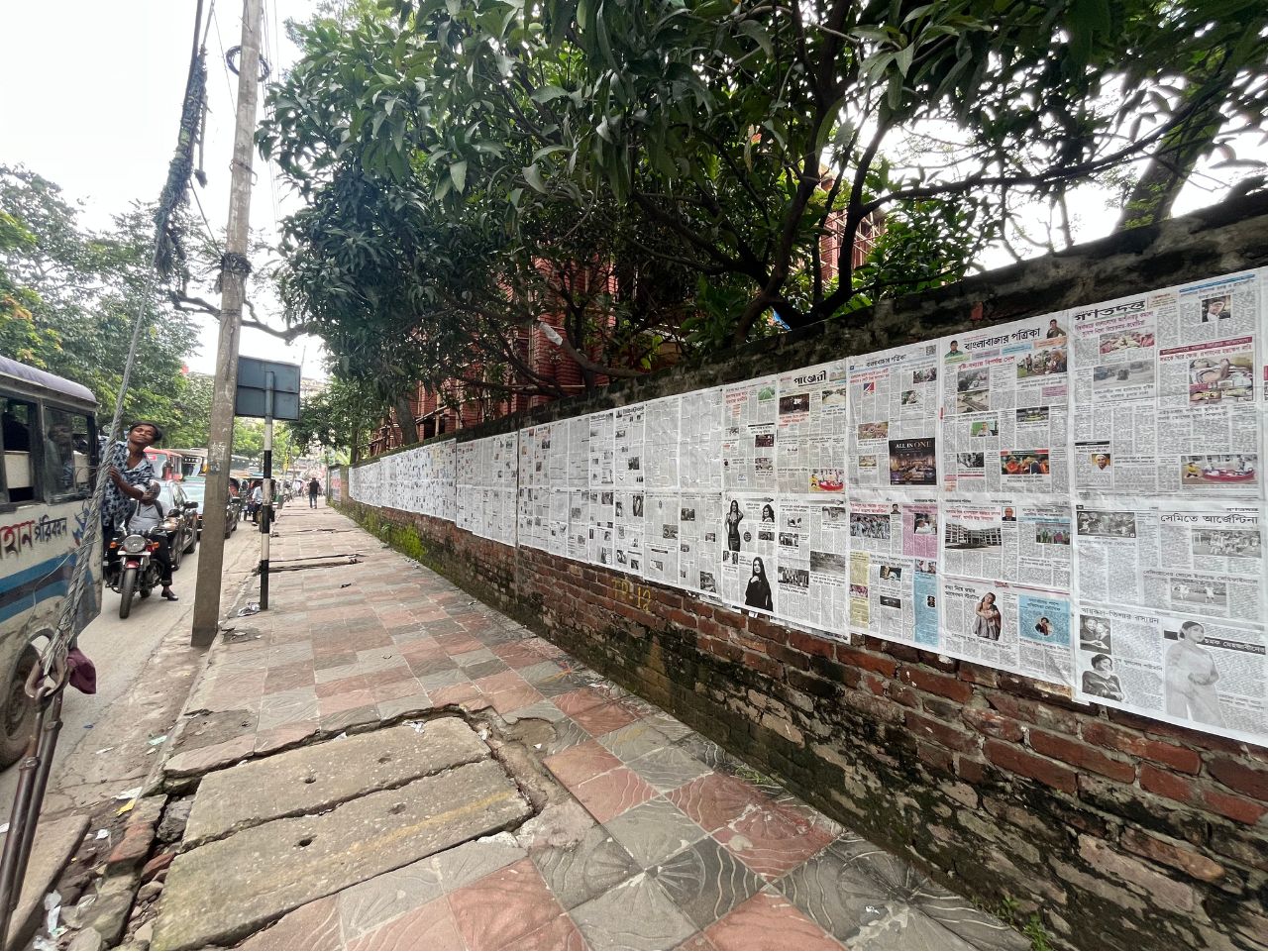
For a few moments each morning, the digital divide disappears. A rickshaw puller and a bank employee stand shoulder to shoulder, reading the same column. The wall does not ask for a subscription. It does not require a data connection. It simply offers news – free, public and accessible to anyone willing to stop and read.
In an age where algorithms curate what we see and paywalls guard what we read, these pasted newspapers remain stubbornly democratic. They are a reminder that in a city of 20 million, some stories are still told on walls – and some readers still prefer their news pasted, not swiped.
Photo: Indrani Mollick/TIMES