Our lives resemble a vast cricket field. Some of us are batsmen, some bowlers, some spectators. Problems come at us like deliveries, relationships arrange the fielding, and fate seems to sit in an invisible room like a third umpire, delivering its verdicts. This metaphor is not merely poetic – it shows that cricket does not just touch us as a sport; it has penetrated deeply into our sense of life, imagination, and social consciousness.
But the question is: does cricket that was once established as a ‘gentleman’s game’ of Victorian morality remain in that position? Reality says no. Cricket is no longer confined to the 22 yards; it has become a powerful instrument of the capitalist economy. Former Australian coach John Buchanan aptly wrote, “When money talks, cricket listens.” This single sentence captures the essence of the transformation of modern cricket.
To understand sports capitalism, Pierre Bourdieu’s concepts of field and cultural capital are relevant here. Cricket is a social ‘field’ where certain classes – elites, corporates, and political forces – reproduce their dominance. Who will play, who will be selected, which club will survive – these are not merely questions of athletic merit; rather, they are outcomes of social capital, networks, and power relations. As a result, cricket has become a site for the reconstruction of elitism. At the same time, Antonio Gramsci’s concept of hegemony helps us understand how cricket is normalised as a ‘national emotion.’ We believe that winning in cricket for the country means national pride. But within this emotion lies a constructed reality – where the game gradually becomes a carrier of pseudo-nationalism. A team, a captain, eleven players – together they seem to embody the hopes and aspirations of an entire nation. If they win, they are heroes; if they lose, they become villains. This duality is not merely about sports; it is part of the construction of power narratives.

This transformation of cricket can be further explained through Guy Debord’s concept of the society of the spectacle. Cricket is no longer just a game; it is a vast media-driven spectacle in which the spectator is no longer a citizen but a consumer. From stadium galleries to television screens, cricket has become a commodity, sold through advertising, branding, and broadcasting rights.
In this context, the IPL is a turning point. It has shown how a domestic league can be transformed into the center of global capital. Cricket is now clearly divided into ‘pre-IPL’ and ‘post-IPL’ eras. In David Harvey’s words, this is a prime example of neoliberal capitalism, where the game becomes a machine for generating profit, and players become mobile assets. In the context of Bangladesh, this reality becomes even more complex. Here, cricket is both a symbol of national unity and a field of political power struggle. Former captain Mashrafe’s warning, that cricket is not a matter of life and death, reveals a harsh truth. Yet we place cricket at the centre of national identity, because it represents a symbolic victory born out of our colonial past.
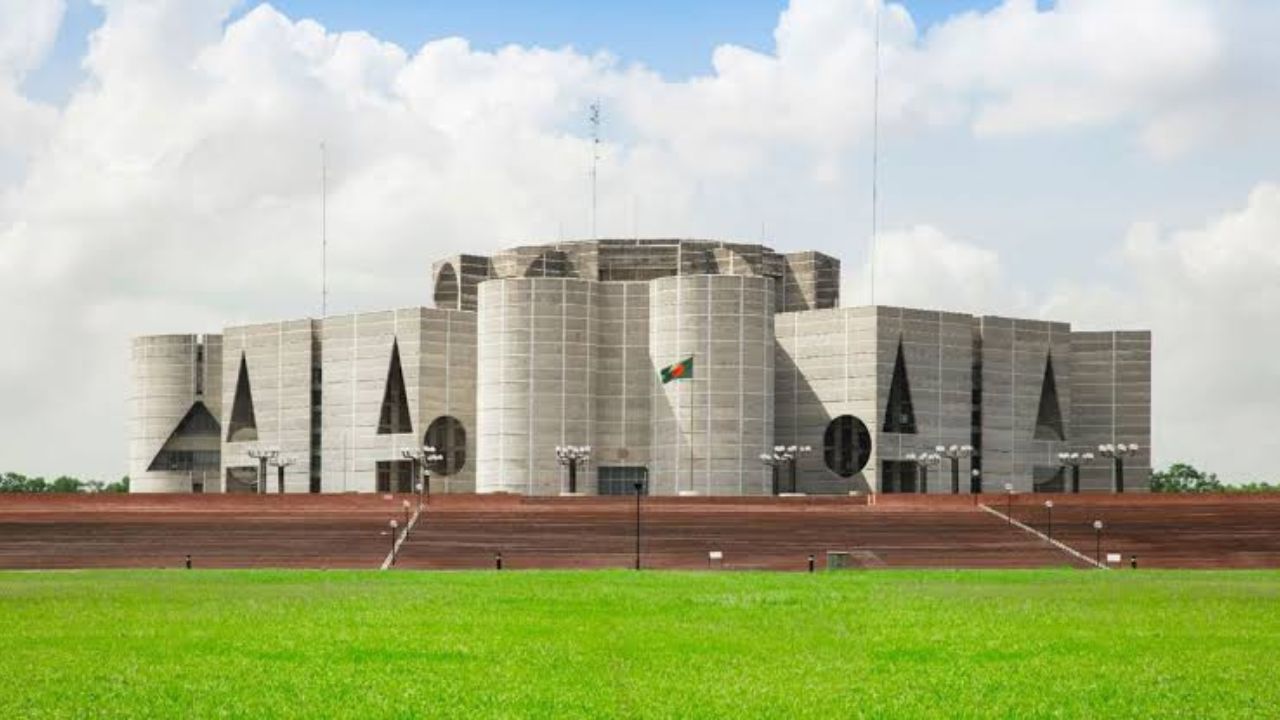



But within this very emotion, capitalism continues its work. A cricketer is not merely a labourer; he is a brand. The game is not just a competition; it is a market. And when the state, corporate entities, and political forces jointly control the game, cricket becomes an element of a state-capital nexus. Recent developments in the Bangladesh Cricket Board (BCB) make this reality even clearer. The formation, dissolution, and reconstitution of the board are not merely administrative decisions; they are reconfigurations of power. The question, therefore, is simple but crucial: is the cricket board an autonomous sporting institution, or an extension of political influence?
Cricket once again proves that it is not just a game; it is an open arena of power struggle. Governments change, faces change, but the character rarely does. Trapped in the vicious cycle of politics, the game seems to be steadily losing its autonomy. The BNP government has not even completed two months in office, yet the tendency of partisan influence across various administrative levels – from the appointment of the Bangladesh Bank governor to city corporations and district councils – has already become visible, and its reflection has reached the cricket board as well.
The Bangladesh Cricket Board is thus gradually shifting from a professional sporting body to a sphere of power influence – one that some critics describe, in harsh terms, as a ‘family-owned cricket board.’ The language may be uncomfortable, but the reality is harsher. Recent developments have reinforced this pattern. The board led by former captain Aminul Islam Bulbul was dissolved on April 7 by the National Sports Council following allegations of abuse of power. In its place, an 11-member ad hoc committee has been formed under former captain Tamim Iqbal. However, the composition of this new committee has also raised concerns. It includes individuals connected to ministers’ families and influential political households – many of whom have no direct involvement in sports. This makes the fundamental question unavoidable: is the cricket board a professional sporting institution, or is it gradually becoming a domain of political inheritance?
The closeness between cricket and politics in Bangladesh is not new. But what was once an informal association has now taken an institutional form, influencing not only administration but also the structure, priorities, and culture of the game. Yet, for more than two decades, cricket has been a rare space where people could transcend ethnic, religious, and partisan divisions and unite under a shared ‘Bangladeshi’ identity. That very institution symbolising unity has seen its governing body change four times in less than two years – each time amid allegations of political influence. Analysts have long noted that political influence over the BCB has always existed; however, in recent times, it has led to increased instability and uncertainty. The issue, therefore, is no longer merely administrative – it has become a deeper concern about the character, future, and public perception of cricket.
The reality is that cricket is no longer an innocent game. It is a complex equation of power, capital, and symbolism. What happens in the field is important, but so are the transactions beyond it. Ultimately, we confront an uncomfortable truth – cricket is increasingly turning into war, and wars are increasingly being turned into games. This exchange is not merely rhetorical; it reflects the political and economic realities of our time. Cricket thus proves itself once again – it is not just a game; it is a stage of power, where rules change, players change, but the underlying character of the game rarely does.
The writer is an Associate Professor, Communication and Journalism, University of Chittagong. Email: [email protected]