


At a time when Dhaka’s two city corporations are struggling to finance their regular operations, their administrators are drawing attention for a different reason: an expensive publicity campaign featuring their names and, in some cases, photographs across leading newspapers.
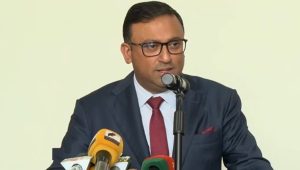
Advertisements marking National Revolution and Solidarity Day on 7 November appeared in at least 20 newspapers, with Dhaka South City Corporation (DSCC) Administrator Abdus Salam’s name and photograph and Dhaka North City Corporation (DNCC) Administrator Md Safiqul Islam Khan Milton’s name prominently displayed.
Based on prevailing government advertising rates, the two corporations’ newspaper advertisements could have cost up to Tk1.92 crore, although the actual payments have not been confirmed.
The publicity has fuelled questions about whether the administrators are using public resources to build political profiles ahead of the next mayoral elections, particularly as both are discussed as possible candidates of the ruling party.
Salam has already expressed his intention to contest the next mayoral election as a BNP candidate. Milton, meanwhile, has not publicly declared any such ambition, although speculation over his possible candidacy continues.
The publicity drive is not confined to Dhaka. Rajshahi City Corporation Administrator Md Mahfuzur Rahman Riton has also placed newspaper advertisements featuring his name and photograph.
The spending has raised concerns among political observers and economists, particularly given the financial difficulties acknowledged by the two Dhaka corporations.
Professor Muhammad Shahadat Hossain Siddiquee of the Department of Economics at the University of Dhaka said the source of the advertising funds warranted scrutiny when the corporations were struggling to meet routine expenses.

“If the city corporations do not have sufficient funds even to run their regular activities, questions as to the origin of the funds used for advertising will be inevitable,” he said.
The estimated cost is based on prevailing government newspaper advertising rates. Front-page advertisements cost Tk12,000 to Tk15,000 per inch, while back-page rates range from Tk10,000 to Tk12,000.
At the maximum rates, a 40-inch DNCC advertisement could cost around Tk6 lakh. Placement in 20 newspapers would bring the estimated bill to Tk1.20 crore.
A 24-inch DSCC advertisement could cost up to Tk3.60 lakh each, taking the estimated expenditure across 20 newspapers to Tk72 lakh.
Together, the two corporations’ advertisements could therefore cost as much as Tk1.92 crore. These calculations do not represent verified payments.



The scale of the publicity is particularly striking against the corporations’ own accounts of their financial condition.
In March, both administrators sought lump-sum allocations from the prime minister, citing severe financial constraints. Salam said revenue collection was slow, while Milton described DNCC’s financial condition as “fragile”, saying it had only Tk25 crore in its fund against tenders and work orders worth Tk1,470 crore.
AHM Hamidur Rahman, assistant secretary general of Jamaat-e-Islami, criticised the administrators’ publicity activities.
“Using public resources to publicise oneself is highly undemocratic, unjust, and condemnable,” he told TIMES.
NCP has also demanded that the administrators be barred from contesting the forthcoming elections.
When contacted for Salam’s comments, his personal assistant Farukul Islam Selim said the administrator was busy with ongoing drives by the city corporation.


Milton and Riton could not be reached for comments despite repeated attempts.
Political overtones at public consultations
The questions surrounding the administrators’ publicity extend beyond newspaper advertisements to their frequent appearances at public programmes, some of which have taken on distinctly political overtones.
Salam, in particular, attends public events almost daily, with photographs and videos of his appearances prominently featured on DSCC’s Facebook page. The corporation’s public relations department also regularly distributes images of him during city-cleaning and other official drives.
Similarly, the media wings of the DNCC and Rajshahi City Corporation portray their administrators in grandiose terms through photographs and videos of their activities.
Meanwhile, staff at both Dhaka city corporations received their salaries two to three days later than the usual payment date of the 15th of the month. Despite the delay, the corporations have continued spending on newspaper advertisements and publicity featuring their administrators.

More questions have emerged over meetings organised as public consultations, where leaflets featuring the administrators’ photographs have been distributed and party leaders and activists have made up much of the audience.
At a DSCC meeting on 26 October, residents of Dhanmondi, Kalabagan, New Market, Shahbag, and Ramna were invited to share their views. However, the audience consisted largely of BNP leaders and activists.
Several BNP leaders who spoke at the meeting were also interested in contesting councillor positions, turning a gathering ostensibly intended to collect public feedback into an event with clear political undertones.
When some participants discussed their respective areas while referring to themselves as “public representatives”, Salam intervened, saying, “First win the election and become a councillor, then responsibility will be given.”
Professor Abu Hossain Muhammad Ahsan of the Department of Public Administration at the University of Dhaka described the use of public platforms for political purposes as a matter of concern.
“Using government services or establishments for political purposes amounts to corruption,” he said.
EC says no scope for action yet
Despite the growing debate over the administrators’ activities, the Election Commission (EC) says it has no scope to impose restrictions at this stage, as it has yet to announce the schedule for the city corporation elections.
Election Commissioner Abdur Rahmanel Mashud said he was unaware of the newspaper advertisements in question.
Under existing law, he said, anyone holding such a position must resign from the relevant post before contesting an election.
The individual becomes eligible to contest once the resignation is accepted by the relevant ministry or authority, he added.