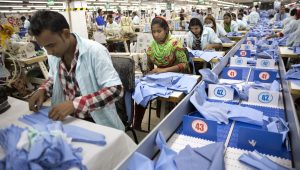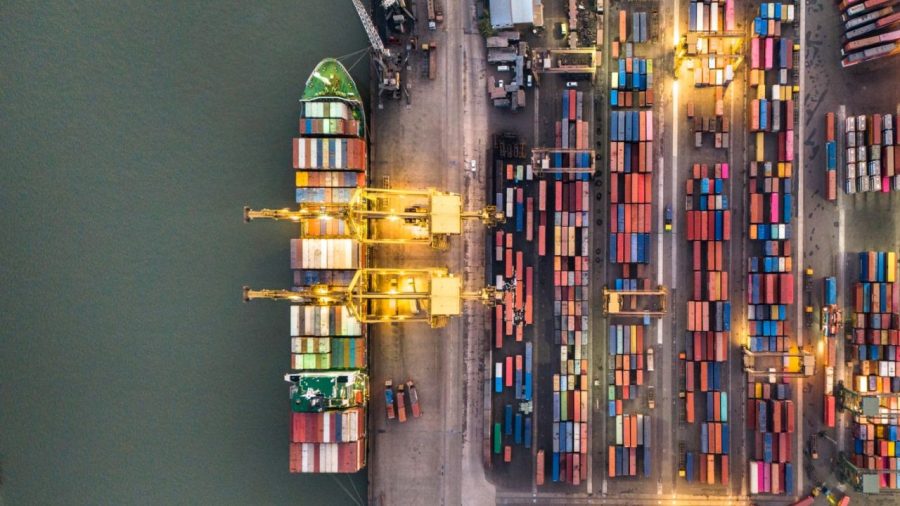

On the day Bangladesh raised garment workers’ minimum monthly wage by 36 per cent to Tk17,000, Washington proposed higher tariffs on Bangladeshi goods, citing low wages among the reasons the country enjoys what it considers an unfair competitive advantage.
The industrial incentives, inexpensive labour and imported Chinese inputs that helped Bangladesh build its export-oriented economy are now at the centre of a US trade investigation that threatens to increase average tariffs on its apparel from 25.6 per cent to 33.6 per cent.
The Office of the United States Trade Representative (USTR) concluded on Wednesday that Bangladesh maintains manufacturing capacity and production beyond what market conditions would naturally support, “hurting American manufacturers and workers.”
It proposed raising additional tariffs on the 15.6 per cent most favoured nation tariff from 10 per cent to 18 per cent, with a potential increase to 20 per cent if bilateral consultations prove unsatisfactory.
“We are essentially victims of global trade politics. America’s main trade war is with China, but third countries, including Bangladesh, are being affected because they use Chinese raw materials and products in manufacturing,” Bangladesh Chamber of Industries (BCI) President Anwar-ul Alam Chowdhury Parvez told TIMES.
Why Washington sees excess capacity
The investigation, launched on 11 March under Section 301 of the US Trade Act of 1974, has resulted in tariff proposals covering 14 of the 16 economies investigated.
Decisions on Mexico and Norway remain pending.

Washington defines structural excess capacity not simply as idle factories or unsold inventories, but as production persistently exceeding market-driven levels because of government intervention.
For Bangladesh, USTR identified three principal causes – industrial policies encouraging export-oriented manufacturing, inadequate measures to address surging imports from non-market economies and weak labour law enforcement despite reforms introduced in 2026.
Apparel accounted for 85.1 per cent of Bangladesh’s exports in 2023 and an estimated 11 per cent of its GDP in 2022. Nearly all its approximately 3,500 garment factories are export-oriented.
Between 2021 and 2025, manufacturing accounted for an average of 21.9 per cent of Bangladesh’s GDP against 9.9 per cent in the US, while the corresponding export shares stood at 11.5 per cent and 7.1 per cent.
USTR also highlighted a $7 billion, or 68 per cent, increase in Bangladesh’s imports of intermediate goods from China between 2017 and 2025, while equivalent US imports declined by $30 billion, or 21 per cent.



Washington argues that Chinese inputs artificially reduce Bangladesh’s production costs, while inadequate oversight of Chinese investment allows Beijing to extend its excess capacity through Bangladeshi industries.
The US has recorded persistent bilateral goods trade deficits with Bangladesh, including $6.1 billion in 2024.
The changing wage equation embraced
USTR found that Bangladesh’s garment workers earned substantially less than their regional counterparts. Despite the 2023 minimum wage increase from Tk8,000 to Tk12,500, inflation had eroded real wages by 12–15 per cent compared with 2018.
The latest wage revision, however, changes that equation.
Following weeks of protests and negotiations, the Minimum Wage Board raised wages across four grades by an average of around 40 per cent. Workers had initially sought Tk32,000.


Effective from 1 December, the revised monthly wages range from Tk17,000 to Tk21,500. Labour law reforms have also shortened the wage revision cycle from five to three years.
According to the Bangladesh Garment Manufacturers and Exporters Association (BGMEA), Bangladesh’s new minimum wage of around $137 exceeds India’s $113 and Pakistan’s $130, although it remains below Vietnam’s $149 and Cambodia’s $210.
BGMEA’s productivity-adjusted model puts Bangladesh’s labour cost for producing a garment requiring 15 standard minutes at $0.416, compared with $0.378 in India, $0.364 in Pakistan and $0.314 in Vietnam.
A fragile tariff advantage
Bangladesh Apparel Voice (BAV) founder and CEO Mohiuddin Rubel said the proposed 18 per cent includes the existing 10 per cent forced-labour related tariff, meaning additional duties would rise by eight percentage points.
Including the average regular apparel import duty of 15.6 per cent, Bangladesh’s total tariff could reach 33.6 per cent, against Vietnam’s 50.6 per cent, China’s 43.1 per cent and India’s 40.6 per cent. Cambodia and Indonesia would face the same rate as Bangladesh, while Pakistan would retain its 25.6 per cent rate.

However, reciprocal trade agreements could reduce India’s total duty to 32.6 per cent and Vietnam’s to 35.6 per cent, sharply narrowing Bangladesh’s advantage.
Rubel said securing a preferential quota for garments made with US cotton could give Bangladesh a significant competitive edge.
BAV recommends negotiating an additional tariff of 17 per cent or lower and seeking exemptions from both Section 301 duties for qualifying US cotton-based garments.
Written submissions are due by 5 January 2027, with public hearings beginning on 25 January.
Lower costs, not just lower tariffs
Centre for Policy Dialogue Executive Director Nazneen Ahmed said another tariff increase would put considerable pressure on Bangladesh despite its trade commitments and substantial purchases of US goods, including aircraft.
She urged the government to intensify negotiations.
Parvez, however, warned that relatively favourable tariffs would offer limited protection if higher American retail prices depressed consumer demand and orders.
He called for lower port charges and borrowing costs, affordable and uninterrupted energy supplies, efficient taxation, workforce development, improved law and order, political stability and good governance.
“Unless we address these domestic weaknesses, we will be unable to capitalise on future global opportunities,” he said.