


The United States has announced proposed new import tariffs targeting 14 major trading partners, including Bangladesh, following a Section 301 investigation into structural excess manufacturing capacity.
The measures affect Bangladesh, China, the European Union, Singapore, Switzerland, Indonesia, Malaysia, Cambodia, Thailand, South Korea, Vietnam, Taiwan, Japan, and India, reports CNN.
Under the proposal from the Office of the US Trade Representative (USTR), rates vary by country, with China facing a proposed rate of 20 per cent that could rise to up to 40 per cent if ongoing trade talks fail.
Vietnam faces a proposed rate of 20 per cent that could rise to 35 per cent, while other targeted nations, including Bangladesh, face duties of either 20 per cent or 25 per cent.
However, duty caps set in existing trade agreements will be respected, such as 15 per cent caps for South Korea, Japan, and the 27 member nations of the European Union, and 19 per cent for Malaysia.
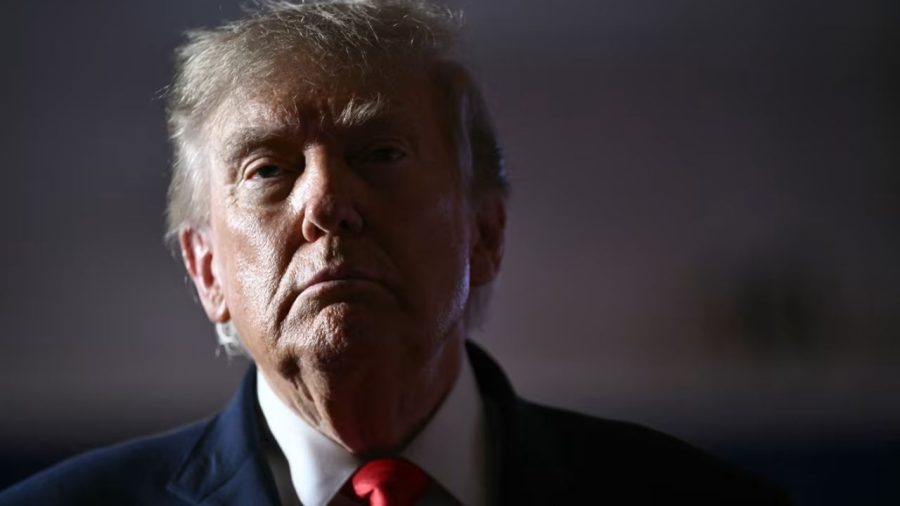
Jamieson Greer, US trade representative, said the tariffs largely stick to agreed rates but could be topped up by a few percentage points. China’s 20 per cent levy comes on top of roughly 25 per cent tariffs imposed in 2018 during the first term of Donald Trump, US president.

Probe targets excess capacity
The White House launched the Section 301 investigation under the 1974 Trade Act on 11 March to examine whether trading partners used unreasonable or discriminatory practices restricting US commerce.
Jamieson Greer, US trade representative, said at the time that the United States would no longer sacrifice its industrial base to countries exporting excess production capacity.
He added that the probe underscores the commitment of US President Donald Trump, to reshore critical supply chains and create good-paying manufacturing jobs, arguing that many trading partners produce more goods than they consume domestically.



A separate probe into weak anti-forced labour laws across 59 countries and the European Union concluded earlier this year, adding duties of 10 per cent to 12.5 per cent.
Alternative legal route follows court ruling
The latest tariff action follows a decision by the US Supreme Court in February that struck down sweeping “Liberation Day” emergency tariffs, ruling them illegal and forcing billions of dollars in refunds to US importers this summer.
In response, the White House sought alternative legislative routes to reinstate import taxes.
Jayant Menon, trade expert at the ISEAS-Yusof Ishak Institute, explained that the new levies apply to fewer jurisdictions, are lower and more uniform, and are grounded in a months-long investigation, making them more likely to withstand legal challenges.


International pushback and market reaction
Beijing rejected US claims of overcapacity, with a Chinese foreign ministry spokesperson calling the accusations a “false narrative” and opposing political manipulation. The spokesperson added that a trade war between the two nations serves no party’s interests.
The move comes shortly after Donald Trump, US president, met Xi Jinping, Chinese president, and Vladimir Putin, Russian president, in southern China, with another meeting scheduled at a G20 summit in the United States next month.
Meanwhile, financial markets reacted nervously, with S&P 500 futures falling 2.1 per cent, Nasdaq futures dropping 3.2 per cent, European equities dipping, and the US dollar edging up against a basket of currencies.
Economists have warned that import taxes could fuel inflation, raise consumer prices, and dampen global trade.

Political pressure mounts ahead of new congress
Canada was notably omitted from the 14-country list, having not been included in the Section 301 excess capacity investigation.
A senior administration official who briefed reporters said this should not be viewed as a clean bill of health, noting that other targeted economies presented egregious cases requiring action.
Donald Trump, US president, had previously hit Canadian exports such as steel, copper, cars, and alcohol with tariffs of up to 50 per cent, triggering counter-tariffs from Canada on US metals, seafood, and dairy products.
Much of the trade between the two nations remains tariff-free under the United States-Mexico-Canada Agreement.
In the midterm congressional elections this month, voters punished the Republican party, with an Associated Press survey indicating about two-thirds of voters believed the policies of US President Donald Trump, had made the economy worse.
Nevertheless, trade restrictions remain central to the president’s political identity. The new policy presents a fresh challenge for congressional Republicans, who could join Democrats when Congress reconvenes in January to force a showdown over tariffs.