


The minimum wage board will follow legal procedures to determine a new minimum wage for garment workers if factory owners fail to submit their proposal at a meeting scheduled for Monday, its chairman Syed Azad Subhani said on Saturday.
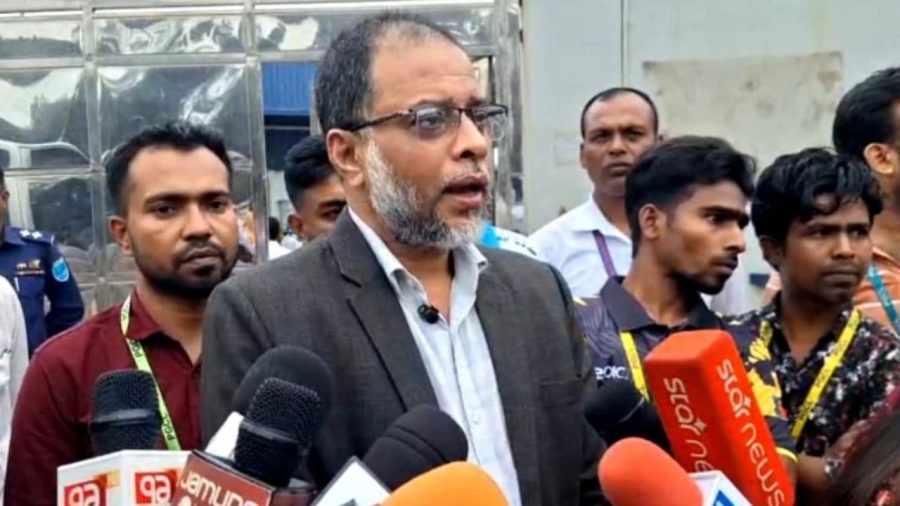
He made the remarks while speaking to journalists during a visit to the Ashulia industrial area in Savar to assess the overall labour situation.
“We have a meeting scheduled for Monday, as announced earlier. We hope the owners will submit their proposal. I cannot compel anyone to do so. If no proposal comes, we will follow the legal procedures and work based on the prescribed criteria and indicators,” he said.
Asked whether delays in the wage-setting process had created a rift between the board and factory owners, Subhani said it was too early to make such an assessment.
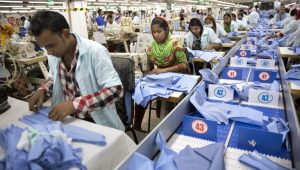
A team led by the wage board chairman visited a garment factory in the Palashbari area of Ashulia, where they spoke with workers about their salaries, demands, family expenses and working conditions.
After the inspection, Subhani said the board was collecting information from both workers and employers to determine an appropriate minimum wage.
The board is assessing workers’ salary expectations, the number of family members dependent on their earnings, and the financial challenges and facilities available to factory owners, he said.

New wages expected from December
Subhani said the postponement of the board’s second and third meetings had caused frustration among workers, who were concerned that employers might be reluctant to submit their proposals or cooperate with the process.
However, he said neither workers nor employers had exerted pressure on the board and that the meetings had been postponed for valid reasons.
The minimum wage board was formed on 1 November, with its first meeting held on 4 November under his chairmanship.
Under the labour law, the board has six months from its formation to complete the process, meaning it has until 30 April next year. However, representatives of both workers and employers want the process completed as soon as possible, he said.
They expect the revised wages to take effect from December, he added.




The chairman said representatives of workers, employers and independent members are contributing to the process individually and collectively. Research organisations are also conducting studies and submitting recommendations.
With 61 workers’ federations in the country, reviewing proposals from different organisations is a time-consuming task, he said, adding that the board is working round the clock to complete the process.
Asked about workers’ dissatisfaction with factory working conditions, Subhani said none of those interviewed during previous factory visits had expressed grievances about their workplace environment.
However, some workers had reported financial difficulties due to the number of dependants in their families.
During Saturday’s visit, two workers spoke about the pressure of meeting household expenses, he said.
He also pointed out that several members of some families worked together to support their households. At one factory, three members of the same family earned a combined Tk70,000 to Tk75,000, he said.
Workers’ right to protest must be respected
Subhani said workers had the right to protest, adding that their problems and demands might have remained unknown to employers and the wage board had they not taken to the streets.
“The state protects workers’ right to protest. However, nobody has the right to create disorder or engage in criminal activities in the name of protests,” he said.
He urged workers not to be influenced by any third party and encouraged them to exercise their rights through lawful means.
“As a government employee, I respect your right to protest. I urge you to remain patient,” he said.
Responding to a question about why labour unrest was concentrated in certain areas of Savar and Ashulia, and whether intelligence agencies or law enforcement agencies had failed to address it, Subhani said his responsibility is limited to determining the minimum wage.
He said the board had several mechanisms to collect information but is visiting workers and factory owners directly to understand their concerns and challenges.
Assessing the performance of other agencies is not his responsibility, he added.
The chairman said it was not possible for him to meet all 40 lakh garment workers individually, but the media could help him reach them within a short time.
The wage board has seven members, including the chairman, along with a secretary and 10 to 12 support staff, he said, highlighting the challenges of addressing the concerns of such a large workforce with limited manpower.
He stressed that the garment sector, the country’s largest export-earning industry, must not be allowed to suffer.
“We never want this sector to be harmed. If something positive happens for workers, we want to be a small part of that achievement,” he said.