Bangladesh’s tariff advantage over India and Vietnam will widen if Washington’s latest tariff proposals take effect, despite an eight-percentage-point increase in its own additional duties.
However, that advantage could narrow once the two major apparel-exporting competitors secure trade agreements with the United States, industry insiders say.
The US on Wednesday proposed tariffs of up to 18 per cent on goods from Bangladesh, Cambodia, Indonesia, Malaysia and Thailand, 35 per cent on Vietnam and 25 per cent on India, with certain product exemptions.
Vietnam’s rate could fall to 20 per cent and India’s to 17 per cent if they reach reciprocal trade agreements addressing Washington’s concerns.
Bangladesh Apparel Voice CEO Mohiuddin Rubel said the proposed 18 per cent tariff includes the existing 10 per cent additional duty levied on top of the 15.6 per cent most-favoured-nation (MFN) tariff. If implemented, Bangladesh’s total apparel duty would rise to 33.6 per cent from 25.6 per cent.
Successful trade negotiations with Washington could bring Vietnam and India broadly on a par with Bangladesh. However, securing a tariff-rate quota for garments made using US cotton would give Bangladesh a substantial competitive advantage over both countries, Rubel said.
Policy Exchange Bangladesh Chairman and CEO M Masrur Reaz told TIMES that every percentage point increase in US tariffs would push up American retail prices, risking a slowdown in consumer demand.
However, Bangladesh could gain US market share if it ultimately faces lower tariffs than its major apparel-exporting competitors.
Centre for Policy Dialogue Executive Director Nazneen Ahmed said additional tariffs were undesirable.
“Bangladesh has already offered the United States a great deal and is importing substantial volumes of goods from the country, including aircraft. Yet another tariff measure would put considerable pressure on Bangladesh,” she said.

The duties would further undermine Bangladesh’s export competitiveness, compound economic pressures and create greater trade challenges, she said, urging the government to intensify negotiations with Washington.
“The move would not only hurt Bangladesh but could also increase costs for US consumers. Such a decision would benefit neither side,” she added.
The Office of the United States Trade Representative (USTR) announced the proposals following investigations into industrial policies and practices that allegedly create or sustain structural excess manufacturing capacity and production in 14 economies, restricting American commerce.
The proposed tariff on Bangladeshi goods is net of existing Section 301 duties and accounts for Section 232 duties, ongoing consultations with Dhaka and commitments under the bilateral Agreement on Reciprocal Trade.
Similar provisions apply to Cambodia, Indonesia and Malaysia under their respective reciprocal trade agreements and Thailand under its trade agreement framework.
US Trade Representative Jamieson Greer said the proposed ceilings were consistent with trade agreements reached over the past year that had also lowered barriers to American exports.




The new duties would not be imposed on top of the 10 per cent and 12.5 per cent tariffs introduced in July on 60 trading partners over alleged inadequate enforcement of laws against forced labour.
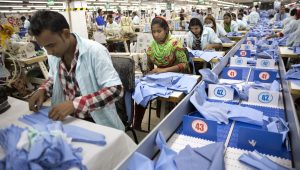
Bangladesh’s ready-made garment industry is at the centre of the investigation, with the USTR identifying five concerns: industrial expansion plans, production and export incentives, inadequate labour protections, financial repression and failure to address global excess manufacturing capacity through imports and investment from non-market economies.
Washington defines structural excess capacity and production as manufacturing capacity or output persistently exceeding market-driven levels due to government intervention.
While acknowledging that no single metric establishes excess capacity, the USTR identified five indicators in Bangladesh: manufacturing’s above-average share of gross domestic product (GDP) compared with the US and the Organisation for Economic Co-operation and Development (OECD) average, a low labour share of GDP, persistent trade surpluses with the US, and growing imports and investment from non-market economies in key export sectors.
Although Bangladesh has been less successful than some other investigated economies in expanding manufacturing, Washington alleged that its policies had artificially increased garment production, lowered costs and prices, and enhanced export competitiveness.
The USTR deemed these practices unreasonable for targeting exports and export-led growth, distorting market-oriented competition and prioritising producers and exporters over workers and public welfare.
The investigation particularly highlighted Bangladesh’s lower garment wages compared with competitors and acknowledged improvements under the April 2026 labour law amendment. Bangladesh has also recently raised its minimum garment wage.


Growing reliance on Chinese manufacturing inputs was another major concern.
Bangladesh’s imports of intermediate goods from China increased by $7 billion, or 68 per cent, between 2017 and 2025, while US imports of such goods from China fell by $30 billion, or 21 per cent.
The USTR particularly highlighted Bangladesh’s surging imports of manufacturing inputs from non-market economies, especially China, since 2022.
Washington alleged that these imports artificially enhanced Bangladeshi products’ competitiveness, while inadequate monitoring of Chinese foreign direct investment allowed China to channel its excess manufacturing capacity through Bangladeshi industries.
Beyond garments, the investigation identified sheets, rugs, curtains, tablecloths and other household textiles, alongside imported capital goods and intermediate inputs, in which American manufacturers have production and export potential.
The USTR attributed Bangladesh’s persistent bilateral goods trade surpluses with the US to government-supported export-oriented manufacturing, substantial input imports and market access barriers.

It alleged that these practices restricted American manufacturers’ commercial opportunities at home and abroad, costing production, sales, revenue, investment, innovation, jobs and wages, while linking persistent US trade deficits to the decline of American textile manufacturing.
Among Bangladesh’s competitors, Vietnam came under scrutiny over industrial and land planning, inadequate labour protections, financial repression, preferential capital allocation, price regulation, and investment, imports and transshipment from other non-market economies, particularly in textiles, apparel, footwear, shipbuilding, cement and technology.
China faces tariffs of up to 20 per cent, with selected products subject to rates of up to 10 per cent and others exempt, reflecting commitments under the Kuala Lumpur Joint Arrangement reached by US President Donald Trump and Chinese President Xi Jinping on 30 October 2025.
However, China’s rate would rise to 40 per cent if the trade truce, which expires on 10 January 2027, collapses.
The proposed 20 per cent tariff would be added to duties of roughly 25 per cent imposed during Trump’s first term, while around $30 billion worth of Chinese imports being considered for tariff reductions would be exempt.
Washington cited China’s extensive industrial support, non-commercial support for state-owned enterprises, forced technology transfers, intellectual property theft, forced labour, lax environmental enforcement, financial repression, currency practices and encouragement of manufacturing expansion abroad.
China rejected the allegations, describing industrial overcapacity as a false issue and opposing its use for political manipulation.
Singapore faces tariffs of up to 20 per cent, potentially falling to 10 per cent under a qualifying trade agreement or other negotiations.
The European Union faces a proposed rate of 15 per cent, while Japan, South Korea, Switzerland and Taiwan face rates of up to 15 per cent, net of existing MFN and Section 301 duties, with product exemptions and existing trade commitments taken into account.
The Trump administration’s latest tariff proposals range from headline rates of 20–40 per cent, subject to lower negotiated ceilings, as it seeks to restore duties struck down by the US Supreme Court in February.
The USTR launched investigations into 16 economies on 11 March under the US Trade Act of 1974, receiving testimony from nearly 140 witnesses and 1,070 comments. Investigations into Mexico and Norway remain ongoing.
Greer said decades of industrial targeting, wage suppression, financial support and reliance on non-market economy inputs had eroded America’s manufacturing base, while successive international efforts to address excess capacity had failed.
Interested parties have until 5 January 2027 to submit written comments and requests to appear at public hearings beginning on 25 January. The proposed tariffs will not take effect before the hearings.