


A detailed “National Policy Proposals and Strategic Recommendations” was published on Thursday to establish the rights, full protection, and justice for persons with disabilities facing climate risks ahead of the 31st UN Climate Change Conference (COP31), scheduled to take place in Antalya, Turkey, from 9 to 20 November.
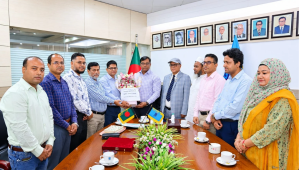
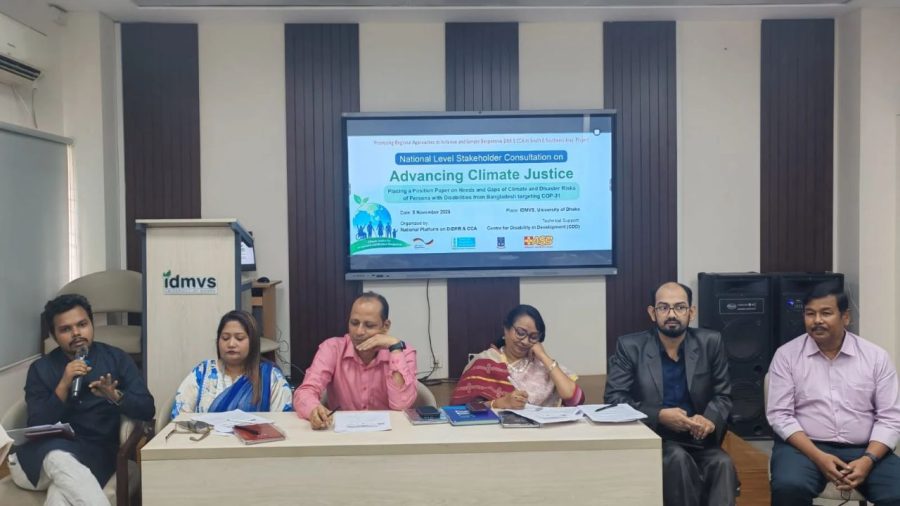
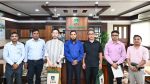
The policy framework was unveiled at a press conference held at the conference room of Institute of Disaster Management and Vulnerability Studies (IDMVS) at Dhaka University.
The event was organised by the National Platform for Disability-Inclusive Disaster Risk Reduction and Climate Change Adaptation (DiDRR & CCA), Bangladesh, with technical support from the Centre for Disability in Development (CDD).
The policy proposal, titled “Advancing Climate Justice for Persons with Disabilities: Protecting Rights, Preventing Disability-Related Harm and Ensuring Inclusive Climate Resilience in Bangladesh,” highlighted that people in coastal regions of Bangladesh face severe risks from multiple hazards, including cyclones, storm surges, sea-level rise, salinity, and extreme heatwaves due to their geographical location.
It mentioned that persons with disabilities suffer two-fold damage during such disasters. Firstly, pre-existing persons with disabilities endure extensive losses due to a lack of proper early warning systems and accessible rescue operations and shelters.

Secondly, physical injuries, mental trauma, and the absence of emergency medical care and rehabilitation during disasters cause many people to develop long-term physical limitations and new disabilities.
To address this situation, a seven-point recommendation was presented to the international climate community, the COP31 presidency, and policymakers.


The recommendations call for recognising the protection of persons with disabilities as a major priority of global climate justice and ensuring their specific share and access in international climate funds and loss and damage funds.
They also emphasise making early warning systems, rescue operations, and multipurpose shelters 100 per cent accessible and inclusive to prevent disaster losses.
Moreover, the recommendations highlight the need to guarantee emergency medical services, physical rehabilitation, assistive technology and devices, and long-term social protection to prevent new disabilities following disasters.
They call for implementing gender-sensitive, sustainable adaptation and livelihood programmes to protect women with disabilities, ensuring meaningful representation of organisations of persons with disabilities (OPDs) in global and national climate policymaking processes including COP31 discussions, and collecting disability-disaggregated data with specific indicators to ensure effective accountability.
At the national level, the platform urged the Bangladesh government to include persons with disabilities in the effective implementation of National Adaptation Plan (NAP) 2023-2050 and the Standing Orders on Disaster (SOD) 2019.
It also stressed the importance of disability-friendly financing in the national climate budget and ensuring their active participation in disaster management committees from the grassroots to the national level.

Prof Mahbuba Nasreen, advisor of the national platform and professor at IDMVS, Dhaka University, alongside Md Jahidul Islam, representative of persons with disabilities, presented the key policy proposals and recommendations at the event.
The programme began with welcome remarks by Subir Kumar Saha, coordinator of CDD, while Roufa Khanam, deputy director of CGREER at BRAC University, outlined expectations from the Bangladesh delegation at COP31.
In his closing speech, Mohammad Moniruzzaman Khan, director of IDMVS, said: “Sustainable disaster resilience cannot be achieved without an inclusive approach.”
An interactive session with journalists was conducted by Malay Chaki and Raisa Imran Choudhury, and moderated by Anika Rahman Lipi, assistant director of CDD.