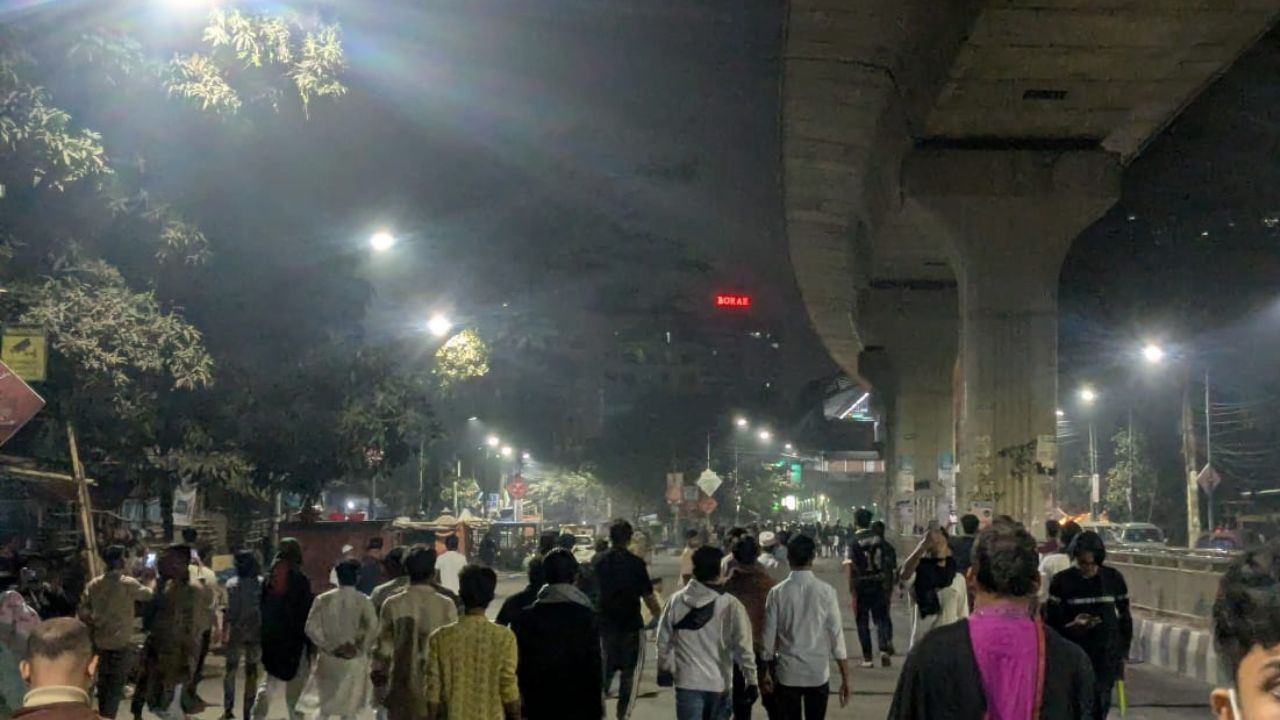

At least 60 people, including independent Dhaka-18 candidate Mohiuddin Roni, were injured Friday night during clashes between police and activists of the Inqilab Moncho at Shahbag.
Hospital authorities confirmed that none of the injured sustained gunshot or pellet wounds.
The violence broke out in two phases. The first confrontation occurred in front of Hotel InterContinental, where police deployed sound grenades, tear gas, and baton-charges to disperse the crowd, resulting in injuries to more than 50 Inqilab Moncho activists.
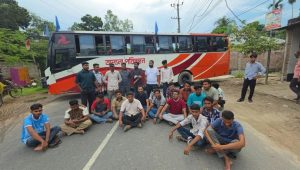
In protest against the police action, activists blocked the Shahbag intersection later that evening.

This led to a second round of clashes involving further baton-charges and tear gas, during which approximately 20 individuals, including Mohiuddin Roni, sustained injuries and were rushed to the hospital.
Dr Mostaque Ahmed, the resident surgeon of the Emergency Department at Dhaka Medical College Hospital (DMCH), confirmed that Mohiuddin Roni suffered baton-inflicted injuries and an inhalation injury caused by tear gas. The surgeon noted that Roni’s condition is currently stable.


Director of DMCH Brigadier General Md Asaduzzaman addressed journalists at approximately 8:30pm, stating that the hospital had received roughly 60 patients related to the incident.
He clarified that while 30 patients presented with external injuries to the scalp, face, and legs caused by batons, and many others suffered breathing problems due to tear gas, there were no cases of gunshot or pellet wounds.
Victims were treated with oxygen and other primary care, and as of the latest update, no one has been admitted to the hospital for long-term treatment.
Regarding the hospital’s operations, Brigadier General Asaduzzaman mentioned that 200 doctors and adequate nursing staff were on duty to handle the influx.
However, he highlighted that crowd control was a significant challenge, as 10 to 15 people often accompanied a single patient, making it difficult for medical staff to work.
He noted that the emergency department had been expanded to treat 25 patients simultaneously to manage the situation.