Social Welfare and Women and Children Affairs Minister Professor AZM Zahid Hossain has stated that ‘Proxy Means Test’ (PMT) scoring will be used to keep the distribution of the Family Card completely free from political influence.
During the piloting phase, ultra-poor, poor, and vulnerable lower-income families falling within the 1st, 2nd, and 3rd quantiles of the 0-1000 score range will be automatically included in the list. These poverty thresholds can be re-determined after reviewing and assessing the country’s socio-economic conditions at specific intervals.
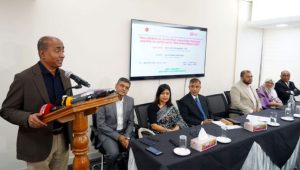
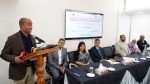
The minister made these remarks during a press briefing after inspecting the Family Card piloting activities on-site, organised by the TNT Boys’ School on the occasion of visiting the Banani Koral Slum and Saat Tala Slum in Dhaka on Saturday.

The minister said that to realise the state’s responsibility to ensure citizens’ right to social security under Article 15(d) of the Constitution of Bangladesh through a modern digital framework, the “Family Card” Piloting Implementation Guideline 2026 has been formulated.
The core philosophy of this programme is “the family, not the individual, is the primary unit of development”. The goal of this programme is to build a non-discriminatory and humane welfare state by eliminating flaws like the existing lack of coordination among over 95 current social security programmes, the same person receiving multiple benefits, and a significant percentage of the genuinely poor being left out.



Zahid Hossain said that eligibility in rural areas will be determined based on owning 0.50 acres or less of cultivable land including homestead land, as well as the family’s monthly income and assets. To ensure women’s empowerment, this card will be issued directly in the name of the “mother” or “female head” of the family.
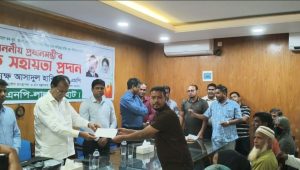
Under the pilot programme, each selected family will be provided with Tk 2,500 per month as direct cash assistance. This money will be deposited directly from the government treasury into the mobile wallet or bank account of the beneficiary woman through the G2P (government to person) method.
The minister stated that a robust organisational structure, from the Cabinet Committee down to the grassroots level, has been created to implement this massive undertaking. Separate implementation and monitoring committees have been formed at the upazila, union, and ward levels for this purpose.
For the pilot phase, 14 diverse areas across the country have been selected, including Dhaka’s Banani Koral Slum, Mirpur’s Alimiar Tek Slum and Baganbari Slum (urban slums), Chittagong’s Patenga (industrial area), Bandarban’s Lama (hill tract area), Sunamganj’s Derai (haor area), and Thakurgaon Sadar (border area). Priority was given to poverty density, geographical challenges, and backwardness in selecting the areas.
The minister said that according to the implementation roadmap, in the first phase of the pilot programme, this card will be provided to 10,000 families in 14 units. Subsequently, increasing by 10,000 in each phase, 40,000 families across various units will be brought under the Family Card by June 2026. This will be regarded as a historic charter for the economic emancipation of Bangladesh’s poor population, which will ensure the dignity and rights of every citizen.
At that time, Social Welfare Ministry Secretary Mohammad Abu Yousuf, along with officials from the ministry and the Department of Social Services, and teachers, were present.