Prime Minister Tarique Rahman has said the government is working continuously to resolve the ongoing gas and electricity shortages through both immediate and long-term measures, acknowledging the significant hardships faced by the public.
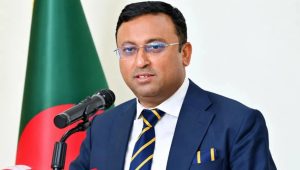
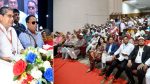
Speaking on Tuesday at a discussion marking the second anniversary of the July mass uprising, the prime minister said the government is not trying to evade its responsibility by making excuses.
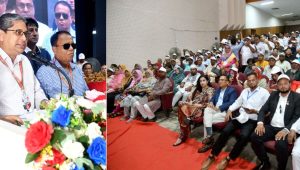
The event, titled “Seventeen Years of Relentless Struggle for Democracy and the Blood-soaked July Awakening,” was organised by the BNP at the Krishibid Institution Bangladesh (KIB) and chaired by its Secretary General, Mirza Fakhrul Islam Alamgir.
Tarique Rahman noted that the crisis has severely affected households and industries due to a “battered economy” and years of mismanagement. He alleged that the previous “fascist” administration had treated the energy sector as a means of “plundering,”

leaving it in a fragile state after years of corruption and looting. He remarked that rebuilding a sector “devastated by years of looting” would naturally take time.
The prime minister detailed several initiatives to bolster gas supply, including the commencement of discussions with neighbouring Myanmar to import natural gas. He also revealed that Bangladesh is in negotiations with Malaysia’s state-owned energy firm, Petronas, to import liquefied natural gas (LNG) via a container-based transportation system.
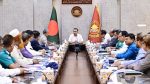


Following his recent visit to Malaysia and direct talks with Malaysian Prime Minister Anwar Ibrahim, a virtual meeting between Petronas and Bangladeshi officials was held on Monday evening. Although Petronas has a long-term commitment to Japan, it is attempting to arrange LNG supplies for Bangladesh by October.
“If we can ensure gas supply to our industries, it will significantly improve the situation,” the prime minister said.
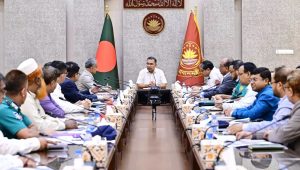
Addressing the power shortage, the prime minister explained that the government is working to secure fuel for eight power plants that are currently idle. He said if gas can be supplied to these facilities, approximately 4,000 megawatts of electricity could be added to the national grid within three to four hours.
Tarique Rahman further alleged that the Bangladesh Petroleum Exploration and Production Company (BAPEX) had been “virtually paralysed” over the past 17 years, with exploration work largely handed to foreign companies.
To reverse this trend, the government has decided to procure two drilling rigs for BAPEX to accelerate exploration in areas with potential reserves. While he acknowledged that the process would take time, he expressed hope for positive results in the near future.
Reaffirming the government’s commitment to restoring stability, the prime minister stated that ensuring uninterrupted gas and electricity is a key expectation of those who sacrificed for the country during the Liberation War, various democratic movements, and the July uprising. He pledged to reduce public suffering through sustained reforms and investment in the sector.
The discussion was also attended by leaders of the BNP, its associate organisations, and political allies from the simultaneous movement.