


A dispute over who declared the one-point demand that toppled the government during the July Mass Uprising sparked chaos at a state event on Wednesday, with foreign diplomats leaving the venue amid protests in the presence of Acting President Hafiz Uddin Ahmad.
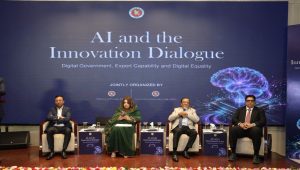
The incident took place at the Bangladesh-China Friendship International Conference Centre in Agargaon, Dhaka, where the Ministry of Liberation War Affairs organised the programme.
The controversy erupted after a documentary screened at the event identified Prime Minister Tarique Rahman as the “declarer of the one-point demand” but omitted the name of Abu Sayed, whose death at Begum Rokeya University in Rangpur had sparked widespread protests during the uprising.
The omission drew criticism from the acting president himself. The audience included family members of those killed during the movement, July fighters, and leaders and activists of the BNP, Jamaat-e-Islami and the National Citizen Party (NCP).
The eight-minute documentary was screened at the beginning of the programme. Soon after it ended, NCP activists in the audience began chanting, “Who declared the one-point demand?” They also shouted, “Fake, fake”, creating a tense situation inside the venue.

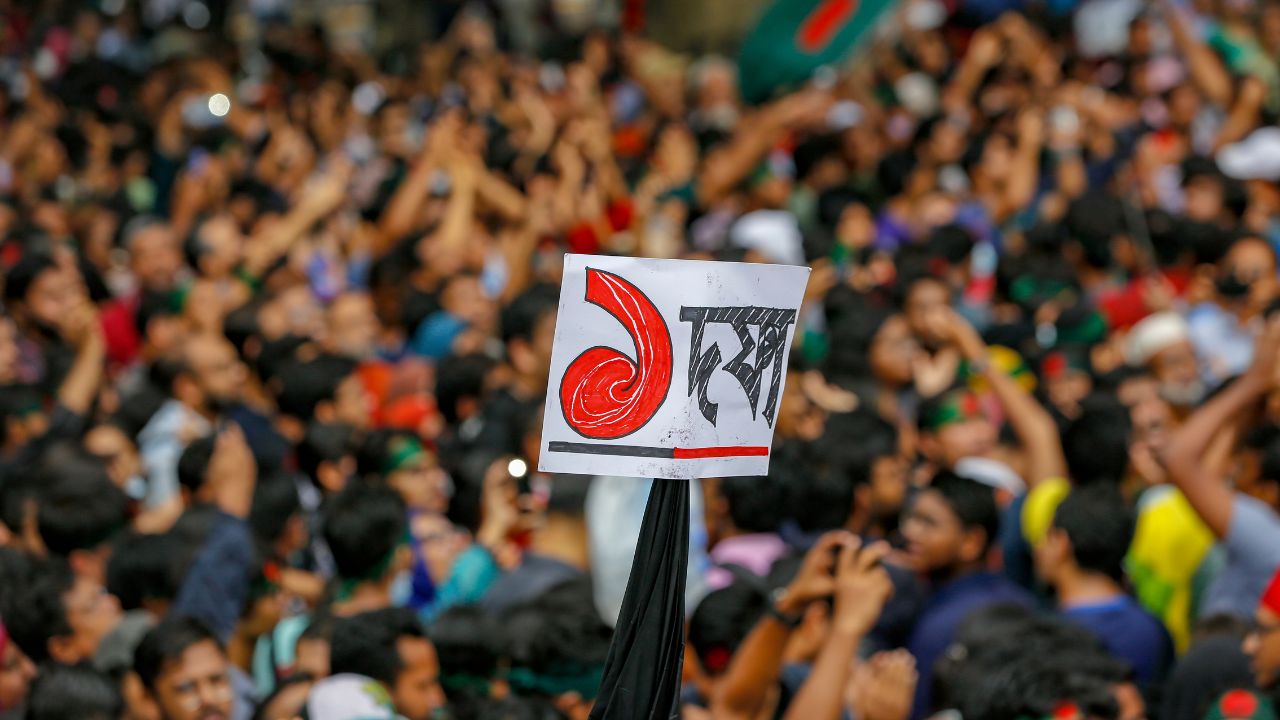
They claimed the one-point demand was announced on 3 August 2024 at a rally held after a protest march from the National Press Club to the Central Shaheed Minar. Nahid Islam, a coordinator of the Anti-Discrimination Student Movement that led the uprising, made the call after rejecting an offer of dialogue from the then government and demanding its removal.
The rally featured numerous placards carrying the words “one-point”. At the time, Tarique Rahman was living in exile in the UK as the acting chairman of the BNP. He returned to Bangladesh in December 2025, 16 months after the fall of the government.
Although legal restrictions prevented the broadcast of his statements at the time due to convictions in multiple cases, Tarique regularly addressed party supporters through Facebook. During the unrest, he also called for the government’s removal in video messages.
The documentary showed Tarique’s 21 July video message, in which he spoke about the one-point demand, instead of Nahid’s 3 August declaration.



Those protesting the documentary alleged that it failed to properly portray key events of the July movement, the sacrifices of those killed and the role of student coordinators. They claimed the contributions of the Anti-Discrimination Student Movement leaders had been deliberately excluded.
Home Minister Salahuddin Ahmed later went on stage and urged everyone to remain calm. NCP Member Secretary Akhtar Hossain then addressed the gathering, saying, “Just as the Awami League had taken one-sided ownership of the Liberation War, a similar situation has been created here.”
After his remarks, Akhtar left the venue with party leaders and activists after seeking permission from the president.
President criticises documentary
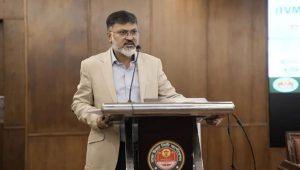
The acting president also criticised the documentary while delivering his speech as chief guest. “Abu Sayeed was one of the key symbols of this movement. A documentary that does not have a picture of martyr Abu Sayeed is not a documentary,” Hafiz Uddin said.
Earlier, Liberation War Affairs Minister Ahmed Azam Khan said the government would examine the inconsistencies in the documentary, including issues related to 3 August.
Referring to the minister’s statement, Hafiz Uddin said, “Mistakes can happen and the concerned minister has publicly expressed regret. But creating such disorder at a national event was undesirable, and such a situation in front of foreign guests has damaged the country’s image.”
He said ensuring rehabilitation and treatment for the families of those killed and injured in the July uprising was one of the government’s key responsibilities.
“According to the state’s capacity, the families of martyrs and the injured will receive the highest possible support,” he added.
Responding to Awami League president and ousted prime minister Sheikh Hasina’s announcement that she would return to Bangladesh in December, Hafiz Uddin said, “Come, we will see. Return to the country, we will meet on the streets.”
NCP leaders voice anger
NCP leaders also expressed strong dissatisfaction over the documentary. Sarjis Alam, the party’s chief organiser for the northern region, wrote on Facebook that watching the documentary could give the impression that “there was no mass uprising in July; rather, there was a BNP party uprising”.
“The BNP has learnt well the Awami League’s habit of trying to take control of history,” he wrote. In another post targeting Tarique Rahman, Sarjis wrote, “Mr Tarique Rahman, how does it feel to become the declarer of the one-point demand?”
NCP Joint Member Secretary Mahin Sarkar alleged that he was attacked for protesting against portraying Tarique Rahman as the declarer of the one-point demand. “Nahid Islam, who signed his own death warrant by declaring the one-point demand, is not in history,” he said.