
In 1940, at the Muslim League session in Lahore, a resolution called for independent states in the north-western and eastern regions of India where Muslims were in the majority.
The people of East Bengal welcomed it. They believed they would have a country of their own, speak their own language and live on their own terms.
But once Pakistan was created, it became clear that the dream would remain just a dream. In 1947, Pakistan became independent and the people of East Bengal became citizens of the new state.
It did not take long to see that the rulers of West Pakistan viewed East Bengal through a colonial lens. In their eyes, Bengali Muslims were converts from ‘low-caste Hindus’ – incomplete Muslims, neither pure nor civilised.
Their language, therefore, was seen as unworthy of state recognition. From that mindset came the declaration that Urdu would be the sole state language of Pakistan.
Yet the majority of Pakistan’s population lived in East Bengal, and their mother tongue was Bangla. Only a small minority spoke Urdu. Still, the language of that minority was imposed on millions.
The issue was never only about language. It was about power. If the state functioned in Urdu – in courts, government offices, and education – those raised in Bangla would begin the race already behind.

To strip a people of their language is not only to silence them; it is to deny them livelihood, dignity and opportunity. The people of East Bengal understood that.
So, in February 1952, students took to the streets. Police opened fire. Rafiq, Salam, Barkat, Jabbar – one after another – fell on the streets of Dhaka.
Through that bloodshed, Bengalis discovered themselves. Before 1952, the people of East Bengal were divided; farmers, weavers, students. After 1952, they were one – Bengali. That unity was the greatest achievement of the Language Movement.
The Language Movement was not merely about language. It was a nation discovering itself – a demand for dignity and a declaration to the state: “We exist, and we count.”
Once awakened, such consciousness does not sleep again. Throughout the 1960s – 1958, 1962, 1966, 1969 – every movement drew strength from 1952. Poet Al Mahmud captured that memory:




“On the afternoon of the twenty-first of February
The rain falls – where is that rain? It is Barkat’s blood.
Red enough to burn for a thousand ages under the sun,
It is that crimson which has reddened the branches of the krishnachura.
Prabhat pheri, prabhat pheri, take me with you –
Bangla is my speech; I was born in this Bengal.”
Poems were written, songs were sung, vows were taken at the Shaheed Minar. In that continuity came 1971 and independence.
If one event must be named as the decisive force behind the birth of Bangladesh, it is the Language Movement.
After independence came a new dream: Bangla would be established at every level of the state – in courts, universities, research, and administration.
The humiliation of the Pakistan era would not be repeated. Ask today whether that dream has been realised, and the answer is uncertain.
More than five decades on, higher education is conducted in English. Court verdicts are written in English. Research is published in English. English remains the gateway to jobs and opportunity. Affluent families choose
English-medium schools, seeing them as the path to success. Bangla-medium education is often the option for those who cannot afford otherwise.
In Pakistan, Urdu was the language of power. Today, English occupies that space. The structure has not changed; only the language has.
The education system is fragmented into three streams. General schools teach in Bangla, though policy instability raises concerns about quality.
Madrasas prioritise Arabic. English-medium institutions treat Bangla almost as a secondary subject. When graduates of these systems meet in the same society, inequality is built in.
Where does the harm lie if Bangla is not used everywhere?
It lies where the struggle began in 1952. When the state does not operate in a language, those raised in it fall behind.
If court proceedings are in English, the ordinary Bangla-speaking citizen cannot fully grasp their own justice. If universities teach in English, talented Bangla-medium students begin with a structural disadvantage. This is not personal failure; it is systemic inequality.
A language excluded from the full space of the state weakens. Without scientific practice, it cannot develop scientific vocabulary. Without legal writing, it cannot refine legal precision. Unused, it contracts, eventually becoming unable to carry complex thought.
The martyrs of 1952 shed blood so that Bangla would not remain only the language of the home, but become the language of the state; not only of affection, but of authority. That aspiration remains unfinished.
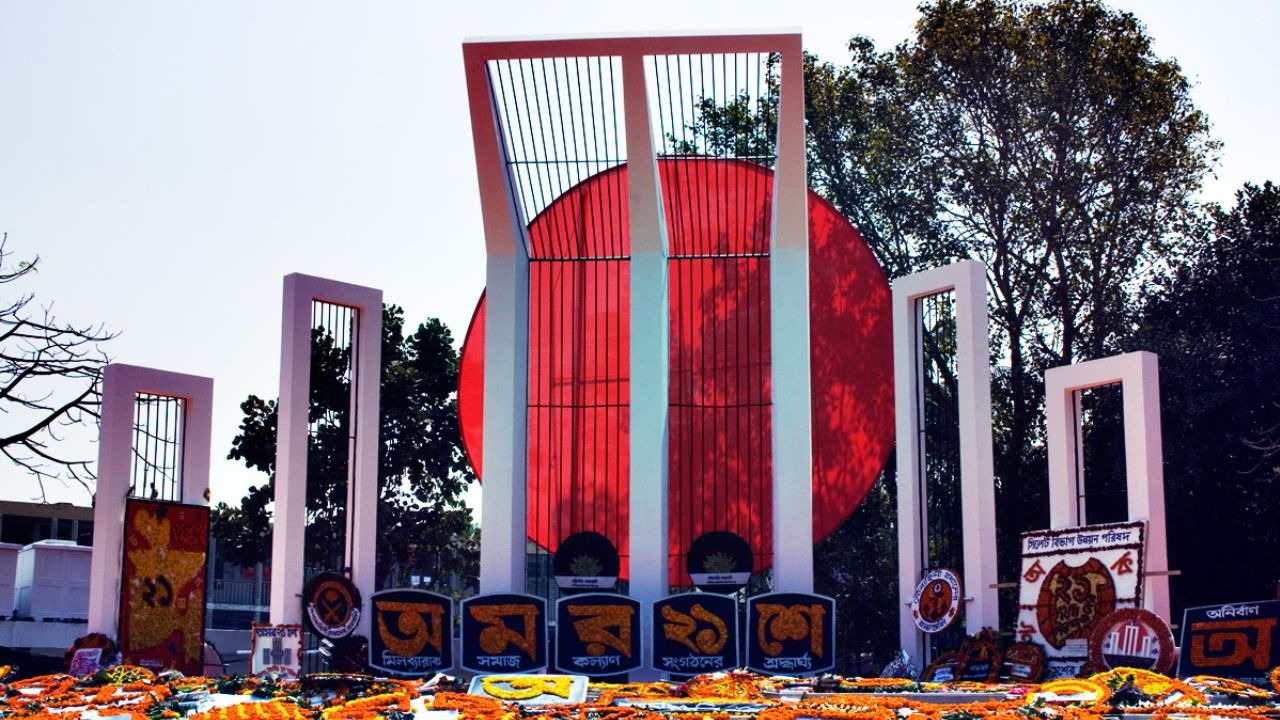
Yet there is no cause for despair. The spirit of the Language Movement endures. Each February 21st, when people walk barefoot to the Shaheed Minar, it is not ritual alone. When injustice occurs, citizens gather there because it remains a symbol of resistance.
Bangla literature continues to thrive, absorbing new realities and experiences. But literature alone cannot complete the task. Bangla must enter every sphere of state power.
True homage to 1952 will come when a citizen who knows only Bangla can seek justice, pursue education and engage with the state in their own language.
That day must be realised by the Bengalis who once stood united. The wait is not yet over.