The government is moving to implement the new pay structure for public servants from the beginning of the 2026–27 fiscal year, with the increased basic salary set to take effect from 1 July.
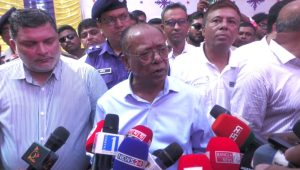
Cabinet Secretary Nasimul Gani confirmed the matter to TIMES of Bangladesh, saying the effective date and the start of payment under the revised structure are separate issues.
“When the payment will start is a separate matter, but it will take effect from July,” he said.
Under the proposed Ninth Pay Scale, employees in grades 1 to 10 have been recommended for a salary increase of around 100 per cent, while employees in grades 11 to 20 may receive an increase of around 130 per cent.

The government had initially planned to increase the basic salary in two phases over two years and raise allowances in the third year. However, it is now considering implementing the basic salary increase in one go, while allowances may be adjusted later.
Officials said the effective date does not mean employees will receive salaries at the new rate immediately. Additional time will be required to complete necessary procedures.




On 11 June, during the budget presentation, Finance Minister Amir Khosru Mahmud Chowdhury announced that the government would introduce a new pay structure for public servants from the 2026–27 fiscal year.
He said rising inflation had increased living costs, while government employees had been receiving salaries and allowances under the same pay structure for nearly 11 years.
The National Pay Commission, formed during the interim government led by Muhammad Yunus and headed by former finance secretary Zakir Ahmed Khan, recommended increasing salaries of government employees. The interim government had earlier announced plans to implement the recommendations but later stepped back.
After the BNP government led by Tarique Rahman assumed office, a 10-member committee headed by Cabinet Secretary Nasimul Gani was formed to review the Ninth Pay Commission recommendations.
The Eighth National Pay Scale was implemented in 2015 in two phases, with the revised basic salary introduced that year and allowances adjusted the following year.
Under the 2015 pay scale, the minimum basic salary was set at Tk8,250 and the maximum at Tk78,000. The Ninth Pay Commission has recommended raising the minimum basic salary to Tk20,000 and the maximum to Tk160,000.
The commission estimated that around Tk1.06 lakh crore in additional funds would be required to implement the new pay structure.
Fahmida Khatun, executive director of the Centre for Policy Dialogue (CPD), said in an analysis that the government must consider its fiscal capacity, budget deficit, borrowing and possible macroeconomic impacts while implementing the new pay scale.