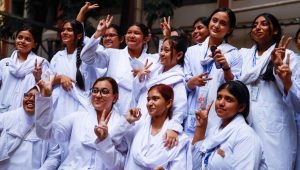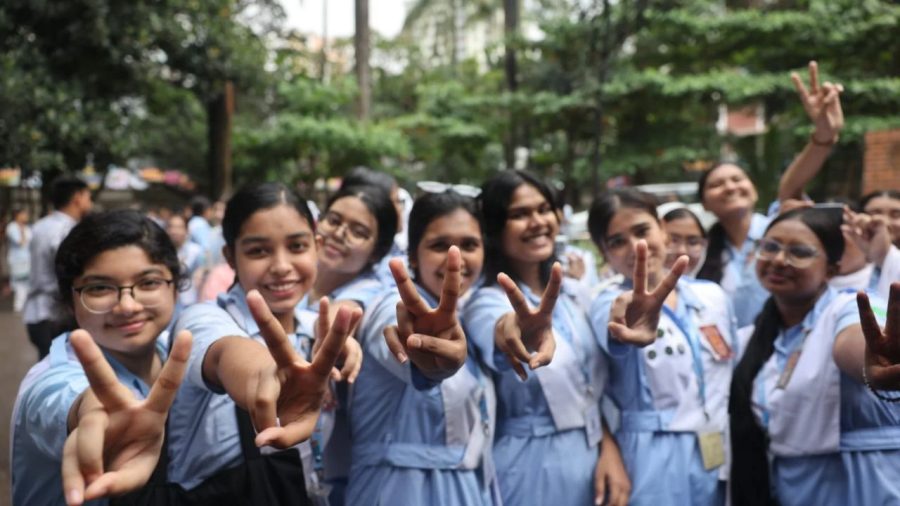



Nearly 40 per cent of seats in Bangladesh’s higher education institutions could remain vacant this year, as a sharp fall in the Higher Secondary Certificate pass rate leaves fewer students eligible for admission.
Only 6,46,685 students passed this year’s HSC and equivalent examinations, against 8,28,304 seats available across public and private universities, colleges affiliated with the National University and medical education institutions.
That leaves 1,81,619 more seats than successful candidates, even if every student who passed seeks admission.
The gap could widen considerably if recent enrolment trends continue.
Over the past three years, an average of 21 per cent of students who passed the HSC examinations did not enrol in higher education. If that pattern continues, around 1.36 lakh successful candidates may not pursue further studies this year.
In that case, approximately 3.17 lakh seats, or nearly 40 per cent of the total, could remain vacant.

However, the projection may change, as students who failed in one or two subjects will, for the first time this year, have an opportunity to retake those examinations in December.
Mohammad Mahbub Morshed, associate professor at the Institute of Education and Research at the University of Dhaka, welcomed the opportunity but cautioned against compromising academic standards to fill vacant seats.
“Earlier, even if a student failed in one subject, they had to wait until the next year. Now, within a month of the results, they are being given the opportunity to sit exams only in the subjects they failed. That is fine. But in trying to match the number of seats with the number of students, the quality of education should not be compromised,” he said.



He argued that providing quality education to fewer students and helping them progress would be preferable to lowering standards by admitting more students than classrooms could accommodate.
Pass rate and GPA-5 numbers fall
The overall pass rate across the country’s 11 education boards fell to 52.12 per cent this year, from 58.83 per cent last year, a decline of 6.71 percentage points.
The number of students securing GPA-5, the highest grade, dropped by 29,013, or around 42 per cent, from 69,097 last year to 40,084.
Among the three academic groups, science recorded the highest pass rate at 73.12 per cent, followed by business studies at 50.77 per cent and humanities at 42.17 per cent.
The fall in the number of successful candidates and top-grade achievers could also reduce competition for admission to public universities this year.
Public universities and medical colleges together have around 30,000 to 32,000 seats, while only 26,702 science students achieved GPA-5.
In business studies, 3,268 students secured GPA-5, compared with approximately 3,500 seats in public universities.
Public universities have an estimated 12,000 to 14,000 seats in humanities and social sciences, but only 5,978 humanities students achieved GPA-5, less than half the number of available seats.

These figures suggest that fewer top-grade candidates may compete for places, although admission depends on more than HSC results.
Top grades no guarantee of university admission
A high grade point average does not necessarily translate into success in university admission tests.
The University of Dhaka’s admission results for the 2025–26 academic year illustrate this distinction.
According to the university’s admission office, 46,861 applicants had achieved GPA-5 in both their Secondary School Certificate (SSC) and HSC examinations across the science, business studies, and arts, law and social sciences units.
Of those applicants, only 12,913 passed the university’s admission tests.
The figures show that even among students with the highest grades in both public examinations, a substantial proportion failed to qualify in the admission tests.