Nakshi Kantha is more than embroidery. It is memory stitched into cloth, poetry written with a needle, and one of Bangladesh’s most intimate artistic traditions. Born from necessity yet shaped by imagination, it transforms layers of old sarees, dhotis, and lungis into living canvases where stories of love, grief, faith, and everyday life are preserved in thread.
The name itself comes from the words “naksha,” meaning design, and “kantha,” meaning quilt. Traditionally, rural Bengali women created these quilts by layering worn fabrics together and sewing them with simple running stitches. What began as an act of thrift slowly evolved into an extraordinary form of storytelling.
In villages across Bengal, women would often gather during long afternoons or monsoon days to stitch scenes drawn from the world around them. Rivers filled with boats, birds soaring across the sky, farmers working in the fields, wedding processions, flowers, fish, and mythic symbols all found their place within the fabric. Every quilt carried traces of personal memories and local landscapes, turning ordinary household items into deeply emotional works of art.
Nakshi Kantha is especially rooted in the rural textile traditions of northern and southwestern Bangladesh. Historically, Chapainawabganj and the greater Rajshahi region became known for refined katha work. In the southwest, districts such as Khulna, Jessore, and Satkhira continued the tradition within deltaic village cultures shaped by wetlands, rivers, and seasonal rhythms.

Across generations, women passed the craft down almost naturally, from mother to daughter, grandmother to granddaughter. This inheritance of skill and memory became an inseparable part of Bengali folk culture and was immortalised in Palli Kabi Jasimuddin’s Nakshi Kanthar Maath, where the quilt itself becomes a symbol of longing, devotion, and loss.
Part of the beauty of Nakshi Kantha lies in its freedom. Unlike formal artistic traditions bound by strict symmetry, these quilts flow instinctively. Every stitch reflects the individuality of its maker, meaning no two pieces are ever the same. Alongside depictions of daily life and nature, many kathas also contain spiritual symbolism.




Motifs such as the lotus, kalash, cosmic sun, and stupa often carry Hindu and Buddhist influences, while geometric borders and repeating patterns suggest protection and harmony. In Sujni Kantha from the Rajshahi region, intricate floral and geometric designs also reveal Islamic Arabesque influences, showing how the art form quietly absorbed multiple cultural traditions over time.
Even the process of making a kantha feels poetic. The fabric spreads across the floor like an open field, while the needle moves slowly and patiently through the cloth. Completing a single quilt can take months, sometimes years. In many ways, Nakshi Kantha becomes not simply an object, but a process of remembrance itself, art created in between household chores, changing seasons, and even generations.
Today, however, this deeply personal tradition is slowly fading from its original domestic rhythm. The practice of hand-stitching quilts is no longer as common in rural households as younger generations move toward urban livelihoods and faster forms of work. The time-intensive nature of embroidery, combined with limited financial return, has discouraged many artisans from continuing the craft.
Ironically, while Nakshi Kantha is celebrated internationally as a symbol of sustainable heritage and handcrafted storytelling, it often lacks consistent support within its own cultural landscape. The number of people actively preserving the tradition continues to shrink.
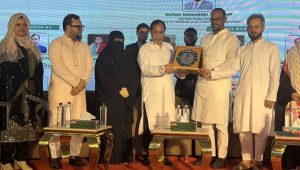
Among those working to keep the art alive is Md Aminul Islam from Shailkupa, Jhenaidah, founder of Bangla Selayi and a long-time associate of Aarong. Beyond being an artist himself, Aminul has spent years organising rural artisans, travelling from village to village to connect needleworkers from different districts under a shared platform.
Speaking to Times of Bangladesh, Aminul shared that he learned the craft from his mother and grandmother at an early age. As a child, he would help thread needles before gradually beginning his own small designs. He admitted that embroidery was often viewed socially as a “feminine” activity, something that affected him emotionally in his younger years. Yet he continued because, as he reflected, “no work is masculine or feminine” when it comes from genuine passion and dedication.
Today, Nakshi Kantha has expanded far beyond household quilts. It appears in galleries, global craft exhibitions, fashion collections, cushion covers, sarees, jackets, shirts, and home décor. Though adapted into contemporary forms, it still carries the same emotional language woven through generations of Bengali life.
At the same time, it reminds us of a larger cultural responsibility. Preserving Nakshi Kantha is not simply about protecting a craft. It is about protecting memory, identity, and connection in an increasingly mechanical and digital world.