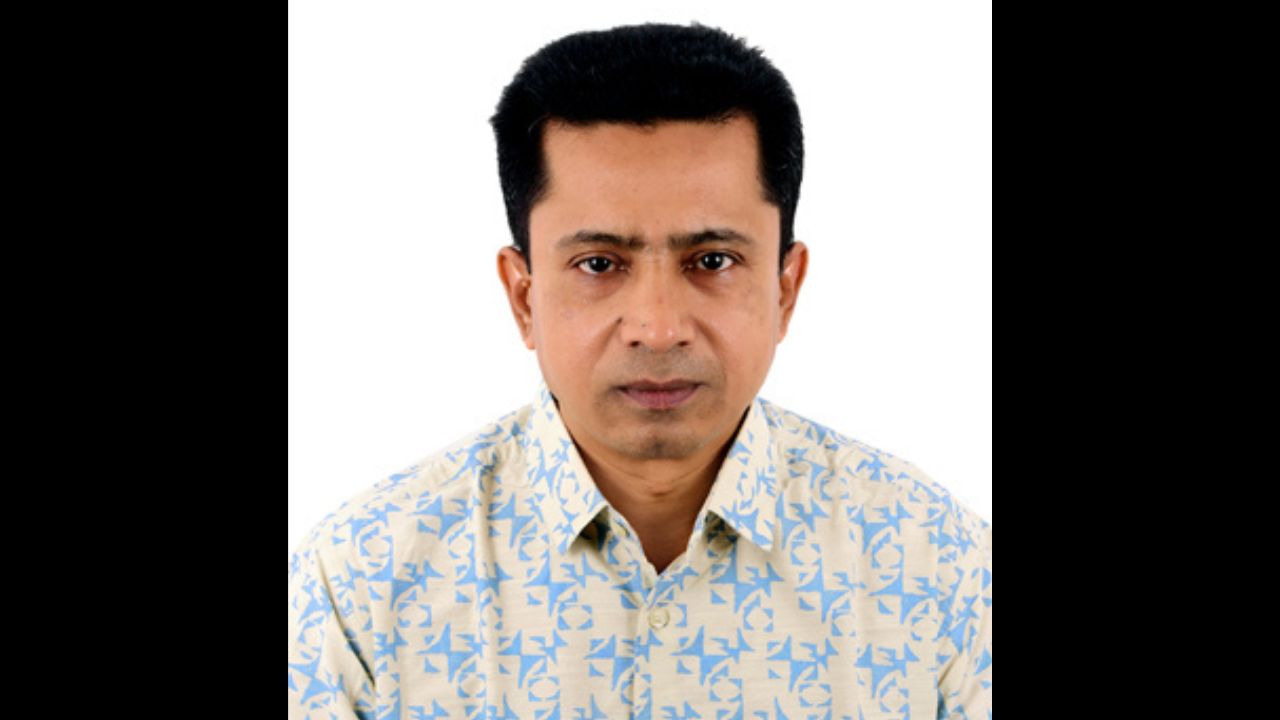

Professor Mojibur Rahman of the Institute of Education and Research (IER), University of Dhaka, has said that much of the proposed education budget for the upcoming fiscal year is detached from reality, despite a few positive elements.
In an interview with TIMES of Bangladesh, the education researcher said the government appears more focused on creating “spectacle” through initiatives such as smart boards, tablets and technology procurement, rather than addressing the sector’s core crisis – a severe shortage of quality teachers.
He added that Bangladesh’s education system faces “mountainous challenges,” and most of them are unlikely to be resolved through the current budget framework.
A big jump in numbers, but not in priorities
The education budget has been increased from Tk87,206 crore to Tk136,606 crore.
However, Prof Rahman said the size of the allocation is less important than the share of GDP spent on education. “The government had earlier promised to spend 5 per cent of GDP on education. Now it is talking about around 2 per cent, which is surprising,” he said.
He added that while reaching 5 percent may not be possible immediately, a clear roadmap is essential. “A budget is not just an income-expenditure statement; it is also a philosophy that shows the direction of a country.”
Teacher shortage is the biggest limitation
According to him, the most serious gap in the education budget is the lack of focus on teacher recruitment.
“The government seems more interested in smart boards and tablets, but we have never said those are the most important things,” he said.
He noted that Bangladesh has around 70,000 primary schools, many of which lack head teachers, while secondary schools also face severe teacher shortages.

“How can we ensure quality education without teachers?” he asked.
AI-based education is unrealistic
Commenting on plans for AI-based education, Prof. Rahman called the idea “completely detached from reality.”
Referring to a Unesco study, he said many students in Bangladesh still fail to achieve basic competency in Bangla, English and mathematics even after completing primary education.
“If we do not even have enough Bangla and English teachers, then talking about AI is a luxury. First comes survival, then vitamins,” he said.
Quality of teachers a major issue
Beyond numbers, he said the quality of teachers is another major concern.
He noted that many people enter teaching as a last option when they fail to secure other jobs. “I am not saying this applies to everyone, but in many cases it does,” he said.



He added that teaching is not a preferred career choice in Bangladesh due to low social status and limited financial security.
“If there were a separate and attractive pay scale for teachers, the best talents would enter the profession,” he said.
Technical education plan is flawed
Prof Rahman criticised the proposal to introduce compulsory technical education from grade six.
“I consider this a wrong decision,” he said.
He argued that Bangladesh has still not ensured universal and meaningful primary education, and students are struggling with basic learning outcomes.
He said technical education should remain optional.
“Those who are interested should take it. It should not be imposed on everyone,” he said.
Need for education reform commission
He said the government should have first established a comprehensive education reform commission.
Such a body, he said, should define a national education philosophy based on the expectations of students, parents and society, before introducing curriculum reforms.
Planning should also include long-term workforce needs, including how many doctors, engineers, technicians and researchers the country requires.
Third language should not be compulsory
He opposed making a third language compulsory in schools.
“There should be opportunities to learn a third language, but it should not be mandatory,” he said.
He suggested optional language learning centres or model schools at the upazila level for interested students.
Madrasah education should be integrated
On madrasah education, he said different streams such as Noorani, Qawmi and Alia should be brought under a unified national framework.
“They are all citizens of Bangladesh. They should neither be neglected nor treated separately,” he said.
Girls’ higher education policy needs reconsideration
He questioned the proposal to extend free education for girls up to the undergraduate level.
He said priority should be ensuring compulsory and quality education up to higher secondary level for all students.
“At this stage, ensuring effective education up to higher secondary level for everyone is more important,” he said.
Two positive aspects of the budget
Despite his criticism, Prof Rahman pointed to two positive aspects.
First, he welcomed the proposed education reform commission, provided it is inclusive and not politically biased.
Second, he noted the government’s stated goal of increasing education spending to 5 percent of GDP, saying this could improve future accountability.
He concluded that while the budget includes some positive intentions, much of it lacks realism and clear prioritisation.
“The real issue is implementation. Without addressing teacher shortages and improving quality, most of these plans will remain on paper,” he said.