One year after a Bangladesh Air Force training aircraft crashed into Milestone School and College in Dhaka’s Diabari, families of the victims say they have neither received the compensation promised by the government nor any financial assistance from the authorities or the school.
Parents of those killed and injured also allege that neither government officials nor representatives of the school have maintained contact with them or offered basic humanitarian support over the past year.
On 21 July last year, an FT-7 BGI training aircraft of the Bangladesh Air Force crashed into a classroom during school hours, killing 36 people, including pilot Flight Lieutenant Md Towkir Islam, students, teachers and guardians. Of the dead, 28 were students.
More than 165 people were injured in the crash, many of whom are yet to recover fully.

On 11 December, around four and a half months after the incident, Chief Adviser’s Press Secretary Shafiqul Alam announced that the families of those killed would receive Tk2 million each, while those injured would receive Tk500,000. According to the families, however, neither the government nor the school authorities contacted them afterwards regarding the announced assistance.

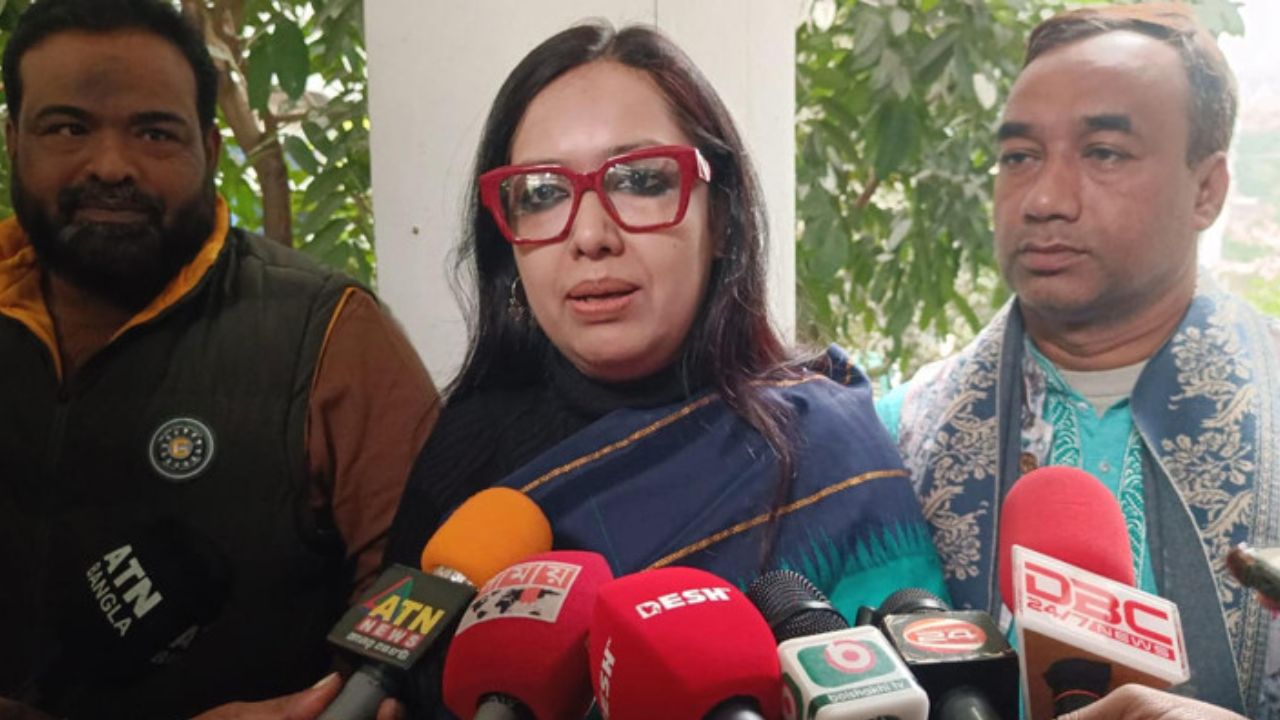
Salma Akter, mother of deceased student Wakia Ferdous Nidhi, told TIMES of Bangladesh, “Forget financial assistance, no one from the government or the school has even checked on us. Only we know what it is like to live after losing a child.”
The father of another deceased student, Raisa Moni, said, “We have lost our greatest treasure. No amount of money can compensate for that loss. But we expected at least some compassion and empathy from the government and the school authorities. Sadly, no one has contacted us.”
Nur Ashfiq’s father said the loss of his eldest child had devastated the family. “My wife has still not returned to a normal life. Neither have I. We thought those responsible would at least stand beside us, but it feels as though everyone has forgotten us,” he said.



Survivors continue to struggle with trauma
Many of the injured students continue to suffer from physical complications and psychological trauma one year after the crash.
Salahuddin, father of seriously injured student Meherin, said his daughter still requires ongoing treatment. “It will take much more time for her to recover physically and mentally. Even after a year, she cannot attend school regularly. She is still undergoing therapy and may need several more surgeries,” he said.

Responding to the allegations, a teacher at Milestone School denied that the institution had neglected the victims’ families. “We have maintained regular contact with the parents. The school also bore various expenses, including hospital treatment and other medical costs for injured students,” the teacher said.
Probe points to training and oversight failures
The investigation commission formed after the crash concluded that deficiencies in the pilot’s flight training and inadequate supervision by his ground supervisor and officer commanding contributed to the accident.
The then interim government formed a nine-member inquiry commission headed by former secretary AKM Zafar Ullah Khan. After more than three months of investigation, the commission submitted its report to the government.
According to the report, Flight Lieutenant Towkir Islam took off on his first solo training flight around 12:30pm on the day of the accident. Communication between the aircraft and the air traffic control tower was lost at 1:13:11pm, and the officer commanding confirmed the crash at 1:14:38pm.
Witnesses said the aircraft struck the left side of the staircase of the school’s Haider Ali Building. Jet fuel ignited immediately after the impact, causing the fire to spread rapidly through the building.
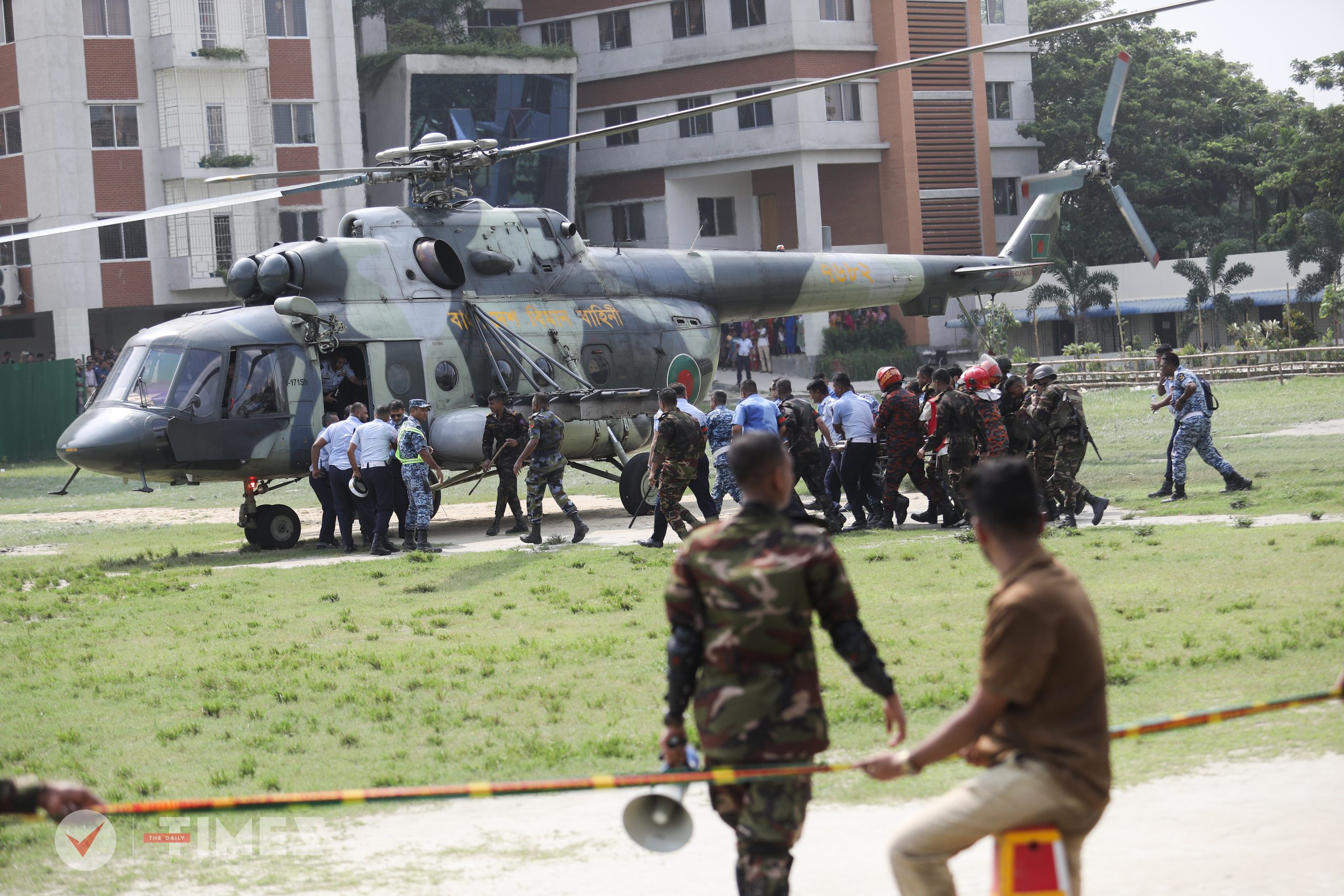
A report by the Fire Service and Civil Defence said the damaged building had only one staircase, although its size and occupancy required at least three emergency staircases. According to the report, additional emergency exits could have reduced the number of casualties.
CAAB Member (Air Traffic Management) Air Commodore Md Nur-e-Alam said the site had approval for structures up to 150 feet in height, but no building there exceeded 132 to 137 feet.
He added that CAAB had already handed over lists of 642 to 645 buildings and structures identified as violating the Obstacle Notification Surface (ONS) around the airport to various investigation committees and the Rajdhani Unnayan Kartripakkha (Rajuk).
Nur-e-Alam said CAAB’s responsibility is limited to determining the maximum safe building height and issuing related clearance. Decisions on whether schools, colleges, hospitals, warehouses or other facilities may be constructed at a particular location fall under the jurisdiction of the relevant urban planning authorities.