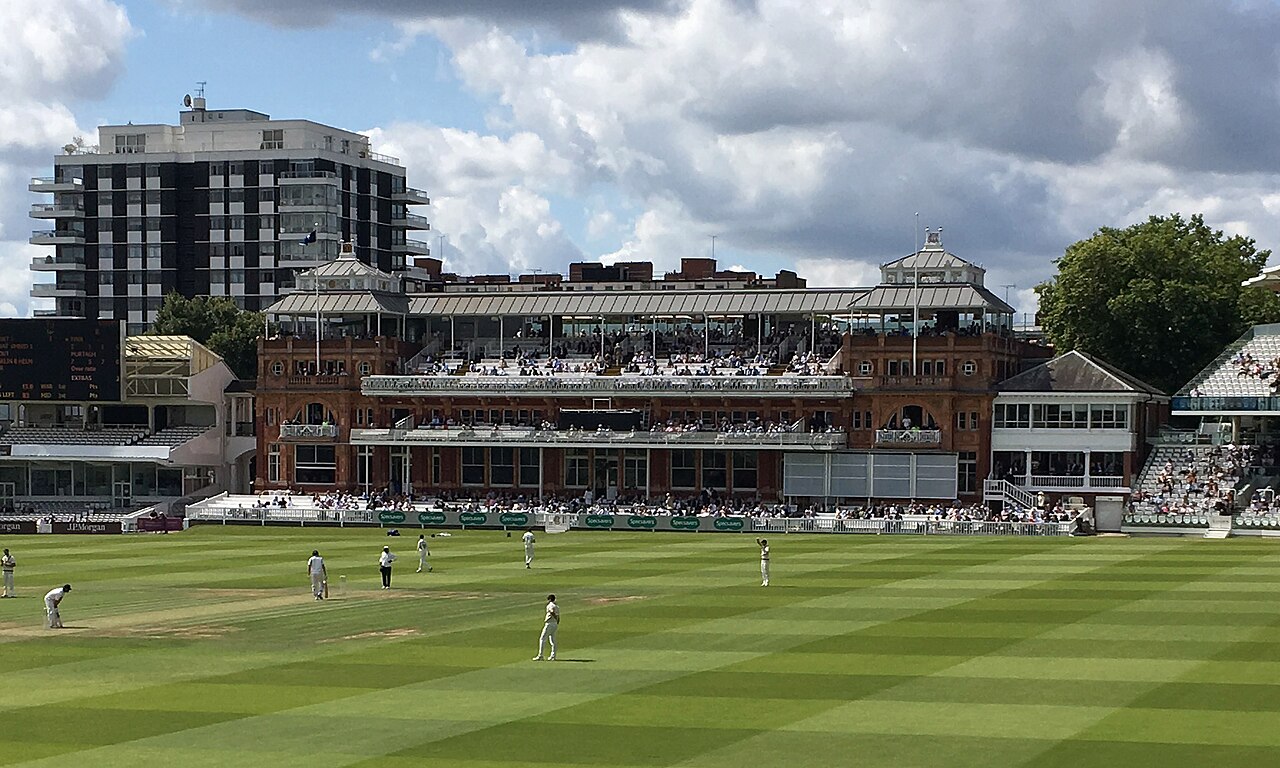

The Marylebone Cricket Club on Tuesday released an updated version of the Laws of Cricket. The update includes 73 material changes. The aim is to make the game clearer, fairer, and better suited to modern cricket.
One of the key updates gives umpires more freedom in deciding when a ball becomes dead. Under the revised law, the ball no longer needs to be in the hands of the bowler or wicketkeeper to be considered finally settled. It can be in the hands of any fielder or remain still on the ground.
“The ball no longer has to be in the bowler or wicketkeeper’s hands to be finally settled. It can be in the hands of any fielder or stationary on the ground. This allows umpires the freedom to make reasonable decisions on when the ball is Dead, even if one fielder, or one batter, is still attempting to play on,” the law says.
The update has also clarified the law on overthrows. The revised wording clearly separates overthrows from misfields. An overthrow is now defined as an attempt to throw the ball at the stumps to stop runs or attempt a run out. Other efforts to stop the ball or throw it near the boundary will be treated as misfields.

Changes have also been made to the law on Hit Wicket. The update refines when a batter is considered to have received the ball. A batter can now be out Hit Wicket if they fall onto the stumps while trying to regain balance after playing a shot.
“Receiving the ball lasts until the batter has gained control of their balance after playing the ball. If the batter is off balance because of the shot they played, hops around for a few steps, and falls onto their stumps, that is as a result of the action they took to receive the ball. The ball may be long gone, but the striker is still out Hit wicket,” the MCC explains.
However, a batter will not be given out if they are pushed onto the stumps by a fielder while regaining balance, unless the contact is purely incidental.




Another major update allows laminated bats in adult recreational cricket. These bats were earlier allowed only in junior cricket since 2017. Laminated bats are made from up to three pieces of wood. They cost less and help manage the rising demand for quality willow.
The update said the move was “part of an attempt to slow the rising costs” of cricket bats around the world. It also clarified that laminated bats, known as Type D bats, do not offer any performance advantage. National boards will decide where these bats can be used in domestic competitions.
A significant change has also been introduced for multi day matches, including Tests. The final over of the day will now be completed even if a wicket falls. Under the revised Law 12.5.2, the batting side can no longer carry the remaining balls into the next morning. A new batter must come in immediately and face the rest of the over.
“The final over of a day’s play will not end if there is a wicket. This is a significant change that will impact multi-day cricket. It was felt unfair that, if a fielding side takes a wicket in the final over of the day, the batting side does not have to send out a new batter.”
The update noted that the earlier rule did not save time, as the remaining balls had to be bowled the next day. It also reduced drama and allowed the incoming batter relief when conditions often favour bowlers. Under the new rule, the full over will be bowled as long as conditions remain fit.
The revised Laws will come into effect on October 1, 2026. The ICC Cricket Committee will review the changes to decide whether they will apply to international matches. National boards may also adopt them in domestic cricket.
“This is the third time the MCC’s Laws sub-committee has edited the Laws since the 2017 Code came into effect,” following earlier updates in 2019 and 2022.
MCC Laws Manager Fraser Stewart said the latest revisions reflect the need to keep pace with a changing sport.
“Cricket is a fast-evolving sport, and this edition is drafted with the modern game in mind, as we are constantly looking to ensure that the Laws, which the Club has administered since being founded in 1787, are fit for all levels of cricket across the globe,” Stewart said.