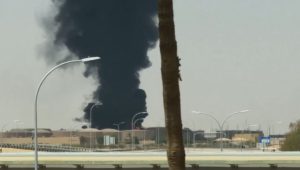
A major environmental crisis is unfolding along the Iranian coastline as a massive oil slick has washed up on Qeshm Island, threatening highly sensitive marine habitats, wildlife, and local fishing communities.
The pollution is believed to have originated from a projectile strike on the Liberia-flagged bulk carrier Minoan Pioneer in Omani waters on 3 August.
According to satellite imagery analysed by BBC Verify, the apparent fuel leakage from the bulk carrier had spread across a large section of the Strait of Hormuz by 10 August, covering an area of more than 300 square kilometres (116 square miles), equivalent to over 40,000 football pitches.
John Amos, chief executive officer (CEO) of Skytruth, a specialist satellite environmental monitoring group, estimated that the spill contains “well over” 100,000 US gallons (380,000 litres) of oil.

He warned that the visible slick may only be the “tip of the iceberg” of the environmental impact, as heavier components can settle on the seafloor and persist for years.
Environmental experts have expressed grave concerns over the location of the spill. Dr Keyvan Hosseini, an energy and environmental expert from the University of Southampton, noted that Qeshm is home to sensitive coastal habitats, including mangrove forests, crucial fishing grounds, and nesting sites for critically endangered Hawksbill turtles. The island also borders the Unesco-designated Hara Biosphere Reserve.



Shipping security firm Vanguard reported that the bulk carrier was struck near Oman, with satellite imagery from 5 August showing the vessel still on fire alongside a 10 square kilometre slick, which doubled in size over the next two days. Thick, black oil has since been verified washing up on Suza beach in southern Qeshm.
Iranian media initially reported that the origin of the pollution was under investigation, and Iran’s foreign ministry spokesman stated on Thursday that the source was a “foreign bulk ship”. While a local environmental official claimed the spill has been “almost completely cleaned up”, these claims remain unverified.
Shipping analysts believe Iran was likely behind the attack on the vessel. Samir Madani, co-founder of TankerTrackers.com, described the incident as a “self-inflicted wound by Iran,” pointing out that several vessels have been targeted by Iranians in that exact spot along the Omani route.
Wim Zwijnenburg, an environmental conflict expert at Dutch peace organisation PAX, also concluded that visual evidence points to the Minoan Pioneer as the source of the oil. He added that even when attacks do not cause immediate spills, disabled vessels pose severe risks by sinking or breaking down.
The disaster occurs amid heightened regional tensions. Since US and Israeli forces began striking Iran at the end of February, data from maritime intelligence company Kpler indicates 67 strikes on vessels in the vicinity of the strait.
Tehran has effectively blockaded the waterway, which handles a fifth of the world’s oil and natural gas trade, while a US blockade on Iranian ports has led to several ships being attacked by US forces.
Qeshm Island itself serves as a key strategic base for Iran’s military and was heavily hit by US strikes last month, which state media reported killed three people.
This is the latest in a series of shipping disasters in the area; the container ship Safeen Prestige sank on 4 March near Oman following an attack, leaving a detected oil slick.