A recent survey by the research vessel RV Dr Fridtjof Nansen has highlighted alarming levels of overfishing and deep-sea plastic pollution in Bangladesh’s waters, according to the report submitted to Chief Adviser Muhammad Yunus.
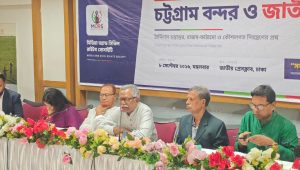
The findings, presented at a meeting on Tuesday morning at the State Guest House Jamuna, underline the urgent need for research-backed policies to protect the country’s marine resources.
Other officials present included Fisheries and Livestock Adviser Farida Akhtar, Chief Adviser’s Special Envoy for International Affairs Lutfey Siddiqi, Professor Syedur Rahman Chowdhury of Chittagong University’s Institute of Marine Sciences, and Assistant Director of the Department of Fisheries, Dr Md Abdullah Al Mamun.
The survey, conducted from 21 August to 21 September 2025, was led by 25 scientists from eight countries, including 13 from Bangladesh.

Professor Syedur Rahman Chowdhury of Chittagong University’s Institute of Marine Sciences presented the research, revealing the discovery of 65 new aquatic species. He warned of an excessive rise in jellyfish in deep waters, indicating ecosystem imbalance driven by overfishing.
Plastic was also found at depths of up to 2,000 metres, raising serious environmental concerns.




Comparisons with a 2018 study showed a decline in large fish in deep waters and sharp reductions in shallower areas. The survey noted that 270–280 large fishing trawlers operate in the deep sea, with 70 using sonar technology for targeted fishing.
While this benefits operators in deep waters, it causes significant losses for those fishing in shallower areas.
The Fisheries Adviser, Farida Akhter warned that continued sonar-based fishing could leave the Bay of Bengal nearly devoid of fish, and the government is set to review regulations on the practice.
The study also highlighted a surplus of tuna suitable for deep-sea fishing in Bangladesh and identified a fishing nursery beneath the Sundarbans, for which the government has already issued conservation directives.
Chief Adviser Yunus emphasised that Bangladesh’s maritime area is equal in size to its landmass but remains underutilised. “We must understand our resources and exploit their potential responsibly,” he said, stressing the need for robust research and policy support.
Chief Adviser further highlighted the importance of international collaboration, citing planned joint research with Japan, Indonesia, and the Maldives. “We must identify problems and work with experts to open new economic horizons for our nation,” he said.
The meeting also noted that the UK Royal Navy’s multipurpose hydrographic and oceanographic survey vessel HMS Enterprise is being transferred to the Bangladesh Navy. The vessel will gather crucial data on seabed conditions, depths, and other maritime information, enhancing national marine research capacity.