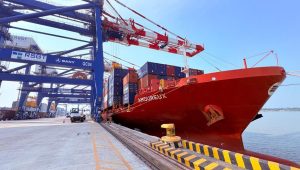



Bangladesh’s gas supply system remains vulnerable despite the return of the Summit-operated floating LNG terminal to full operation, as a possible shutdown of the Excelerate Energy terminal for repairs could trigger another supply shock.
The Summit Floating Storage and Regasification Unit (FSRU) at Maheshkhali resumed full-scale operations on Saturday after a weather-related disruption, restoring a major share of LNG-based gas supply to the national grid.
Petrobangla Senior General Manager Saiful Islam Sarkar said the two Maheshkhali LNG terminals can now supply more than 700 million cubic feet (MMcf) of gas a day. Summit sources said the terminal was supplying around 570 MMcf at 4:00pm on Saturday.
The recovery, however, has not removed concerns as Petrobangla is considering major repairs at the Excelerate-operated FSRU. The work may require both boilers at the US-operated terminal to be shut down simultaneously, with officials discussing whether to begin repairs within the next 48 hours.
If Excelerate’s terminal goes offline while Summit remains the only operating FSRU, LNG-based gas supply could fall significantly again.

The latest disruption exposed a major weakness in Bangladesh’s LNG-dependent gas system: the country has only two floating terminals, leaving little backup capacity when both face problems at the same time.
The crisis began when rough weather prevented an LNG carrier carrying a cargo for Summit from berthing at Maheshkhali. Petrobangla officials said strong winds and rough seas disrupted offshore operations, with wind speeds reaching around 38 knots.
Unable to receive the LNG cargo, Summit suspended gas supply. At the same time, Excelerate’s terminal was operating at reduced capacity after one of its two boilers developed a mechanical problem, cutting output by about half.




The combined disruption reduced supply from the two FSRUs to around 300 MMcf a day on Friday, 14 August, according to Petrobangla sources — less than one-third of their normal combined capacity.
Bangladesh’s domestic gas fields currently produce around 1,600–1,900 MMcf per day, while total supply remains around 2,600–2,700 MMcf against demand of nearly 3,800 MMcf.
With a deficit exceeding 1,000 MMcf a day, imported LNG has become critical to meeting national demand. The two Maheshkhali FSRUs have a combined regasification capacity of around 1,000 MMcf per day, accounting for roughly 37–38 per cent of the country’s total gas supply.
Any disruption at the terminals therefore immediately affects power plants, fertiliser factories, industries, captive power users and other major consumers.
Petrobangla is now awaiting a decision from the ministry on whether to proceed with the Excelerate repair work. A full shutdown could further tighten supplies and affect electricity generation and industrial operations.
The latest setback follows a separate incident at the Excelerate terminal on 21 July, when a fire broke out during an LNG ship-to-ship transfer operation.
The incident forced the FSRU to suspend operations and cut around 450 MMcf of gas supply from the national system.
The repeated disruptions have raised concerns over the resilience of Bangladesh’s LNG infrastructure.
The challenge is no longer only securing LNG cargoes from global markets. Bangladesh must also ensure reliable transportation, offshore transfer, regasification and delivery into the national grid, as a failure at any stage can quickly turn into a nationwide gas supply crisis.