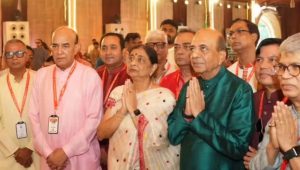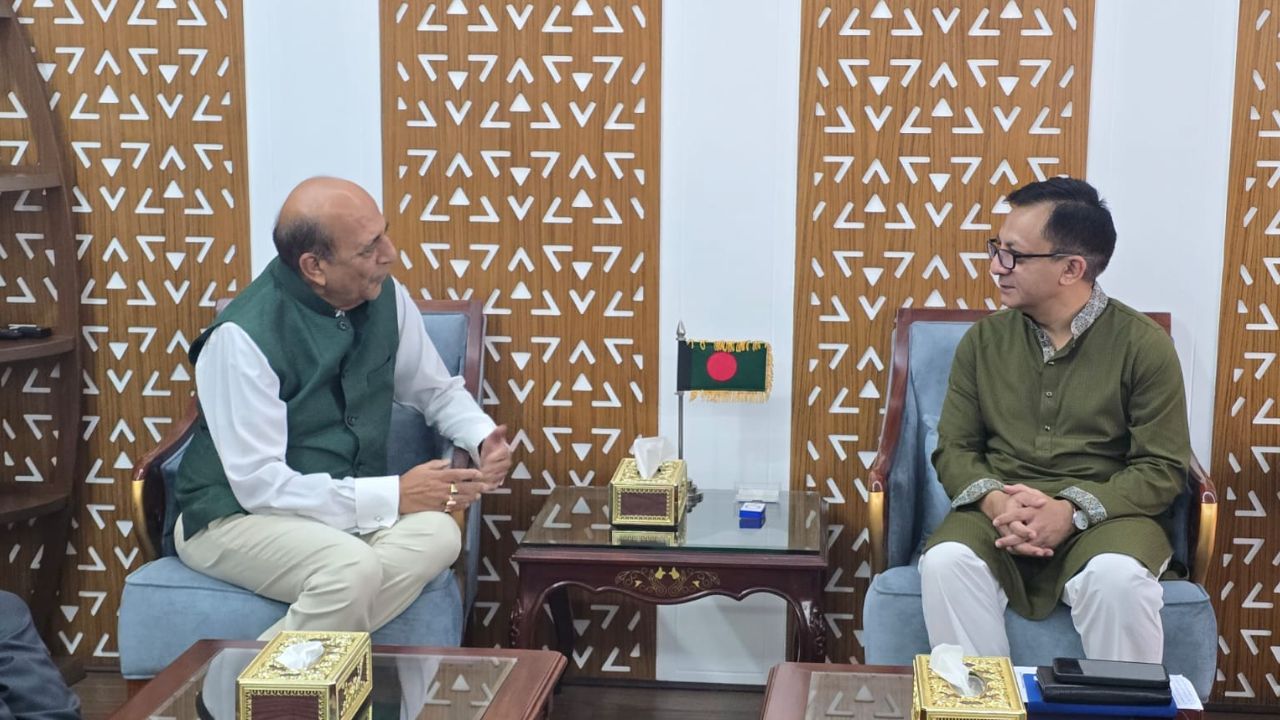



Indian High Commissioner to Bangladesh Dinesh Trivedi on Monday stressed boosting business‑to‑business relations between the two countries, saying politics will run its own course.
“Let us have business‑to‑business together. Politics will continue in its own way, but it is our responsibility to deliver what people deserve. I have no doubt that the future is very positive. Let things take their own time, and let us work together for the people of both countries,” he told reporters at the Secretariat after a meeting with Commerce Minister Khandaker Abdul Muktadir.
The high commissioner described Bangladesh as a vibrant, sovereign and independent country, equal to India.
“Nobody is big and nobody is small. We are all equals, and we have to work on that footing,” he said.
Highlighting peace and prosperity, he added that ensuring peace is the responsibility of both countries, particularly for the younger generation. Ordinary people, he noted, want little beyond basic necessities, with peace as their foremost priority.

Referring to Mahatma Gandhi, he said leaders must always consider the impact of decisions on the poorest.
Trivedi also emphasised exploring joint‑venture opportunities in Bangladesh, including projects in border areas, and underscored the private sector’s role in bridging differences.




“No government in the world can provide everything. It always needs the private sector,” he said, expressing gratitude to business communities on both sides.
Trade initiatives discussed
The meeting between Trivedi and Commerce Minister Muktadir also focused on reopening closed border haats, making land ports fully operational, and lifting the existing ban on yarn imports via land routes to make bilateral trade more dynamic.

The commerce minister said Bangladesh and India currently have bilateral trade worth about USD 13 billion, but barriers over the past 18 months have slowed activities. The talks identified these problems and explored ways to make future trade smoother and more effective.
He also said that India is Bangladesh’s second‑largest trading partner after China, with long‑standing economic ties.
Proposals were made to form a joint task force and improve digital infrastructure to boost cooperation between businesses. This, he said, would create new investment opportunities, expand relations, and accelerate trade.
He expressed hope that initiatives by the Indian High Commissioner would strengthen ties and give economic cooperation new momentum.
Trivedi highlighted Bangladesh’s globally successful garment sector, saying India could support it by supplying zippers, machinery, buttons, and other materials, thereby increasing mutual dependence.
He said he feels proud when he sees garments labeled “Made in Bangladesh” in international markets and noted that the sector could expand further through joint initiatives.
It is expected that increased cooperation between businesses, new investment opportunities, and stronger supply chains will further expand Bangladesh‑India trade relations in the coming days.