


The additional three years to prepare for graduation from least developed country (LDC) status will be meaningful only if Bangladesh fast-tracks reforms.
Experts on Sunday warned that the country’s late preparation, coupled with slow reform progress, could limit the value of the extended timeline.
None of 23 graduation-related reforms monitored by the independent Bangladesh Reform Tracker has reached the “Action Implementation” stage.
The citizen-led platform, whose secretariat is housed at the Centre for Policy Dialogue (CPD), shows six reforms at the proposal stage, nine initiated, two under legal and policy measures and six under operationalisation. None has moved to action implementation, where reform measures are enforced and applied in practice.
The United Nations General Assembly extended Bangladesh’s preparatory period to 24 November 2029.
CPD said the extra time follows years of delayed preparation. Bangladesh adopted its final Smooth Transition Strategy only in 2025, four years late.
The country has been stronger at drafting commitments than delivering them, making the additional three years a test of execution, it added.
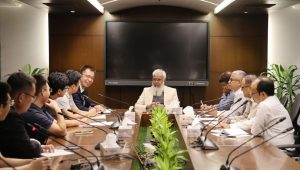
“An exceptional decision demands exceptional performance. The extension is not a precedent,” CPD Distinguished Fellow Debapriya Bhattacharya said at a briefing in Dhaka on Sunday.

He said the reform pathway should centre on public financial management, energy, social protection and logistics to drive diversification, productivity and competitiveness.
For public financial management, CPD called for stronger revenue mobilisation, more effective public spending and lower non-performing loans. Energy reform should ensure reliable and affordable supply while addressing pricing and subsidies.
Social protection should become more inclusive with fewer exclusion errors, while logistics reform should cut the cost of doing business.
The aim is to help Bangladesh diversify beyond readymade garments into new products and markets, raise productivity, particularly labour productivity, and strengthen competitiveness before graduation.
CPD also urged the government to identify every measure available only to least developed countries, including export cash incentives, and set a timetable to phase them out before November 2029.
The Bangladesh Reform Tracker groups the 23 proposals into four areas: seven on trade preferences, 11 on export diversification and competitiveness, four on productive capacity and one on partnerships and international cooperation.




Trade access remains unsettled
Engagement with the European Union over access to its Generalised Scheme of Preferences Plus has advanced, but relief from safeguards on textiles and clothing remains unresolved.
The United Kingdom now allows single-stage transformation for apparel under its Developing Countries Trading Scheme, while no comparable relaxation has been confirmed under the European Union scheme.
Bangladesh has discussed a Comprehensive Economic Partnership Agreement with India to retain benefits now available under the South Asian Free Trade Area, but the tracker found no confirmed progress on continued duty-free access.
The Economic Partnership Agreement with Japan was signed on 6 February 2026 but has yet to take effect, with approval by Japan’s Diet and domestic legal procedures still pending.
Bangladesh’s accession process for the Regional Comprehensive Economic Partnership is under way, while its application to join the World Trade Organisation’s list of Net Food-Importing Developing Countries remains pending.
Export diversification and competitiveness carry the largest reform burden.
Twelve sector strategies have been produced under the updated Diagnostic Trade Integration Study, but the tracker found no consolidated official mechanism showing their implementation status.
Tariff rationalisation advanced in the FY2026-27 budget, but a time-bound action plan under the National Tariff Policy 2023 has not been finalised.
Bonded facilities have been extended to 10 additional sectors, although the scope of a proposed entitlement for duty-free intermediate inputs worth up to 70 per cent of export value remains unclear.
Industrial infrastructure is also unfinished
The Tannery Estate Dhaka was declared complete in 2021, but its central effluent treatment plant cannot handle peak effluent. The active pharmaceutical ingredient park, also declared complete in 2021, still lacks gas supply and has not started commercial-scale production.
Labour reform has advanced further, with the Labour Act amended in April 2026. Revision of the Labour Rules continues, while environmental, social and governance compliance remains largely concentrated in the readymade garment sector.

Non-cotton products now account for 30.7 per cent of garment exports, but higher duties on man-made fibre inputs continue to raise production costs.
Productive-capacity reforms remain incomplete. A proposed low-cost strategic investment fund for man-made fibre and backward-linkage industries has not been established.
Invest Bangladesh has merged relevant agencies, but the one-stop service is not yet fully integrated.
CPD said the period to November 2029 brings together three agendas – graduation preparedness, macroeconomic stabilisation and an investment and growth turnaround.
Graduation preparation requires implementation of the Smooth Transition Strategy, trade agreements and annual reporting to the United Nations Committee for Development Policy.
Macroeconomic stabilisation requires banking-sector clean-up, stronger revenue collection, healthier reserves and price stability. Private investment, at 21.5 per cent of gross domestic product, and economic growth, at 4.1 per cent, also need to recover.
CPD argues that the agendas reinforce each other: reforms in revenue, banking and energy needed for graduation would also help stabilise the economy and revive investment.
To strengthen delivery, CPD proposed moving coordination of the Smooth Transition Strategy from the Economic Relations Division to the Prime Minister’s Office and placing the strategy and the 2026-29 roadmap before Parliament.
It also called for annual reporting by the Finance Ministry to the United Nations Committee for Development Policy and a regularly updated public dashboard to track progress.
“The issue is capacity, not political will,” CPD said.
Its Executive Director Nazneen Ahmed, Distinguished Fellow Mustafizur Rahman and Additional Director, Research Towfiqul Islam Khan also spoke at the briefing.