

Jungle Salimpur in Chattogram’s Sitakunda upazila has once again become tense despite a major joint forces operation aimed at restoring state control, as armed groups reportedly attempt to reassert influence in the hill tract.
Security officials say the area had long operated under a parallel power structure controlled by armed criminal networks.
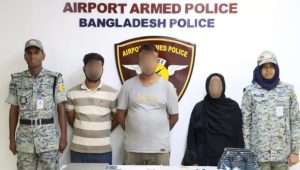
Although repeated operations have led to dozens of arrests, key alleged leaders remain at large, allowing their associates to continue exerting pressure and influence in parts of the locality.
The renewed tension comes amid reports of attacks on security installations, public demonstrations in support of alleged local power brokers, and fresh mobilisation of armed groups in the area.
According to security sources, the most serious incident occurred on 24 May, when several hundred armed men, allegedly led by a figure identified locally as Yasin, attacked a temporary joint forces camp in Alinagar using heavy equipment including bulldozers.
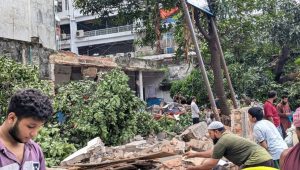
The attackers reportedly damaged camp infrastructure, broke boundary walls and dug trenches on internal roads to obstruct movement.
Officials said the confrontation escalated into nearly two hours of intermittent gunfire before the attackers retreated into the surrounding hills. No official casualty figures were immediately confirmed.

The camp had been established after a large-scale joint operation on 9 March, conducted by the army, Rapid Action Battalion (RAB) and police, which brought the area under administrative control following years of alleged criminal dominance.
That operation was triggered in part by the killing of RAB Assistant Director Motaleb Hossain Bhuiyan during an arms recovery mission in January, an incident that authorities say underscored the scale of armed activity in the region.
Despite the crackdown, officials acknowledge that the arrest of key suspects remains pending.
“In operations like these, the main leaders sometimes remain elusive, but we have arrested more than 50 individuals linked to various incidents,” said RAB-7 commander Lieutenant Colonel Hafizur Rahman.
He said operations were continuing in the area. “As a citizen, I also want the main accused to be arrested. The drive is ongoing and they will eventually be caught,” he said.




Rahman, however, noted that local demonstrations should not be automatically treated as criminal activity. “People can hold human chains or express opinions. That alone does not fall under criminal offences,” he added.
Following the March operation, authorities established a temporary security camp in Alinagar and increased patrols across the hill tract.
Officials had declared that no armed group would be allowed to maintain parallel control or operate a “shadow administration” in the area.
However, the situation appeared to shift again after a high-level visit by the home minister on 31 May.
During the visit, he described Jungle Salimpur as a former hub of “a criminal state within the state”, alleging that armed groups had previously installed CCTV networks, checkpoints and parallel taxation systems.
“We will not allow any such criminal sanctuary to exist here again,” the minister said at the time, adding that the security forces had dismantled much of the structure within a month of taking charge.
He also outlined long-term development plans for the area and reiterated government commitments to relocating a long-stalled central jail project.
Despite these assurances, local reports suggest that supporters of the alleged armed network resurfaced publicly shortly after the minister’s departure.
Some residents were seen speaking in favour of the alleged leader, claiming that his group had provided informal protection in the area.
“We lived under Yasin’s control. We could move freely even at night and nobody disturbed us,” said one woman, speaking to reporters after the visit. “Now RAB is here and people are being harassed.”
Another woman made similar claims, alleging that local “taxation” had been imposed by rival groups before the crackdown.
“Yasin told us we would not have to pay any tax. We want him back,” she said, adding that the presence of security forces had led to harassment.
Authorities have not independently verified these claims.
Meanwhile, local sources say a human chain protest has been announced in the area, opposing the continued presence of law enforcement forces. The announcement has added to fresh tensions in the already sensitive region.
Security officials maintain that the situation remains under control, with joint forces including Border Guard Bangladesh (BGB) and RAB conducting regular patrols.
“Jungle Salimpur is under law enforcement control. There may be minor harassment attempts, but no organised resurgence is likely,” said Lt Col Hafizur Rahman.
He added that external backing would be required for any large-scale regrouping of armed elements, comparing the situation to other cross-border militant networks.
However, analysts and officials acknowledge that the combination of difficult terrain, weak long-term administrative presence and alleged political protection has allowed armed influence networks to persist for years.
While recent operations have significantly disrupted their structure, the area has yet to stabilise fully, leaving open the risk of renewed unrest if key suspects remain at large.