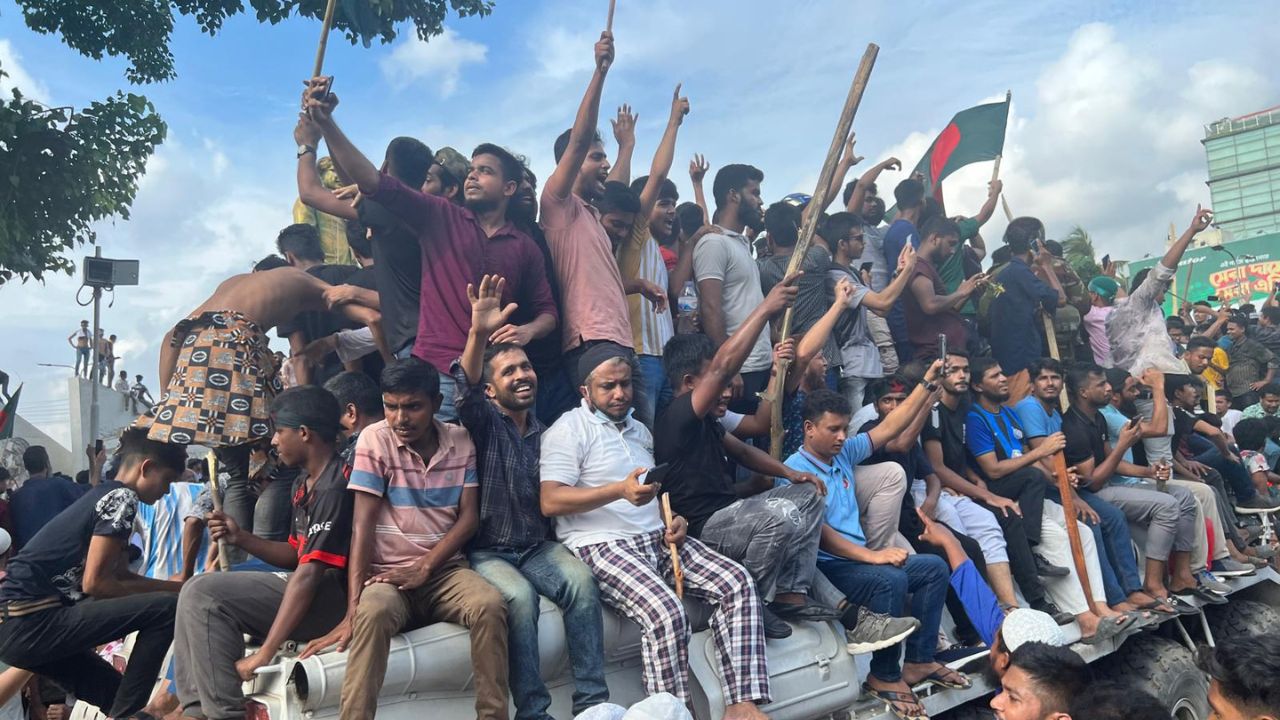



On the second anniversary of the July uprising, Ganabhaban – the former official residence of ousted prime minister Sheikh Hasina – is set to reopen its gates as the “July Mass Uprising Memorial Museum”.
Prime Minister Tarique Rahman will formally inaugurate the landmark institution on Wednesday morning, before it opens to the general public the following day.
The unveiling stands as a symbolic pinnacle of a broader national observance, with the government officially declaring 5 August as “July Mass Uprising Day” to honour the movement that redefined the nation’s political landscape. The day is a public holiday.
The inauguration ceremony at 9:00am will feature addresses by veterans of the movement and the families of martyrs, alongside the screening of a documentary capturing the public swell that led to the regime’s fall.

The prime minister will tour the museum’s galleries, which preserve authentic artefacts, photographs, and historical records detailing the uprising. The proceedings will culminate in a cultural tribute of patriotic music and recitations.
The transition from executive residence to public memorial comes two years after hundreds of thousands marched on Ganabhaban in 2024, prompting Hasina’s departure and leading the subsequent interim administration to convert the looted compound into a permanent monument to democratic resistance.


Beyond the museum halls, a comprehensive slate of state, civic, and cultural events will unfold across all 64 districts. Official tributes begin with the laying of floral wreaths at regional July Martyrs’ Memorials, while the Bangladesh-China Friendship Conference Centre in Dhaka hosts a major civic reception at 11:00am.
Attended by Acting President Hafiz Uddin Ahmed as chief guest, the ceremony will honour fallen heroes and freedom fighters, establishing a template for concurrent assemblies in every district across Bangladesh.
The capital will also play host to two grand open-air musical festivals celebrating democratic expression and national unity. Suhrawardy Udyan will host the “Concert for Democracy” – an initiative organised by the Ministry of Cultural Affairs alongside Bangladesh Shilpakala Academy and BAMBA – featuring iconic acts such as Miles, Warfaze, and Lalon.
Meanwhile, the South Plaza of the Jatiya Sangsad Bhaban will present ‘Songs of the Monsoon Revolution’, featuring high-profile performances by Artcell, Shironamhin, and Ark. Both events will be entirely free to the public, drawing vast audiences from across the country.
Nationwide, public life will reflect the gravity of the occasion. Main thoroughfares, traffic islands, and monuments will be illuminated and adorned with banners, accompanied by the release of a commemorative postage stamp.
Educational institutions are staging essays, art, and debate competitions, while diplomatic missions abroad hold dedicated commemorative forums.
Mass media outlets, including state broadcasters and private networks, will air archival documentaries alongside special newspaper supplements. To ensure inclusive participation, state and private museums as well as amusement parks will offer free entry to children throughout the day.
Improved diets will be served across hospitals, correctional facilities, orphanages, and welfare centres nationwide, whilst places of worship hold special prayers to conclude a historic day of national remembrance.