Prosecutors at the International Crimes Tribunal have sought the death penalty for Jatiya Samajtantrik Dal (Jasad) President and former minister Hasanul Haq Inu in a case over crimes against humanity committed during the July 2024 mass uprising.
The prosecution argued on Thursday that the charges against Inu had been proven beyond doubt, while defence lawyers sought the acquittal of their client.
After hearing final arguments from both sides, the three-member ICT-2 bench led by Justice Nazrul Islam Chowdhury kept the case pending for verdict at any time.
Final arguments in the case began on 2 April.
Chief Prosecutor Aminul Islam, alongside prosecutors Mizanul Islam and Faruk Ahmad, represented the state during the hearings. The defence team comprised lawyers Monsurul Haque Chowdhury and Sifat Mahmud.
The prosecution brought the case against Inu before the tribunal over eight specific charges, including the killing of seven people in Kushtia during the mass uprising.
The victims included labourer Ashraful Islam, Suruj Ali Babu, students Abdullah Al Mustakin and Usama, businessman Bablu Foraji, and service holder Yusuf Sheikh.

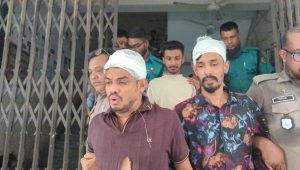
Police arrested Hasanul Haq Inu from Uttara in the capital on 26 August 2024, following the fall of the Awami League government on 5 August.
The tribunal began recording prosecution witnesses in the case on 1 December last year.
After the hearing, Chief Prosecutor Aminul Islam told reporters that Hasanul Haq Inu, as an ally of the 14-party alliance led by Awami League, had been directly involved in the activities of the former government.
“We have presented before the tribunal issues of superior command responsibility, individual responsibility and criminal conspiracy,” he said.




The prosecution also submitted as evidence telephone conversations between Inu and then prime minister Sheikh Hasina on 19 July and 4 August 2024, he added.
According to the chief prosecutor, the Jasad president described the mass movement as militancy during the calls and discussed suppressing it.
“The conversations included discussions about imposing curfew, dividing the movement by using the militant narrative, and giving instructions to police in Kushtia,” he said.
“The planning and killings of students and civilians are clearly reflected in those conversations, and he did not deny them.”
The prosecution further alleged that Inu attended meetings of the 14-party alliance during the uprising and supported the imposition of curfew.
“People were labelled terrorists and indiscriminate firing was carried out, amounting to crimes against humanity,” the chief prosecutor said.
However, defence lawyer Sifat Mahmud argued that the prosecution had “completely failed” to prove any of the eight charges brought against the Jasad leader.
“There is no involvement of Hasanul Haq Inu in the killings and casualties during the mass uprising,” he said.
“He did not hold any constitutional or administrative position at that time.”
The lawyer also argued that the recorded phone conversations with Sheikh Hasina contained no instructions to shoot protesters, carry out bombings or commit torture.
“There is nothing in the prosecution’s submitted documents showing that he incited or conspired with anyone to shoot or torture protesters,” he said.
Describing the unrest as a “non-international armed conflict”, the defence lawyer claimed that “terrorist and militant groups had infiltrated the student movement and engaged in conflict with the state”.
“Hasanul Haq Inu supported the students and the people, but opposed acts of sabotage,” he added.
Without denying the authenticity of the conversations, he argued that the recordings instead formed “the main basis of his defence”.
“Because the conversations included calls for protesters to return home and statements against casualties or firing,” he said.
Inu served one term as information minister during the Awami League government.
However, in the 12th parliamentary election, he lost his Kushtia seat as an alliance candidate to an Awami League rebel contender.