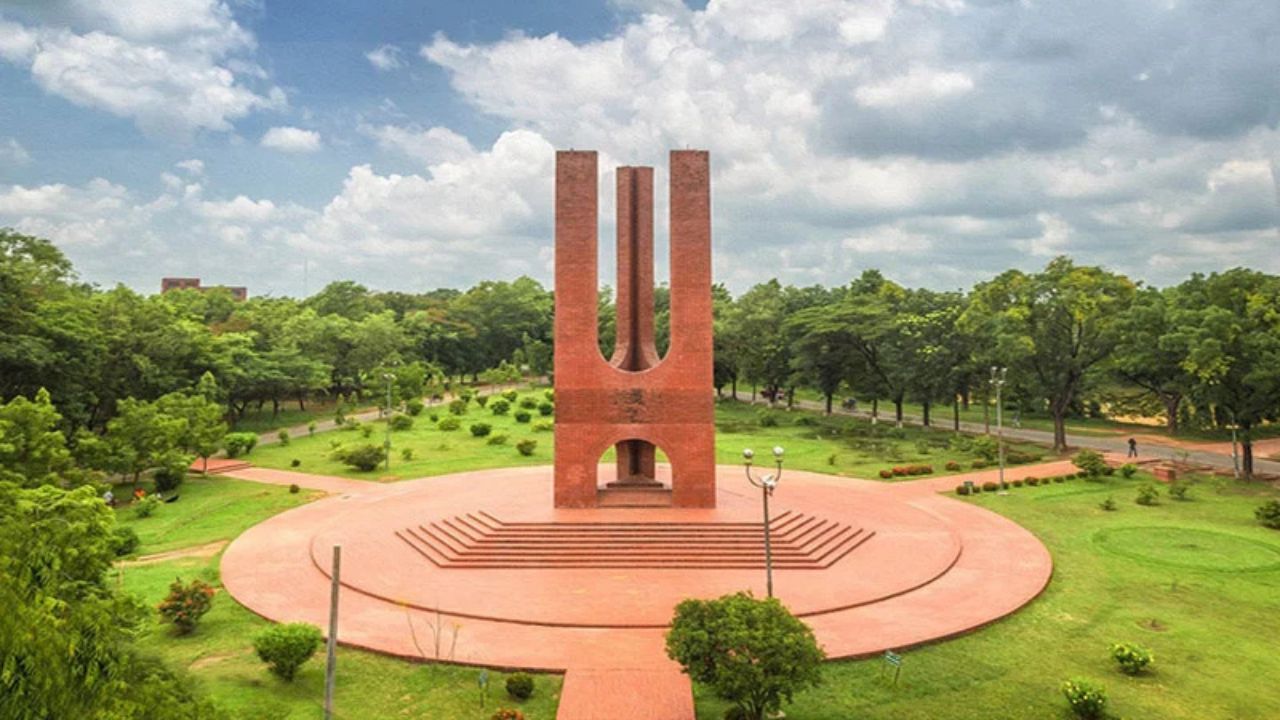



Nearly a year after sweeping the Jahangirnagar University Central Students Union (Jucsu) elections with promises of subsidised meals, academic reforms and a safer campus, the Shibir-backed leadership is facing growing criticism as many of its key pledges remain unfulfilled.
The Islami Chhatra Shibir-backed United Students’ Alliance, which secured 20 of 25 posts including general secretary, had promised sweeping changes in food security, healthcare, women’s safety, academic administration and campus development.
But as its tenure approaches its end, students and opposition groups say visible progress remains limited. Major commitments, including a 50% dining subsidy and round-the-clock medical services, are yet to become reality.
Opposition leaders accuse Jucsu of shifting responsibility to university authorities instead of exerting effective pressure, while the union leadership blames administrative hurdles, staffing shortages and budget constraints.
Jucsu General Secretary Mazharul Islam told TIMES of Bangladesh that several initiatives are still underway despite institutional challenges.
Jatiyatabadi Chhatra Dal’s university unit convener Zahir Uddin Mohammad Babar disagreed, saying, “They are covering up their failures by passing the buck to the administration.” He added that Jucsu’s primary responsibility is to lobby effectively for students.
Jatiya Chhatra Shakti’s university unit president Zia Uddin Ayan echoed the frustration, saying, “Jucsu has tried, but those efforts simply haven’t yielded results.”
The half-price meal promise that stalled
Among all manifesto commitments, the promise of a 50% dining subsidy generated the strongest response from students.

For many, affordable meals were a decisive factor behind supporting the Shibir-backed alliance. Fine Arts student Sumit Kundu said the promise of subsidised food and a digital coupon system significantly raised expectations.
Nearly a year later, however, the subsidy remains unrealised.
Mazharul Islam blamed stalled budget allocations, saying the same issue had delayed plans for installing water purifiers in halls.
Rakibul Hasan, vice-president of the National Poet Kazi Nazrul Islam Hall Union, confirmed that the administration had no dedicated funding for the scheme and that the digital coupon system had not been introduced.
Mazharul argued that technical challenges, personal mobile usage issues and resistance from dining staff to QR-based payments had slowed implementation.
Academic reform: promises without visible change
Academic reform was another central pillar of the alliance’s manifesto, with commitments to tackle session delays, exam irregularities and bureaucratic complications.


However, students say everyday difficulties remain unchanged.
Journalism student Iffat Raisa Nuha said, “Even basic reforms would have given us hope. Instead, we’re still running from pillar to post just to submit exam forms and get routine approvals.”
Mazharul defended Jucsu’s performance, citing a proposed Jucsu-inspired academic calendar, pending approval for improvement exams and plans for teacher evaluations.
Critics, however, dismissed these measures as routine university activities rather than major achievements.
Bangladesh Chhatra Union’s university unit general secretary Faizan Ahmed Arko said seminars and regular programmes were being presented as major breakthroughs. “These are standard university activities, not Jucsu triumphs,” he said.
Babar also criticised the union for failing to deliver structural reforms. “Instead of long-term changes for student welfare, all students have received so far is a flood of announcements,” he said.
Healthcare promises remain pending
Healthcare reforms have also failed to meet expectations.
Promises of 24-hour doctors and ambulance services remain incomplete, while the university medical centre recently faced serious medicine shortages.
Jucsu Health Secretary Husne Mobarak blamed the shortages on depleted budgets and said the situation was improving.
Mazharul pointed to administrative delays and staffing shortages across university offices.
Faizan, however, rejected such explanations, saying, “The real benchmark isn’t administrative red tape. It’s whether students are actually getting the healthcare they need.”
Women’s safety: a partial response
Women’s safety was another major election pledge. Although the creation of a cyberbullying cell received initial appreciation, female students say broader security concerns remain unresolved.
Iffat Raisa Nuha said harassment on campus continues, with outsiders allegedly photographing female students without consent.
“The cell is a positive step, but the actual safety climate hasn’t changed,” she said.
Mazharul said Jucsu maintains a zero-tolerance approach towards ragging, toxic ‘guest room’ culture and harassment, adding that stronger measures would follow once formal policies are approved.
Meanwhile, commitments for students with special needs — including ramps, audiobooks, scribes, daycare facilities and breastfeeding corners — remain incomplete.
“These initiatives are ongoing,” Mazharul said.
Green campus vision yet to materialise
Environmental protection featured prominently in the manifesto, but students say little has changed on the ground.
Sumit and Iffat said eco-friendly initiatives and campus development plans have failed to produce visible improvements.
Mazharul said an ecological master plan had been approved and pointed to ongoing waste management, anti-plastic campaigns and tree plantation drives.
However, major promises — including protected ecological zones, professional sports trainers, and modernisation of the Teacher-Student Centre and auditorium — remain unfinished.
With the clock running out on its tenure, Jucsu now faces the biggest test of its credibility: whether its ambitious manifesto can move beyond promises and deliver measurable change before its term ends.