The Japan International Cooperation Agency (JICA) and the Department of Agricultural Extension (DAE) on Tuesday announced successful completion of the second-cycle activities of the Bangla-SHEP project, which helped smallholder horticulture farmers increase average income by 24 per cent through market-oriented farming practices.
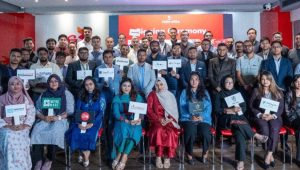
The results were shared at a review workshop held at the Bangladesh Agricultural Research Council (BARC) auditorium in Farmgate, Dhaka, attended by officials from the Ministry of Agriculture, DAE, Bangladesh Bank, financial institutions, private companies, non-governmental organisations, donor-funded projects and participating farmers.
The project, formally titled “Market-Oriented Agriculture Promotion Project for Smallholder Horticulture Farmers through Multi-Stakeholder Partnerships”, is funded by JICA and promotes market-oriented agriculture through collaboration among government agencies, financial institutions and private-sector stakeholders.

Under the project, more than 2,814 smallholder farmers, including a significant number of women, participated in training and farming activities, while over 112 farmer groups practising market-oriented agriculture were formed.
The project introduced the internationally recognised SHEP approach, encouraging farmers to move away from the traditional “produce and sell” model to a demand-driven “grow to sell” system based on market demand and buyer engagement.




According to project officials, the initiative also strengthened women’s participation in farming and market activities, improved access to income and savings opportunities and increased women’s involvement in household financial decision-making.
JICA Bangladesh Chief Representative Junko Takahashi said the project demonstrated that improving farmers’ market knowledge and confidence can significantly improve livelihoods and create sustainable opportunities in rural communities.
She said JICA plans to support wider expansion of the SHEP model by integrating it into national agricultural and extension policies, strengthening public-private partnerships and improving farmers’ access to finance and markets.
BARC Executive Chairman Md Abdus Salam, Ministry of Agriculture Joint Secretary Shahin Akhter, DAE Director Md Abdus Sattar, Bangladesh Bank Agriculture Credit Department Director Sayeduzzaman, Bangla-SHEP Project Director Humayoun Kabir, Team Leader Masahiro Kawamura and A R Malik Seeds Managing Director Ataus Sopan Malik attended the event.
Officials said the project’s completion marks a milestone in Bangladesh-Japan agricultural cooperation and provides a foundation for expanding sustainable, market-oriented agriculture to support rural development and inclusive economic growth.